

Maddy summaryThe HEAL Act (HR 603) requires the U.S. Holocaust Memorial Museum Director to study how public elementary and secondary schools teach about the Holocaust and related antisemitism. The study will examine curriculum requirements, teaching methods (like project-based learning), instructional materials, and assessment approaches across states and school districts. It specifically analyzes whether Holocaust education is mandatory, optional, or integrated across subjects, and how schools address antisemitism and genocide prevention. The resulting report, due within 180 days of the study or three years after enactment, will inform Congress but does not change current school policies. This is a data-gathering measure, not a policy mandate.
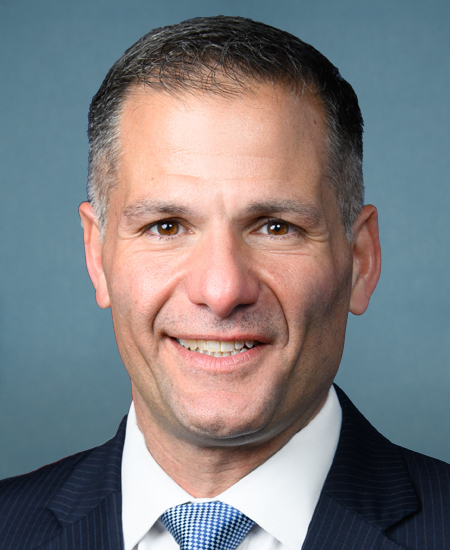
Rep. Marcus J. Molinaro
Sponsored bills
This concurrent resolution calls on the President to abandon the One China policy in favor of one that recognizes Taiwan as an independent country that is not a part of China. The resolution also urges the President to bolster diplomatic and economic relations between the United States and Taiwan through specified means.
Maddy summaryHR 22, the *Protecting America’s Strategic Petroleum Reserve from China Act*, blocks the U.S. government from selling petroleum from the Strategic Petroleum Reserve to entities under Chinese Communist Party control or unless sellers guarantee the oil won’t be exported to China. It directly affects the Department of Energy’s management of the reserve and any foreign entities seeking to purchase reserve petroleum. The key mechanism requires the Secretary of Energy to prohibit sales to China-linked entities or impose strict export restrictions on any sale. This policy change aims to prevent strategic petroleum resources from reaching entities tied to China’s government.
Maddy summaryThis bill renames a U.S. Postal Service facility at 620 East Pecan Boulevard in McAllen, Texas, as the "Agent Raul H. Gonzalez Jr. Memorial Post Office." It updates all federal references to the location to reflect this new name. The bill has no policy impact - it is purely a ceremonial designation honoring an individual. No other provisions or affected groups are involved.
Maddy summaryHR 345, the TRUST in Congress Act, requires Members of Congress, their spouses, and dependent children to place certain investments into a "blind trust" within 90 days of taking office or after the bill's enactment. It directly affects current and future lawmakers and their immediate family members by mandating that covered investments - such as stocks, commodities, or derivatives (excluding Treasury bonds and some mutual funds) - be placed in a trust they cannot manage. Members must certify the trust setup to House or Senate officials within 15 days, and trusts cannot be dissolved until 180 days after leaving office. The law excludes investments providing primary income (e.g., from a spouse's job) but requires transparency through public website disclosures of certifications.
Maddy summaryThe Protect Local Farms Act (HR 353) would override state laws that require overtime pay for agricultural workers after fewer than 60 hours in a workweek. It amends federal labor law to preempt any state regulation setting a lower maximum workweek threshold (e.g., 40 or 50 hours) for farm employees. This directly affects agricultural employers and workers in states with stricter overtime rules, such as California or New York, by replacing those state standards with the federal 60-hour threshold. The bill does not change federal overtime rules but ensures states cannot impose more stringent requirements on farm labor.
Stop Enabling Repeat Violence and Endangering Our Communities Act or the SERVE Our Communities Act This bill authorizes the Bureau of Justice Assistance to make grants to states and local governments for mentoring, transitional services, and training to help offenders successfully reintegrate back into the community after incarceration. To be eligible for a grant, a state or local government must take steps to prevent repeat offenses by violent offenders and allow a state court or magistrate to consider the danger an individual poses to the community when determining bail or pretrial release conditions.
Maddy summaryHJRES 8 proposes a constitutional amendment to permanently set the Supreme Court's size at nine justices. The bill would require any future changes to the Court's composition to follow this specific number, locking in the current structure. It does not alter the existing Court size (which has been nine since 1869) but aims to prevent future adjustments through legislative action. The amendment must be ratified by three-fourths of state legislatures within seven years to take effect. This is a procedural proposal focused on constitutional structure, not a direct policy affecting citizens or programs.