

Maddy summaryThis bill amends federal law to include Transportation Security Administration (TSA) officers who die while performing official duties protecting transportation systems as eligible for public safety officers' death benefits. It specifically adds TSA employees working to "ensure freedom of movement for people and commerce" to the list of covered personnel under the Omnibus Crime Control and Safe Streets Act. The change applies to deaths occurring on or after October 31, 2013, directly affecting TSA officers and their families by expanding access to death benefits previously available only to other public safety personnel.
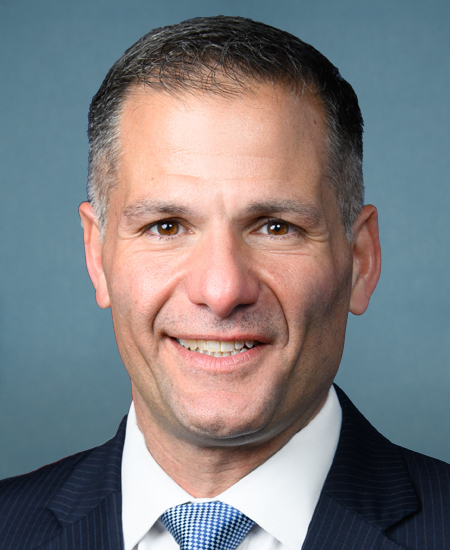
Rep. Marcus J. Molinaro
Sponsored bills
This resolution condemns Iranian state-sponsored terrorist attacks against U.S. citizens and officials and Iranian dissidents. The resolution also expresses support for the people of Iran who are legitimately defending their rights for freedom against repression and condemns the killing of Iranian protesters by the Iranian regime.
Maddy summaryHCONRES 13 is a concurrent resolution expressing Congress's support for maintaining the current policy that prohibits imposing new fees on local radio stations for playing music. It states that Congress should not impose any performance fee, tax, royalty, or charge on local radio stations for broadcasting sound recordings over the air, or on businesses like bars and restaurants that play music publicly. The resolution argues that such fees would harm local radio stations - critical sources for emergency information and community programming - and jeopardize the economic model that has supported both radio and the music industry for decades. This resolution does not create new law but formally opposes potential legislative changes to the existing fee structure.
Freight Rail Assistance and Investment to Launch Coronavirus-Era Activity and Recovery Act of 2023 or the Freight RAILCAR Act of 2023 This bill provides a new tax credit through 2025 for 10% of freight railcar fleet modernization expenses (i.e., railcar replacement and modernization expenses for meeting fuel efficiency and performance standards). The bill provides that no more than 2,000 freight railcars per taxpayer may be taken into account for purposes of determining the credit in a taxable year. The Department of the Treasury must report to Congress on the credit to provide information on the number of times the credit was claimed and the number of railcars scrapped or built as a result of the credit.
Maddy summaryThe Protecting School Milk Choices Act of 2023 requires schools participating in the National School Lunch Program to offer both flavored and unflavored milk to students. Schools may also choose to provide lactose-free milk as an optional offering. This bill directly affects all public and private schools receiving federal funding for school meals, which serves millions of students nationwide. The amendment changes existing milk requirements under the National School Lunch Act to expand student choices while maintaining mandatory options.
Maddy summaryThe Federal Infrastructure Bank Act of 2023 would establish a new Federal Infrastructure Bank to provide financing for infrastructure projects across the United States. The bank would offer loans, loan guarantees, and equity investments to eligible entities for qualifying projects including highways, ports, airports, energy systems, and public transportation. The bill requires at least 10% of funding to support rural infrastructure projects and prohibits the bank from funding projects owned or influenced by the Chinese government or projects outside the United States. The bank would operate as a subsidiary of a Federal Infrastructure Bank Holding Company, with both entities exempt from most taxes. The bank would also establish an Infrastructure Guarantee Fund to cover defaults on loans or guarantees.
Maddy summaryHR 683 (PASS Act of 2023) expands the Committee on Foreign Investment in the United States (CFIUS) review process to cover foreign investments in U.S. agriculture businesses, agricultural biotechnology, and private farmland. It mandates that the President block transactions involving foreign entities from China, Russia, Iran, or North Korea that would give them control over U.S. agricultural operations or land used for farming. The bill allows limited presidential waivers for national security reasons but requires a 30-day review period before any waiver. Additionally, it requires the Secretary of Agriculture to submit biannual reports to Congress on risks posed by foreign ownership in U.S. agriculture.
Maddy summaryHR 648, the Agriculture Export Promotion Act of 2023, increases federal funding for key USDA export promotion programs to boost U.S. agricultural sales abroad. It raises annual funding for the Market Access Program from $200 million to $400 million and for the Foreign Market Development Cooperator Program from $34.5 million to $69 million, effective 2024-2029. These changes directly benefit U.S. farmers and agricultural businesses exporting commodities like soybeans, beef, and dairy by expanding their access to international markets. The bill aims to counter competitive disadvantages as foreign competitors grow their export programs faster than U.S. funding has kept pace. This represents a significant funding adjustment to address years of stagnant investment in these programs.
SALT Marriage Penalty Elimination Act This bill increases from $10,000 to $20,000 the amount that a married couple filing a joint tax return may deduct as state and local taxes (thus eliminating the tax effect known as the marriage penalty with respect to the deduction).
This resolution recognizes and appreciates the dedication and devotion demonstrated by the men and women of law enforcement. It also condemns calls to defund, disband, dismantle, or abolish the police.