

Maddy summaryHR 5908, the "Strengthening Communities through Summer Employment Act," authorizes $200 million to $240 million annually (2024-2028) for the Department of Labor to fund summer youth employment programs. It requires grantees to provide subsidized summer jobs (minimum 4 weeks at minimum wage) for youth under 25, including mandatory mentoring, job training, and post-program support to improve graduation rates, college enrollment, employment, and reduce crime. Programs must prioritize communities with high youth unemployment and violent crime, and serve historically underserved youth in rural or suburban areas. The bill also mandates independent evaluations to measure long-term impacts on participants’ education, employment, and criminal justice outcomes.
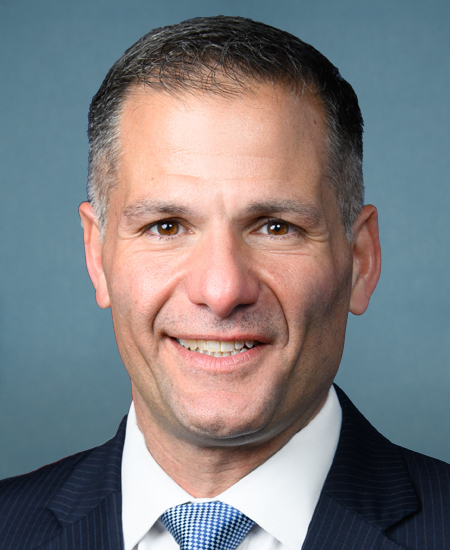
Rep. Marcus J. Molinaro
Sponsored bills
Maddy summaryHRES 750 is a symbolic resolution recognizing the "Operation Green Light for Veterans" campaign, which encourages counties to illuminate buildings green (Nov 6-12) to show community support for veterans. It promotes awareness of existing county resources - such as mental health services, job training, housing assistance, and benefits guidance - that help veterans transition to civilian life. The resolution urges all counties to participate in the lighting event and use community outreach to highlight these resources, while commending the National Association of Counties for leading the initiative. It does not create new laws or funding but focuses on raising visibility for existing support systems. (HRES 750, introduced Sept. 29, 2023)
Maddy summaryThis resolution designates the week of September 25-29, 2023, as "National Clean Energy Week" to recognize the growing role of clean energy in the U.S. economy. It expresses support for clean energy jobs and innovation, noting the sector employed about 8.1 million people in 2022. The resolution encourages federal, state, and local investment in affordable clean energy technologies and promotes "commonsense solutions" for energy needs. As a symbolic gesture, it has no legal force or funding implications - it simply urges recognition of clean energy's economic and environmental contributions.
Maddy summaryThe Mental Health Infrastructure Improvement Act of 2023 provides federal loans and loan guarantees to help build or improve mental health and substance use disorder treatment facilities. It prioritizes projects that increase psychiatric bed capacity in underserved areas, serve rural communities, or provide integrated care, with 25% of funds reserved specifically for pediatric facilities. Borrowers must contribute 25% of project costs from non-federal sources, and the program allocates up to $200 million annually for fiscal years 2024-2028. The bill includes specific terms for loan repayment, guarantee coverage, and requirements for eligible facility types that qualify for funding.
Maddy summaryHJRES 11 proposes a constitutional amendment that would limit Members of Congress to serving a maximum of three terms in the House of Representatives and two terms in the Senate. If passed and ratified, it would prevent any member who has already served the maximum terms from running for re-election, including time spent filling vacancies (for more than one year in the House or three years in the Senate). This amendment directly affects current and future members of Congress by changing eligibility rules for re-election. The proposal is currently a joint resolution in the House, requiring ratification by three-fourths of state legislatures to become part of the Constitution.
Maddy summaryHR 5808, the Preventing Deep Fake Scams Act, establishes a federal Task Force to address AI-driven financial fraud risks. The Task Force, composed of key financial regulators (Treasury, Federal Reserve, CFPB, FDIC, and others), must issue a report within one year detailing current protections, standard AI definitions, deep fake risks, best practices for institutions, and regulatory recommendations. This bill directly affects banks, credit unions, and financial service providers by requiring them to report on AI security measures and collaborate with the Task Force. The report aims to help financial institutions protect consumers from identity theft and fraud using deep fake technology, without creating new regulations itself.
Maddy summaryThis bill requires federal agencies to adjust contract prices to reimburse contractors for paying employees during government funding lapses (e.g., shutdowns). It covers costs for furloughed, laid-off, or reduced-hour workers, or for restoring paid leave used during the lapse, with a weekly cap of $1,442 per employee. Directly affecting federal contractors and their employees who experienced work disruptions due to funding gaps, it mandates agencies to make these adjustments promptly after enactment. Contractors must provide proof of costs, and the Office of Federal Procurement Policy must report on implementation to Congress within a year.
Maddy summaryHR 5641, the Pay Our Troops Act, ensures military personnel and their support staff continue receiving pay during fiscal year 2024 if Congress fails to pass regular budget appropriations. It appropriates existing Treasury funds to cover pay and allowances for active-duty troops, reserve components, and civilian employees or contractors supporting military operations. The bill automatically terminates on January 1, 2025, or earlier if Congress enacts a regular budget or continuing resolution. This provision directly affects service members, Department of Defense staff, and Coast Guard personnel (when not under the Navy) during budget implementation gaps.
Maddy summaryHR 5759, the Post Quantum Cybersecurity Standards Act, directs the National Institute of Standards and Technology (NIST) to promote voluntary adoption of quantum-resistant encryption standards. It specifically targets critical infrastructure operators and digital infrastructure providers at high risk of quantum computer attacks. Key mechanisms include NIST developing public guidance and technical assistance, and establishing a grant program to fund adoption costs for eligible high-risk entities. The bill defines "post-quantum cryptography" as encryption methods resistant to both quantum and classical computer attacks. This legislation aims to prepare U.S. systems for future quantum computing threats without mandating compliance.
Maddy summaryThis bill exempts Purple Heart medal recipients from paying standard passport application fees. It directly affects military veterans who have been awarded the Purple Heart for combat wounds. The key mechanism amends the 1920 Passport Act to add a specific fee waiver for these veterans when applying for passports. This change would reduce costs for eligible veterans seeking to travel internationally using official U.S. passports.