

This resolution expresses unwavering support for Israel and a readiness to consider urgent requests for additional assistance to Israel to defend its people and sovereignty. The resolution also states that (1) Israel is entitled to act in self-defense against Hamas, the Palestinian Islamic Jihad, and associated forces, as well as their state sponsors; and (2) the cross-border attacks and kidnappings against Israel constitute acts of international terrorism and aggression.
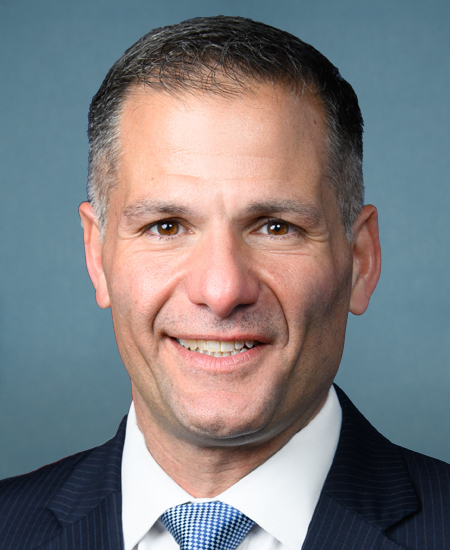
Rep. Marcus J. Molinaro
Sponsored bills
Maddy summaryHRES 768 is a symbolic House Resolution expressing congressional support for Israel following Hamas' October 7, 2023 attacks. It condemns Hamas' actions, reaffirms Israel's right to self-defense, and calls for the immediate release of hostages. The resolution references the U.S. commitment to Israel's security through existing military aid programs, including the 2016 U.S.-Israel Memorandum of Understanding, and emphasizes enforcement of laws like the Taylor Force Act to prevent U.S. aid from reaching terrorist groups. As a symbolic resolution, it does not create new policy but serves as a statement of congressional support for Israel.
Maddy summaryHRES 764 is a symbolic House resolution expressing support for recognizing Christopher Columbus and his historical impact on the Italian-American community. It formally designates the second Monday in October as "Columbus Day" for observance. The resolution does not create new laws or alter existing policies but affirms a longstanding tradition of honoring Columbus's legacy and the contributions of Italian-Americans to U.S. society. This is a non-binding expression of congressional support, not a legislative change.
Maddy summaryHR 6041, the Runaway and Homeless Youth and Trafficking Prevention Act of 2023, expands federal support for services targeting youth aged 12-26 experiencing homelessness or running away from home. The bill establishes grants for short-term shelter (Basic Center Program), longer-term transitional housing (Transitional Living Program), and specialized services for youth at risk of or experiencing trafficking (Sexual Abuse and Trafficking Prevention Program). It requires grantees to provide trauma-informed, culturally appropriate services that address substance use, mental health, education needs, and connections to caring adults, with special attention to vulnerable populations including LGBTQ youth, youth of color, and those involved with child welfare or justice systems. The bill authorizes $200 million annually for these programs through fiscal year 2028, with specific funding allocations for different program components.
Maddy summaryThis bill, the ACCESS Act (HR 6043), requires states and local areas to expand career counseling for secondary students (middle and high school) by adding new public awareness campaigns about skilled trade and high-demand jobs. It mandates states to run media campaigns - including social media - promoting career and technical education programs, and requires local workforce programs to provide students with career exploration, counseling, and labor market information specific to in-demand occupations. The changes apply directly to public schools and workforce development agencies administering programs under the Workforce Innovation and Opportunity Act. The bill focuses on improving student access to information about skilled trades and high-wage careers through concrete policy updates.
Curbing Illicit Drug Threats Act This bill requires the Government Accountability Office to study the effectiveness of federal drug surveillance systems, such as the Drug Overdose Surveillance and Epidemiology System of the Centers for Disease Control and Prevention, in monitoring and addressing illicit drug use.
Maddy summaryThis bill removes a previous exclusion that prevented temporary federal employees (including U.S. Postal Service staff and Members of Congress) from counting service after January 1, 1988, toward their retirement benefits. It allows these workers to have their post-1988 temporary service counted toward retirement eligibility if they pay a deposit to the retirement system. The change applies to anyone employed by the federal government on or after the bill's enactment date. The Office of Personnel Management must notify affected employees and create rules to implement this change.
Keeping Drugs Out of Schools Act of 2023 This bill allows the Office of National Drug Control Policy to award grants for eligible entities to implement school-community partnerships for preventing and reducing substance use and misuse among youth. Eligible entity refers to a coalition that (1) is a Drug-Free Communities funded coalition on or before the date on which the coalition submits a grant application, and (2) has a memorandum of understanding in effect with not less than one local school to establish a school-community partnership.
Maddy summaryHR 5954 designates the Finger Lakes region in 14 New York counties (Cayuga, Chemung, Cortland, Livingston, Monroe, Onondaga, Ontario, Schuyler, Seneca, Steuben, Tioga, Tompkins, Wayne, and Yates) as a National Heritage Area. It establishes the Finger Lakes Tourism Alliance as the local managing entity and requires a management plan for the area within three years. Federal funding for the area would end 15 years after the bill's enactment, as specified in the National Heritage Area System.
Maddy summaryHR 5950, the Quantum Instrumentation for Science and Engineering Act, establishes a new grant program under the National Science Foundation to upgrade research facilities and improve access to equipment for quantum information science. The bill directs the NSF to fund institutions of higher education, nonprofit organizations, or consortia to accelerate quantum technology development by upgrading research resources, enhancing equipment sharing across institutions, and providing hands-on training for students, including at community colleges. Key provisions require grantees to address materials and supply chain needs while facilitating coordination and professional staff support for quantum research operations. This legislation directly affects research institutions and students by expanding access to critical quantum research infrastructure and training opportunities.