

Maddy summaryThe Hydrogen for Ports Act creates a federal grant program to fund port infrastructure using hydrogen and ammonia as clean energy sources. Eligible entities - including states, local governments, tribes, port authorities, and private port operators partnering with public entities - can apply for grants to install or operate hydrogen/ammonia-fueled cargo equipment, trucks, vessels, shore power systems, and fueling infrastructure. The program prioritizes projects that reduce emissions, benefit low-income communities, create quality U.S. jobs, and avoid net job losses from automation (prohibiting grants for fully automated equipment that causes such losses). Additionally, the bill mandates a study on safety, feasibility, and storage challenges for hydrogen and ammonia fuels in maritime settings.
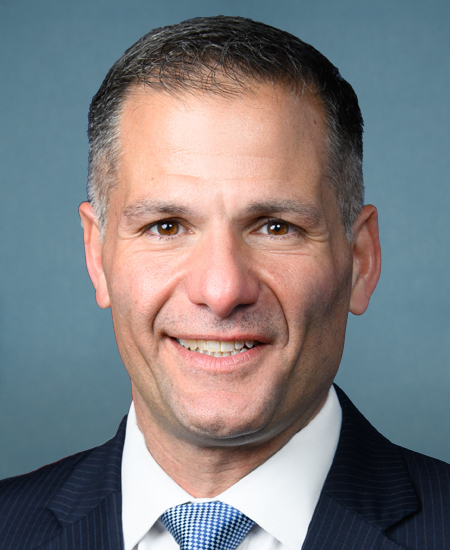
Rep. Marcus J. Molinaro
Sponsored bills
Maddy summaryThis bill designates the U.S. Postal Service facility at 86 Main Street in Haverstraw, New York, as the "Paul Piperato Post Office Building." It updates all official references in federal law, maps, and documents to reflect this new name. The bill does not change postal services, funding, or affect any specific group of people; it solely modifies the facility's official designation. This is a routine naming resolution with no substantive policy provisions.
Hydrogen for Trucks Act This bill requires the Department of Transportation to establish a grant program that assists eligible entities in purchasing (1) heavy-duty fuel cell vehicles (e.g., trucks) that use hydrogen as a fuel source, and (2) related equipment. Certain entities that control heavy-duty truck fleets or public hydrogen fueling stations may apply for grants. Grant recipients must use the funding to demonstrate the performance of at least seven heavy-duty fuel cell vehicles that use hydrogen as fuel source or at least one hydrogen fueling station for use by such vehicles.
Maddy summaryHR 4765, the Exposing China’s Support for the Taliban Act, requires the U.S. Treasury Department to study China’s financial ties to the Taliban in Afghanistan. The bill mandates a report within one year to Congress assessing Chinese companies’ involvement in money laundering, drug trafficking, and other illicit activities supporting Taliban financing. This study will also evaluate how these activities conflict with U.S. national security interests and suggest policy improvements to disrupt such networks. The bill itself does not impose new restrictions but directs a formal review of China’s financial role in Afghanistan.
Maddy summaryHR 1147, the Whole Milk for Healthy Kids Act of 2023, allows schools participating in the National School Lunch Program to offer whole milk as an option during lunch. It amends the school lunch law to explicitly permit schools to serve flavored and unflavored whole milk alongside reduced-fat, low-fat, and fat-free milk choices for students. The bill also requires the Secretary of Agriculture to adjust meal regulations to account for saturated fat from whole milk, ensuring it doesn't count against meal fat limits. This change directly affects participating schools and the students who receive school lunches, expanding their milk beverage options.
Maddy summaryThe Artificial Intelligence Literacy Act of 2023 creates grant programs to improve AI literacy in public schools, community colleges, and higher education. It amends the Digital Equity Act to fund specific activities like teacher training, hands-on AI labs, virtual learning platforms, and partnerships with private sector organizations. These grants directly support schools and community institutions serving students and workers, with a focus on underserved communities and addressing workforce gaps. The bill requires annual reports to Congress on grant outcomes and recommendations for expanding effective programs.
Maddy summaryThe 988 Lifeline Location Improvement Act of 2023 establishes a federal advisory committee to study how location information is transmitted for 988 calls. The committee, composed of representatives from telecom providers, mental health organizations, crisis centers, and government agencies, will examine privacy concerns, technical standards, and funding needs for improving location data accuracy during 988 Suicide and Crisis Lifeline calls. It must submit a report within one year to Congress and the FCC with recommendations for potential policy changes. This bill does not enact new requirements but directs a study to address challenges in connecting callers to local crisis services. The committee will terminate 30 days after submitting its report.
Maddy summaryThis bill amends the National School Lunch Act to require that the value of donated foods distributed to service institutions (like schools and community organizations) under the summer food service program equals the national average value of donated foods, as determined by existing rules. It directly affects schools and nonprofits that provide summer meals to children by standardizing how the value of donated food commodities is calculated. The key mechanism updates Section 13(h) to mandate this national average value, replacing previous methods. This ensures consistent funding for food assistance during summer months without changing program eligibility or structure.
Maddy summaryThis bill requires U.S. federal agencies to prioritize native plants over non-native plants in landscape projects at federal facilities (like government buildings, military bases, and national parks). It mandates agencies to consider environmental benefits - such as supporting pollinators, reducing water use, and preventing soil erosion - when making planting decisions. Agencies must update design standards within 270 days and include these requirements in all relevant contracts. The Council on Environmental Quality will provide implementation guidance and publish biennial reports on native plant usage across federal projects.
Maddy summaryThis House resolution (HRES 933) symbolically opposes New York’s Clean Slate Act, which automatically seals certain criminal records (misdemeanors after 3 years, some felonies after 8 years) for eligible individuals. It argues the law would prevent employers from accessing background checks during hiring, though the resolution itself has no legal effect. The resolution urges New York to prioritize crime prevention and public safety over this policy, citing concerns about employer access and recent crime statistics. (Note: This is a non-binding expression of opinion, not a legislative change.)