

Maddy summaryHR 6759 makes AmeriCorps education awards tax-free for recipients. The bill amends the Internal Revenue Code to exclude these awards from taxable income under sections 117(c) and 108(f), meaning members who earn education awards through AmeriCorps will not pay federal income tax on them or on student loans forgiven through the program. This directly affects AmeriCorps members who receive education awards under the National and Community Service Act of 1990. The tax exclusion applies to taxable years beginning after the bill's enactment date.
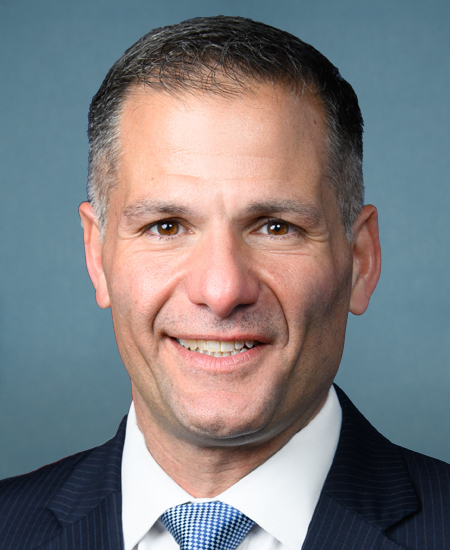
Rep. Marcus J. Molinaro
Sponsored bills
Maddy summaryHR 6416, the "Russian War Crimes in Ukraine Tax Act," imposes a 100% tax on interest and dividends earned from frozen Russian and Belarusian sovereign assets held abroad. This tax revenue is directed into a new Ukraine Reconstruction Trust Fund, which must be used for Ukraine's reconstruction, humanitarian aid, economic development, and transparent governance. The bill requires U.S. financial institutions to withhold this tax from qualifying income and overrides international treaty obligations to ensure implementation. It also mandates annual reports on fund usage to Congress, specifying that all revenues from the tax must support Ukraine's recovery efforts as defined in the legislation.
Maddy summaryThis bill reauthorizes and extends funding for programs addressing substance use disorders and opioid addiction, including residential treatment for pregnant and postpartum women, first responder training, and community recovery initiatives. It increases funding levels for these programs, adds xylazine to Schedule III of controlled substances, and requires a study on remote monitoring for patients prescribed opioids. The bill also expands Medicaid coverage requirements for medication-assisted treatment and mandates reporting on mental health condition data alongside substance use disorder data, directly affecting individuals with substance use disorders, healthcare providers, and state and tribal governments.
Maddy summaryThis bill amends existing law to expand substance abuse treatment services for children, adolescents, and young adults to explicitly include suicide prevention. It broadens eligibility for funding to include pediatric specialists, children’s hospitals, emergency departments, and Indian Health Service programs. The bill requires grantees to provide parents or guardians with counseling on preventing overdose/suicide and supplies to reduce access to lethal means (like medications or firearms). It mandates a minimum of $2 million annually in federal grants for these suicide and overdose prevention programs, effective 2024-2028.
Maddy summaryHR 6600, "Tyler’s Law," requires the Secretary of Health and Human Services to study how often hospital emergency departments test for fentanyl during overdose cases, along with the costs, benefits, risks, and patient privacy impacts. The study must be completed within one year of the bill’s enactment, followed by guidance issued within six months on whether fentanyl testing should become routine. This guidance will address how hospitals can inform clinicians about testing protocols and how fentanyl testing might affect future overdose risks and patient health outcomes. The bill directly affects hospitals and emergency departments treating overdose patients, focusing on improving data-driven practices for fentanyl detection.
Maddy summaryHR 6631, the Investing in Digital Skills Act, updates the Workforce Innovation and Opportunity Act (WIOA) to require adult education programs to integrate digital literacy skills. The bill adds "digital literacy skills" to program definitions and mandates that services must help adults develop these skills for employment, economic self-sufficiency, and family support. Key provisions include amending WIOA sections 202 and 203 to explicitly include digital skills training in program purposes and activities. This directly affects federally funded adult education programs serving adults seeking job readiness and economic opportunity.
Maddy summaryThis bill creates a federal grant program to expand access to mental health care for rural residents and those working in farming, fishing, or forestry (Triple-F industry). It authorizes up to $10 million annually (2024-2028) for nonprofit or public organizations to deliver home-based telemental health services - using video or phone - directly to patients in their homes. The program specifically targets areas with health professional shortages or Triple-F workers, requiring grantees to measure service quality compared to in-person care. Reports on outcomes must be submitted to Congress after three years to evaluate effectiveness.
Maddy summaryThis bill designates the United States Postal Service facility at 298 Route 292 in Holmes, New York, as the "Sheriff Adrian 'Butch' Anderson Post Office Building." It updates all federal references (including laws, maps, and documents) to use this new name for the location. The bill has no policy changes or financial impact - it solely commemorates Sheriff Adrian "Butch" Anderson through a building designation.
Maddy summaryHR 5785 modifies the Edith Nourse Rogers STEM Scholarship for veterans and military dependents pursuing STEM degrees. It updates eligibility by adding "or graduate" to degree requirements, reduces maximum benefit periods from 60 to 45 months for undergraduate and 90 to 67.5 months for graduate study, and adds new priority criteria for beneficiaries who've used the most entitlement months or are studying STEM fields. The bill also requires veterans to exhaust all other educational benefits before using this scholarship. These changes directly affect individuals seeking STEM education benefits under the program.
Maddy summaryThis bill (HR 6553) waives all costs for U.S. government-led evacuations of American citizens from Israel, Gaza, the West Bank, and nearby countries (like Cyprus) between October 7 and November 17, 2023. It directly affects U.S. citizens endangered by the Hamas-led attacks on October 7 and subsequent conflict. The key mechanism amends existing law to require the State Department to cover all expenses related to these evacuations through government-coordinated transport, eliminating repayment obligations for affected citizens. This policy change applies specifically to evacuations during that defined period following the October 7 attacks.