

Maddy summaryHR 5686 authorizes $30 million in U.S. humanitarian aid for Armenians in Armenia and Nagorno-Karabakh affected by recent conflicts and blockades, and $12 million in foreign military financing to support Armenia's sovereignty and security cooperation. The bill requires the State Department to develop a strategy protecting Nagorno-Karabakh residents' rights, including cultural heritage and security, and mandates a 90-day report on Azerbaijani military actions during 2022-2023 attacks. It also directs the U.S. to push for International Criminal Court investigations into alleged atrocities and imposes sanctions on Azerbaijani officials involved in blockades or attacks. The legislation focuses on concrete U.S. policy actions - aid, accountability measures, and diplomatic efforts - without prescribing specific outcomes.
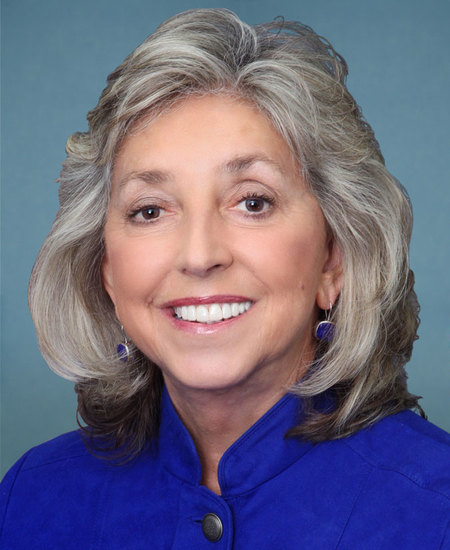
Rep. Dina Titus
Sponsored bills
Maddy summaryThe Supporting Armenians Against Azerbaijani Aggression Act of 2023 authorizes $30 million in U.S. humanitarian assistance for Armenians in Armenia and Nagorno-Karabakh affected by Azerbaijani military actions and blockade. It repeals a longstanding restriction on aid to Azerbaijan, allocates $10 million for military assistance to Armenia, and requires the U.S. government to develop a strategy protecting Armenians' rights in Nagorno-Karabakh. The bill also mandates a report on alleged Azerbaijani atrocities, authorizes $650 million for energy sector development in Armenia, and requires sanctions on Azerbaijani officials responsible for attacks and the blockade of Nagorno-Karabakh.
Maddy summaryThe STORE Act of 2023 amends the Emergency Food Assistance Act to improve how infrastructure grants are distributed to food banks and pantries. It increases annual funding from $15 million to $25 million (2024-2028), prioritizes support for Tribal, low-income, and remote communities, and allows grants to cover mobile delivery services, home delivery, and refrigeration equipment. The bill also requires a report assessing national cold storage and refrigerated truck shortages for emergency food organizations. This directly affects food banks serving underserved areas by expanding their access to funding for critical refrigeration and distribution infrastructure.
Maddy summaryHR 5610 establishes a 15-member Commission to examine historical discrimination against LGBTQ+ service members and veterans. The Commission will document policies targeting LGBTQ+ individuals in the military since WWII, gather testimonies from affected veterans, and analyze impacts on mental health, benefits access, and financial stability. It must hold public hearings, examine how discrimination affected racial minorities and women within the military, and recommend solutions like record corrections, improved benefits for LGBTQ+ veterans, and better diversity training. The Commission will submit a final report to Congress within one year, proposing concrete steps to address past harms and improve inclusion in the military.
Maddy summaryThe CURE Act prohibits federal agencies from denying security clearances or federal employment based on past or present marijuana use. It requires agencies to review all denials made since 2008 for this reason and reconsider applications within 90 days of a request. Affected individuals can appeal denied reconsiderations to the Merit Systems Protection Board, which must resolve appeals within 120 days. The bill specifically excludes marijuana use from disqualification criteria under existing security clearance rules, applying to all federal job applicants and current employees.
Maddy summaryHRES 698 designates the week of September 18-24, 2023, as "Rail Safety Week" in the United States. It expresses congressional support for efforts to reduce highway-rail grade crossing incidents, fatalities, and injuries - directly affecting drivers, pedestrians, and communities near railroad crossings. The resolution encourages public education on rail safety, references existing initiatives like Operation Lifesaver, and cites 2022 data showing 274 deaths at grade crossings. It has no binding effect but promotes awareness through symbolic recognition of ongoing safety campaigns. (HRES 698, introduced September 18, 2023)
Maddy summaryThe United States Legal Gold and Mining Partnership Act establishes a strategy to combat illicit gold mining in the Western Hemisphere, particularly in Latin America and the Caribbean. The strategy requires the Secretary of State to develop a comprehensive plan to interrupt links between artisanal mining and criminal organizations, prevent mining in protected areas, and counter money laundering related to gold trafficking. It promotes formalization of artisanal mining operations, supports indigenous communities affected by mining, and fosters responsible sourcing practices through international partnerships. The bill authorizes $10 million for implementation and directly affects mining communities in countries like Colombia, Peru, Venezuela, and Nicaragua where illicit mining is prevalent.
Maddy summaryHR 5492, the Veteran Families Health Services Act of 2023, provides fertility treatment, counseling, and adoption assistance to military members and veterans with infertility conditions. The bill requires the Department of Defense to offer fertility preservation services like cryopreservation before deployment or hazardous assignments, and to cover fertility treatments including in vitro fertilization for current service members. For veterans, it adds fertility treatment and counseling to VA medical services, allows adoption assistance up to the cost of three adoptions, and mandates coordination between military and VA health systems. These provisions apply regardless of sex, gender identity, sexual orientation, or marital status, and are designed to support military families affected by service-related infertility.
Maddy summaryThe Better CARE for Animals Act of 2023 amends the Animal Welfare Act to strengthen enforcement of animal welfare standards. It gives the Attorney General authority to bring civil cases for violations, including seeking penalties up to $10,000 per day per violation and injunctions to remove or relocate animals. The bill also requires the Secretary of Agriculture and Attorney General to coordinate through a new Memorandum of Understanding, focusing on repeat violators. These changes directly affect dealers, exhibitors, and enforcement agencies by expanding civil enforcement tools and clarifying jurisdiction over rule violations.
Maddy summaryHR 4845, the Food Secure Strikers Act of 2023, amends the Food and Nutrition Act to remove a restriction that previously disqualified workers from the Supplemental Nutrition Assistance Program (SNAP) if they were on strike. The bill changes eligibility rules so that striking workers are no longer automatically ineligible for SNAP benefits solely because they are participating in a labor strike. This change directly affects workers involved in strikes who rely on SNAP for food assistance, ensuring they can access benefits during labor disputes. The key provision removes specific language from Section 6(d) of the Food and Nutrition Act that had barred strike participants from SNAP enrollment.