

Maddy summaryThe Youth, Peace, and Security Act of 2023 requires the U.S. government to increase meaningful youth engagement in peacebuilding and conflict prevention efforts globally. The bill mandates the development of a U.S. Foreign Assistance Youth, Peace, and Security Action Plan within one year, focusing on inclusive participation of diverse youth aged 10-29, particularly marginalized groups including girls, LGBTQI+ youth, and youth with disabilities. It authorizes $5.5 million for grants to youth-led organizations working on peacebuilding, conflict resolution, community violence intervention, and post-conflict recovery. The legislation also establishes a USAID Youth Coordinator role to oversee implementation and requires U.S. foreign assistance programs to integrate youth participation in decision-making processes. The Act aims to address barriers to youth involvement in peace processes while ensuring safety, security, and equitable access to resources for young people in conflict-affected areas.
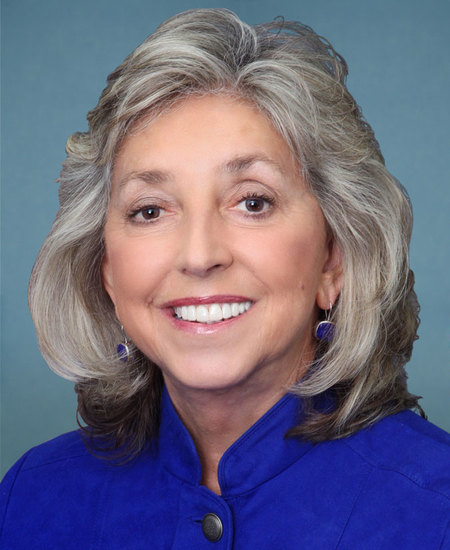
Rep. Dina Titus
Sponsored bills
Maddy summaryHR 5667, the Pay Our Military Act, ensures continued pay and allowances for active-duty military members, reservists, Department of Defense civilians, and qualifying contractors during any government funding gap in fiscal year 2024. It appropriates funds from the Treasury to cover these payments if regular appropriations bills aren't passed before the end of the fiscal year. The funding automatically terminates once regular appropriations are enacted or by January 1, 2025, whichever comes first.
Maddy summaryThis bill replaces "Columbus Day" with "Indigenous Peoples’ Day" as the official federal holiday observed on the second Monday in October. It directly affects federal government operations and all federal documents, rules, or laws that previously referenced "Columbus Day" by automatically updating those references to "Indigenous Peoples’ Day" upon enactment. The key mechanism is a simple amendment to federal law (5 U.S.C. § 6103(a)) to change the holiday name and a provision ensuring all existing federal references to Columbus Day are legally treated as referring to Indigenous Peoples’ Day instead. This is a procedural change to federal holidays and references, not a new policy or program.
Maddy summaryThe Oleksander Ivanov Act of 2023 establishes U.S. sanctions authority targeting individuals and entities responsible for Russia’s forced displacement and illegal adoption of Ukrainian children. It authorizes the President to block property and deny visas to foreign persons involved in forcibly transferring Ukrainian children to Russia, illegally assimilating them, or facilitating trafficking. The bill also directs the U.S. to support Ukraine through programs for trauma care, rebuilding education systems, creating a multilingual registry for missing children, and establishing emergency call centers to combat trafficking. These measures aim to address documented violations of international law, including Russia’s detention of over 6,000 Ukrainian children in occupied territories, with sanctions set to expire after six years.
Maddy summaryThis bill requires the Federal Emergency Management Agency (FEMA) to implement concrete measures to ensure equitable disaster response and assistance. It mandates FEMA to modify data collection systems, develop equity criteria for all programs, appoint an equity advisor, and establish a steering group with diverse representation - all to address barriers faced by underserved communities (including racial minorities, rural areas, low-income populations, and those with disabilities). FEMA must also submit annual reports to Congress on progress and metrics measuring equity impacts, while the GAO will review FEMA’s decision-making factors for disaster declarations. These changes directly affect how FEMA delivers federal disaster aid, aiming to reduce disparities in access and outcomes for communities historically underserved in emergency management.
This resolution requests the Department of State to transmit to Congress a statement on human rights practices in Azerbaijan, including the steps the United States has taken to promote human rights in the region and an assessment of whether circumstances exist that necessitate a continuation of security assistance for Azerbaijan.
Maddy summaryThis bill exempts Purple Heart medal recipients from paying standard passport application fees. It directly affects military veterans who have been awarded the Purple Heart for combat wounds. The key mechanism amends the 1920 Passport Act to add a specific fee waiver for these veterans when applying for passports. This change would reduce costs for eligible veterans seeking to travel internationally using official U.S. passports.
Maddy summaryThe WIC for Kids Act expands eligibility for the Special Supplemental Nutrition Program for Women, Infants, and Children (WIC) by adding new qualifying pathways. It allows children to qualify if they live in households where someone receives Head Start, Indian reservation food assistance, or Puerto Rico/Northern Mariana Islands nutrition block grants, and streamlines documentation by permitting states to use existing records. The bill extends certification periods for children from one to two years and automatically enrolls infants born to current WIC participants. This directly affects low-income families with children who qualify for related assistance programs but previously faced barriers to WIC access.
Maddy summaryThis bill requires federal agencies to mandate that auto manufacturers bidding on vehicle assembly contracts disclose detailed workforce information for each plant involved. Specifically, contractors must provide average and range of hourly wages, temporary worker counts, and any OSHA or National Labor Relations Act violations at each manufacturing location. It also requires written agency permission - and additional disclosures - if a contractor seeks to shift production to a new plant, with notification to affected labor unions. The law directly affects auto manufacturers competing for federal vehicle assembly contracts and aims to increase transparency around labor practices.
Maddy summaryHRES 719 is a symbolic resolution designating the week beginning September 24, 2023, as "National Source Water Protection Week." It does not create new laws or directly affect individuals or entities, but expresses congressional support for raising public awareness about protecting drinking water sources. The resolution highlights the importance of safeguarding water quality and quantity for public health, the environment, and community resilience. It encourages collaboration among local, state, and federal entities to promote water conservation and protection efforts.