

Maddy summaryThe Tribal Access to Clean Water Act of 2023 provides dedicated federal funding to address water infrastructure gaps in Native communities. It allocates $100 million annually (2024-2028) through the USDA for technical assistance and water system construction, $20 million for Indian Health Service sanitation facilities, and $100 million for operation/maintenance of existing water systems. The bill specifically targets tribes and Native Hawaiian communities, requiring no matching funds and prioritizing the most urgent needs. This directly supports tribes in accessing existing infrastructure funding, developing self-sustaining water utilities, and maintaining facilities for public health and safety.
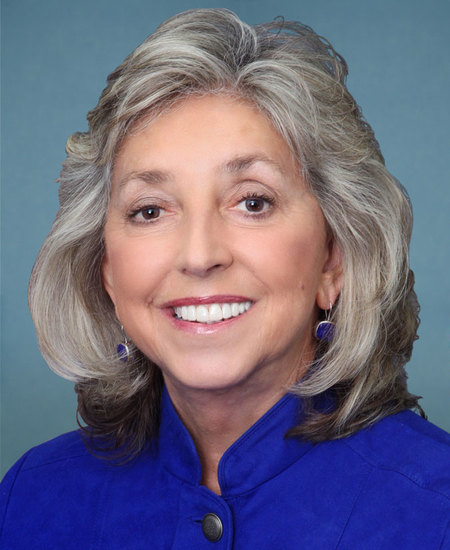
Rep. Dina Titus
Sponsored bills
Maddy summaryThe John R. Lewis Voting Rights Advancement Act of 2023 would strengthen the Voting Rights Act of 1965 by updating the criteria for which states and localities must obtain federal preclearance before changing voting practices. It would establish new standards for proving vote dilution and vote denial by requiring courts to consider historical discrimination, racial polarization in voting, and whether voting practices disproportionately burden minority voters. The bill would also require states and localities to provide public notice of voting changes and share demographic data about polling locations. These changes would primarily affect jurisdictions with a history of voting rights violations, aiming to prevent discriminatory voting practices before they take effect.
Maddy summaryHRES 697 is a non-binding resolution expressing the U.S. House of Representatives' concerns about China's "Made in China 2025" (MIC2025) industrial plan and associated actions. The resolution cites alleged Chinese practices - including state-backed intellectual property theft, forced labor, unfair subsidies, and cyber espionage - as undermining U.S. competitiveness in key technology sectors like semiconductors, AI, and clean energy. It directly affects U.S. businesses, researchers, and government entities operating in these MIC2025 priority areas, urging them to strengthen security measures against foreign interference. The resolution calls for coordinated U.S. public-private efforts to protect innovation but does not impose new legal requirements.
Maddy summaryHR 5517 creates a Capacity Building Grant Program to fund predevelopment activities like planning, community mapping, and feasibility studies, and a HOST (Hospitality and Outdoor-Recreation Supporting Tourism) Grants program to support tourism infrastructure, marketing, and event activities. The bill increases federal funding for Tribal organizations and Native Hawaiian organizations to 100% for HOST grants and sets aside 5% of funding for Tribal communities, 20% for rural areas, and 40% for outdoor recreation. It modifies existing economic development programs to include these new provisions and defines key terms related to tourism and outdoor recreation activities. This legislation directly affects local communities, Tribal organizations, Native Hawaiian organizations, and tourism-related businesses seeking federal economic development support.
Maddy summaryThe Humane Cosmetics Act of 2023 bans cosmetic animal testing in the United States, prohibiting companies from conducting or contracting such testing after its enactment (effective 1 year later). It also bans selling or transporting cosmetics developed using animal testing conducted after that date within U.S. interstate commerce. The law directly affects cosmetic manufacturers, retailers, and suppliers operating in the U.S. market, requiring them to use non-animal testing methods for safety evaluations. Exceptions exist for foreign regulatory requirements or when no alternative testing methods are available for specific ingredients.
Maddy summaryThe No Tax Breaks for Union Busting Act would deny tax deductions for employers who attempt to influence employees' decisions about union activities, including unfair labor practices like firing workers for organizing or using captive audience meetings. It targets expenses related to union-busting tactics, such as consulting fees and other costs used to sway workers' opinions about collective bargaining. Employers would need to report these expenses on tax returns and would no longer be able to deduct them from taxable income. The bill aims to prevent employers from using tax-deductible expenses to influence union elections, aligning with existing rules that deny tax deductions for political spending. It would apply to expenses incurred in taxable years beginning 240 days after enactment.
Maddy summaryThis bill requires the Department of Homeland Security to develop a strategy addressing untraceable firearms (ghost guns), defined as privately made or modified weapons lacking serial numbers. It mandates DHS agencies to produce annual threat reports on ghost gun use in terrorism, analyze cross-border smuggling patterns (especially U.S. firearms recovered in Mexico), and track airport security violations involving such weapons. The law also directs the Secret Service to research prevention methods and requires the Transportation Security Administration to report on firearm violations at checkpoints. These provisions focus on improving interagency coordination and data collection on ghost gun threats, without changing gun ownership laws.
Maddy summaryThis bill creates a new grant program to fund partnerships between Hispanic-serving institutions (HSIs) and local school districts with high Hispanic/Latino enrollment (at least 25% Hispanic/Latino students and 50% poverty rate). It authorizes $150 million for fiscal year 2024 to support specific activities like aligning high school coursework with college requirements, providing college application assistance, addressing non-academic barriers (such as housing and food insecurity), and developing teacher pipeline programs. The grants require eligible partnerships to report on outcomes, disaggregating data by student demographics to measure impact on Hispanic/Latino students' college enrollment, persistence, and completion rates. The program directly affects HSIs, qualifying school districts, and the Hispanic/Latino students they serve, aiming to close educational gaps through targeted collaboration.
Maddy summaryHRES 682 is a symbolic resolution designating the week beginning September 11, 2023, as "National Hispanic-Serving Institutions Week." It does not create new programs or funding but formally recognizes Hispanic-Serving Institutions (HSIs) for their role in educating Hispanic students and underserved communities. The resolution calls for the public to observe the week with ceremonies during Hispanic Heritage Month, highlighting HSIs' contributions to higher education access and economic mobility. This resolution affects no specific entities or policies, as it is purely commemorative.
Tax Simplification for Americans Abroad Act This bill directs the Internal Revenue Service to make available a new tax form for certain U.S. citizens living abroad. The form shall allow such individuals to demonstrate nonresidence, and declare foreign income, foreign taxes paid, and U.S. source income from retirement, pension and social security benefits. The bill also expands the types of income allowed as foreign earned income for purposes of the foreign earned income tax exclusion and sets forth requirements for reporting foreign financial assets.