

Maddy summaryHR 5428, the No Tax Breaks for Union Busting (NTBUB) Act, prevents employers from deducting certain expenses related to influencing workers' decisions about union representation. It targets spending on tactics like anti-union meetings, workplace surveillance, or consultants during organizing campaigns, making these costs non-deductible for tax purposes. Employers must report such expenses on their tax returns, including details about the activities and amounts spent. The bill aims to remove tax incentives for employer interference in union elections, aligning with federal labor law protections for workers' collective bargaining rights.
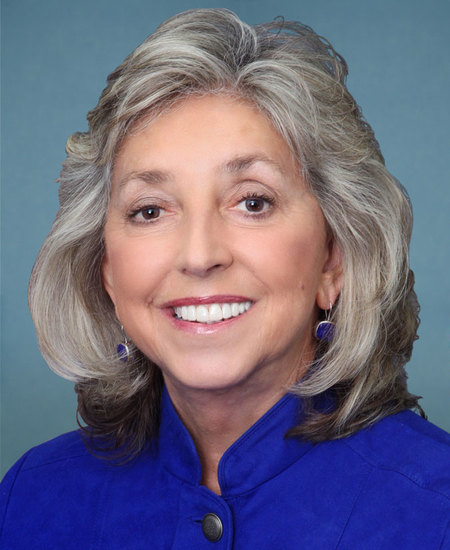
Rep. Dina Titus
Sponsored bills
Maddy summaryHR 3152, the "Fight CRIME Act," aims to maintain international restrictions on Iran's missile-related activities by requiring diplomatic efforts to extend these restrictions before they expire in October 2023. The bill mandates annual reports detailing U.S. diplomatic strategies, potential impacts of expiration, and measures to deter missile technology transfers to Iran. It establishes sanctions against foreign individuals or entities that knowingly support Iran's missile or drone programs, including asset freezes and visa restrictions. These sanctions apply regardless of whether UN restrictions remain in effect after their expiration, directly affecting foreign entities involved in these activities.
Maddy summaryHRES 677 is a symbolic House resolution condemning Russia for actions that worsen global food insecurity. It specifically targets Russia's invasion of Ukraine, including its blockade of Ukrainian Black Sea ports, attacks on grain infrastructure, and suspension of the Black Sea Grain Initiative - measures that disrupted Ukraine's role as a major global grain exporter (supplying 11% of world cereals). The resolution demands Russia cease targeting grain facilities, resume participation in the Grain Initiative, and stop weaponizing food shortages. It affirms that Russia's actions, not sanctions, are the cause of rising global food insecurity, which the resolution links to U.S. national security. This resolution does not enact new laws but formally expresses congressional opposition to Russia's tactics.
Maddy summaryHRES 492 is a congressional resolution condemning the Iranian government's systematic persecution of the Baha'i minority, which directly affects Baha'is in Iran facing arrests, property confiscation, and imprisonment. The resolution specifically calls for Iran to immediately release Baha'is detained for their faith, end state-sponsored hate propaganda against them, and reverse discriminatory policies denying equal access to education, employment, and religious freedom. It urges the U.S. President and Secretary of State to demand Iran’s compliance with international human rights treaties and to use existing sanctions authorities (under the 2010 and 2012 Iran sanctions laws) against officials responsible for these abuses. The resolution does not impose new legal requirements but serves as a formal U.S. government statement of condemnation and a call for diplomatic and sanctions action.
Maddy summaryThis bill requires federal agencies to acquire and maintain opioid overdose reversal kits (like naloxone) and train employees annually on their use, effective within 270 days of enactment. It mandates these actions for all federal agencies - including the Veterans Health Administration - while providing non-mandatory guidance to private employers on similar practices. The law directly affects federal workplaces by making kits and training a requirement, and indirectly encourages private employers to adopt similar safety measures. Key provisions include a 270-day deadline for the Labor Department to issue regulations for federal agencies and non-binding guidance for other employers. The bill focuses on practical workplace safety measures without altering existing federal health or safety laws.
Maddy summaryHR 5369, the Tipped Worker Protection Act, requires employers to pay tipped workers the full federal minimum wage (currently $7.25/hour) instead of the current lower "tip credit" rate ($2.13/hour). It phases in this change over time, starting with a $3.60/hour cash wage in the first year, increasing by $1.50 annually until matching the standard minimum wage. The bill prohibits employers from keeping or using customer tips for any purpose (including covering costs like credit card fees) and mandates that all tips go directly to employees, with new rules governing voluntary tip pools. It directly affects restaurant, bar, and similar service workers who rely on tips for income.
Maddy summaryHR 5322, the Time Off to Vote Act, requires most private employers (with 25+ employees) to provide two consecutive hours of paid leave for employees to vote in federal elections. Employers must grant this leave upon request, can schedule it during early voting periods if permitted by state law, and cannot include lunch breaks in the leave period. The bill prohibits retaliation against employees who take this leave and ensures it does not affect accrued employment benefits. Violations could result in civil penalties up to $10,000 per offense, enforced by the Department of Labor.
Maddy summaryThis bill designates the Peter J. McGuire Memorial and Gravesite in Pennsauken, New Jersey, as the "Peter J. McGuire Memorial National Commemorative Site." It formally recognizes the site's historical significance as the resting place of Peter J. McGuire, a foundational labor leader who co-founded the American Federation of Labor and proposed Labor Day. The designation does not make the site part of the National Park System but allows for cooperative educational programs. The memorial, already listed on both New Jersey and National Registers of Historic Places since 2018-2019, honors McGuire’s role in labor history.
Voters on the Move Registration Act of 2023 This bill requires the Consumer Financial Protection Bureau to develop, and specified agencies to distribute, a statement providing individuals with information on how to register to vote and their voting rights. This information must be provided to individuals upon their participation in certain rental assistance programs or application for certain residential mortgages.
Maddy summaryHR 5293, the Youth Voting Rights Act, would improve voting access for young people aged 18-29 through several concrete changes. The bill requires public colleges and universities to serve as voter registration agencies, establishes pre-registration for 16-year-olds, mandates on-campus polling locations for all institutions of higher education, and prohibits age-based restrictions on voting by mail. It also requires states to accept student ID cards as valid voter identification and provides grants to states for youth voter engagement programs. The bill would collect data on voting trends by age to help identify barriers to youth participation. These changes aim to address systemic barriers that have led to lower youth voter turnout and higher ballot rejection rates among young voters.