

Maddy summaryThe Sustaining Our Democracy Act creates a federal program to provide states with annual funding to improve election administration and increase voting access. It allocates $2 billion each year from 2024-2033 through the State Election Assistance and Innovation Trust Fund to support activities like upgrading voting equipment, training election workers, and expanding voting access for underserved communities, people with disabilities, and voters on Indian lands. States must submit detailed plans for using funds, which cannot be used for activities that restrict voting access or target election officials. The Act establishes an Office of Democracy Advancement and Innovation to administer the program, monitor fund usage, and oversee compliance with its requirements.
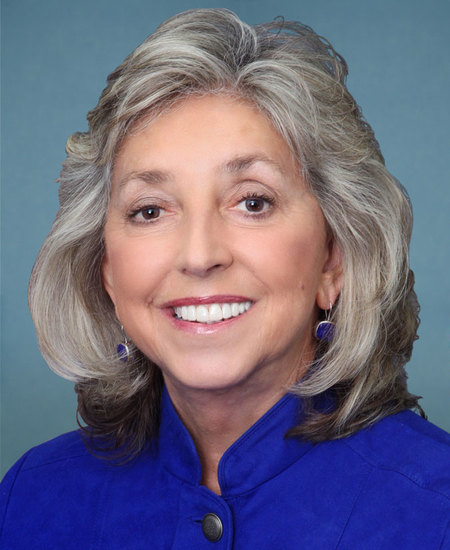
Rep. Dina Titus
Sponsored bills
Maddy summaryHR 5295, the Expanding the VOTE Act, modifies Section 203 of the Voting Rights Act to expand language access for voters. It requires states and localities to provide voting materials (including ballots and instructions) in the language of covered language minority groups, with new provisions for American Indian and Alaska Native languages requiring tribal government consultation for unwritten languages. The bill creates $15 million in grants to help jurisdictions provide voting materials in languages that don’t currently trigger Section 203 coverage, while mandating continued provision for those groups in future elections. It also directs a study to evaluate lowering population thresholds for language protections and expanding the definition of covered languages.
Maddy summaryHCONRES 59 is a non-binding congressional resolution urging all countries to ban the dog and cat meat trade and enforce existing anti-trade laws. It directly affects foreign governments, not U.S. citizens, as it calls on them to adopt legal prohibitions and strengthen enforcement. The resolution cites animal cruelty concerns (including reports of stolen pets and inhumane slaughter) and public health risks (such as rabies and trichinellosis transmission linked to the trade). It does not change U.S. law, as domestic prohibition already exists under the 2018 Agriculture Act. The resolution affirms U.S. support for global animal welfare but has no legal force.
This bill requires various changes to the passport application process and addresses related issues. The bill requires all U.S. regular passports to contain a written notice advising travelers (1) to check travel.state.gov for updated travel warnings, (2) to register with the Department of State prior to overseas travel, (3) that many countries deny entry to travelers whose passport expires within six months, and (4) to renew their passports within at least one year of the expiration date. Further, the bill makes permanent existing State Department authority to assess a surcharge on the passport application fee to cover the costs of increased demand prompted by certain legal requirements. This authority currently expires on September 30, 2026. For three years starting from this bill's enactment, the State Department may use direct hire authority to expedite the hiring of individuals into Passport and Visa Examining positions (Series 0967). Finally, the bill requires the Department of State to report to Congress about passport processing wait times, agency plans for a public outreach campaign, and related information.
Maddy summaryHRES 645 is a non-binding House resolution recognizing August as "Chicano Heritage Month" to celebrate the contributions of Mexican Americans to U.S. history. It highlights historical figures like labor leaders Cesar Chavez and Dolores Huerta, landmark court cases (e.g., *Mendez v. Westminster* ending school segregation), and cultural impacts such as Selena's influence on music. The resolution does not create new laws or policies but serves as a symbolic acknowledgment by the House to honor this heritage. It encourages the public and institutions to observe the month with events celebrating Mexican American contributions.
Maddy summaryThis bill amends the Exceptional Family Member Program (EFMP) to protect transgender dependents of military members. It prohibits assigning service members to locations where local laws restrict medically necessary treatment for transgender dependents, including gender dysphoria, and allows members to request reassignment within 30 days of such a law taking effect. The bill explicitly adds "gender dysphoria" to the list of conditions qualifying as a "medical special need" under the EFMP. This directly affects transgender dependents (spouses or children) and their military-affiliated service members, ensuring access to required care without forced relocation to restrictive jurisdictions.
Providing Essential Temporary Shelter Assistance For Emergencies Act of 2023 or the PETSAFE Act of 2023 This bill directs the Federal Emergency Management Agency (FEMA) to establish a pilot program to provide grants for mobile pet shelters during emergencies and major disasters. FEMA may provide funds to state, local, and tribal governments to establish a new pet shelter site that is a mobile unit, which may be a companion animal mobile equipment trailer, to be used in case of evacuation due to emergencies and major disasters. FEMA's authority to approve projects under this bill shall cease on January 1, 2029.
Maddy summaryHR 4249, the VET PFAS Act, provides healthcare benefits to veterans and their families exposed to PFAS chemicals at military bases. Veterans who served at contaminated bases (including through water sources) and developed specific conditions like testicular cancer, ulcerative colitis, or pregnancy-induced hypertension become eligible for VA healthcare without needing medical proof of cause. Family members who lived at these bases or were in utero during such residence also qualify for covered conditions. The bill creates a "presumption of service connection" for these illnesses, meaning the VA assumes PFAS exposure caused the condition. It requires annual VA reports tracking beneficiaries, denials, and conditions treated.
Maddy summaryThis bill authorizes increased federal funding for early childhood special education programs under the Individuals with Disabilities Education Act (IDEA). It specifically restores funding for Part C (services for infants and toddlers with disabilities) and Section 619 (preschool programs for children with disabilities ages 3-5) by setting annual appropriations from $503 million to $1.22 billion for Section 619 and $932 million to $1.73 billion for Part C through 2028. These funds would directly support states in delivering high-quality early intervention and preschool services to children with disabilities and their families. The bill aims to reverse decades of reduced per-child funding, which had fallen significantly from historical highs.
This resolution expresses that the International Atomic Energy Agency plays an indispensable role in strengthening nuclear security and safety around the globe. The resolution also reaffirms that the United States has a vital interest in preventing the spread of nuclear weapons and securing nuclear materials.