

Maddy summaryHRES 668, the BUDS Resolution, amends House rules to allow bipartisan joint sponsorship of public bills and resolutions by one majority-party and one minority-party member. This change directly affects House members seeking to co-sponsor legislation with cross-party support, updating the existing rules for naming cosponsors and submitting constitutional authority statements. The key mechanism requires that for joint sponsorship, one sponsor must represent the majority party and the other the minority party, with both sponsors sharing responsibility for related procedural steps. This procedural adjustment streamlines the process for bipartisan co-sponsorship without altering legislative policy.
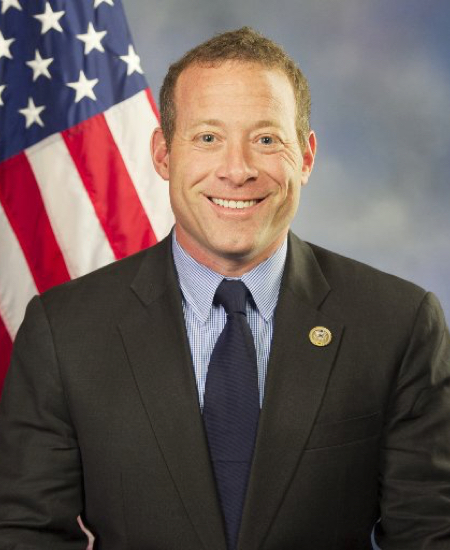
Rep. Josh Gottheimer
Sponsored bills
Maddy summaryThis bill designates the Peter J. McGuire Memorial and Gravesite in Pennsauken, New Jersey, as the "Peter J. McGuire Memorial National Commemorative Site." It formally recognizes the site's historical significance as the resting place of Peter J. McGuire, a foundational labor leader who co-founded the American Federation of Labor and proposed Labor Day. The designation does not make the site part of the National Park System but allows for cooperative educational programs. The memorial, already listed on both New Jersey and National Registers of Historic Places since 2018-2019, honors McGuire’s role in labor history.
Maddy summaryThis bill requires infant formula manufacturers to immediately notify federal health officials within 24 hours if they know a product may lack required nutrients, is unsafe, or contains pathogens like bacteria. It mandates that the Director of the Office of Critical Foods contact manufacturers within 72 hours of receiving such a notification to discuss fixes, and confirms corrective actions within 90 days. Manufacturers must halt distribution of unsafe formula immediately upon health risk determination. The bill directly affects infant formula producers by imposing strict timing requirements for safety notifications and responses, with annual congressional reports tracking response times. It modifies existing food safety law (21 U.S.C. 350a) to accelerate action on potential infant formula risks.
Maddy summaryThe Fire Grants and Safety Act of 2023 reauthorizes and increases funding for key federal fire safety programs. It extends the Assistance to Firefighters Grants Program and Fire Prevention and Safety Grants Program through 2030 (from 2024) with $750 million annually for fiscal years 2024-2028. The bill also reauthorizes the United States Fire Administration at $95 million per year (including $3.42 million for specific activities) and mandates a GAO audit within three years to assess barriers to accessing federal funds and the U.S. Fire Administration's operations. These provisions directly affect state and local fire departments eligible for federal grants.
Maddy summaryHR 4909, the SNAP Nutrition Security Act of 2023, amends the Food and Nutrition Act to improve data collection and reporting on SNAP (Supplemental Nutrition Assistance Program) usage. It requires the USDA to collect store-level point-of-sale data on specific food items purchased with SNAP benefits and mandates annual reports analyzing food security, nutrition security, and diet quality for SNAP participants. The bill also directs states to include actions taken to improve food and nutrition security in their annual reports to Congress. These changes aim to inform future SNAP policy decisions by providing detailed data on purchasing patterns and program effectiveness, without altering current benefit levels or eligibility.
Maddy summaryThis bill expands the Gus Schumacher Nutrition Incentive Program (GusNIP) to increase access to healthy food for low-income SNAP participants. It raises the incentive funding percentage from 50% to 80% for eligible purchases, creates new cooperative agreements to scale state programs (requiring 90% of funds to be used for redeemed incentives at retailers), and expands a produce prescription program where healthcare providers can refer patients to buy fresh produce. The bill allocates increased annual funding through 2029, including $57.5 million annually for 2024-2028, and requires a study on transitioning produce prescription costs to health insurance within 10 years. It directly affects SNAP recipients, participating retailers (including farmers markets), and community health centers.
Maddy summaryThis bill expands SNAP eligibility for college students by modifying existing rules. It allows students attending higher education institutions (as defined by the Higher Education Act) to qualify for SNAP benefits if they have a zero expected family contribution (EFC) from FAFSA or meet specific criteria for independent student status under the Higher Education Act. The changes replace outdated language about "employment" with "attending school or working" and remove barriers that previously excluded many low-income students. This directly affects low-income undergraduate and graduate students who may face food insecurity while enrolled in college. The policy change takes effect 180 days after enactment.
Maddy summaryThis bill requires the Bureau of Prisons to develop and implement a strategy for scanning all incoming mail at federal prisons to stop fentanyl and other synthetic drugs from entering facilities. It directs the Bureau to evaluate existing scanning technology within 180 days and submit a detailed plan to Congress within 90 days, including how to provide digital copies of mail to inmates within 24 hours and physical copies within 30 days (if safe). The strategy must achieve 100% mail scanning capacity at all federal prisons, prioritize high-security facilities, and include a budget proposal for fiscal years 2024-2026. This directly affects federal prisons, inmates, and Bureau employees by changing mail processing procedures to enhance safety and reduce staffing burdens from manual mail checks.
Maddy summaryHR 5295, the Expanding the VOTE Act, modifies Section 203 of the Voting Rights Act to expand language access for voters. It requires states and localities to provide voting materials (including ballots and instructions) in the language of covered language minority groups, with new provisions for American Indian and Alaska Native languages requiring tribal government consultation for unwritten languages. The bill creates $15 million in grants to help jurisdictions provide voting materials in languages that don’t currently trigger Section 203 coverage, while mandating continued provision for those groups in future elections. It also directs a study to evaluate lowering population thresholds for language protections and expanding the definition of covered languages.
Maddy summaryHR 5238 (PLAY Act of 2023) expands the child and dependent care tax credit to cover expenses for youth physical activities (e.g., fitness memberships, activity fees, and equipment) for dependents aged 4-18, with a $1,000 annual limit per taxpayer (or $2,000 for joint returns). It also increases the annual limit for employer-sponsored dependent care flexible spending arrangements from $10,000 to $12,000 for single parents. The bill creates a new $100 million HHS grant program (2024-2025) to fund recreational youth sports programs that reduce family costs, promote physical activity, and avoid competitive/elite sports or facility construction. These provisions directly affect families with children participating in non-competitive physical activities and eligible organizations like local governments or nonprofits.