

Maddy summaryThis bill reorganizes collective bargaining rules for Veterans Health Administration (VHA) employees by removing existing subsections (b), (c), and (d) from Section 7422 of Title 38 and redesignating the current subsection (e) as (b). It directly affects VA health care employees by altering the structure of their collective bargaining framework. The bill explicitly states it does not change the Secretary of Veterans Affairs' existing authorities over incentive pay or expedited hiring under Section 706 of Title 38. The change is purely procedural, focusing on the internal organization of bargaining rules without introducing new employee benefits or obligations.
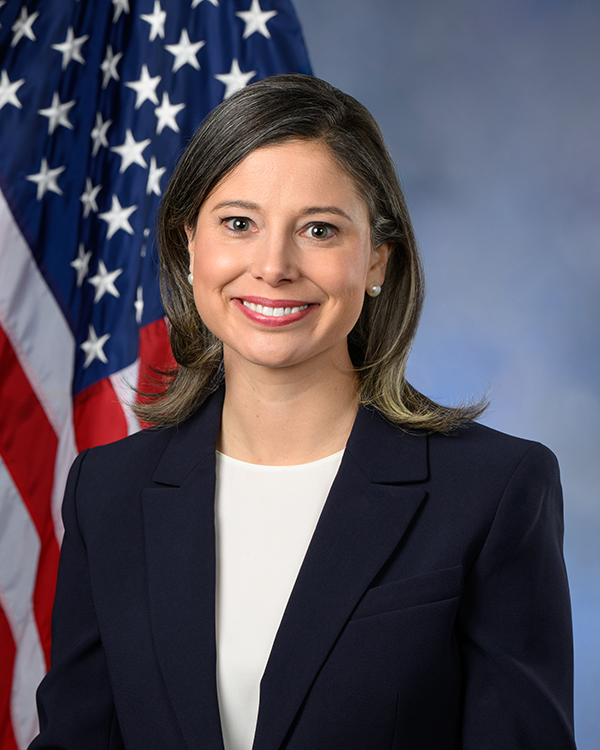
Rep. Maggie Goodlander
Sponsored bills
Maddy summaryThis bill amends the Workforce Innovation and Opportunity Act (WIOA) to prioritize digital literacy skills in adult education programs. It defines "digital literacy skills" using existing federal standards and requires WIOA-funded programs to integrate these skills into their services for adults seeking employment, economic self-sufficiency, or community participation. Key provisions mandate that programs must now include training in digital technology use, problem-solving with digital tools, and parental support for children's learning through digital skills. The bill directly affects adult education and workforce programs serving low-income adults, job seekers, and parents across all states.
Maddy summaryThis bill prohibits the U.S. military from discriminating against service members or applicants based on gender identity. It bans policies that would deny service, involuntarily separate members, deny medically necessary healthcare, or require service in a gender different from one's identity. The law defines "gender identity" broadly to include a person's internal sense of gender, appearance, and mannerisms, regardless of sex assigned at birth. It directly affects transgender and gender-diverse individuals currently serving or seeking to serve in the Armed Forces.
Maddy summaryHR 3564, the Nuclear First-Strike Security Act of 2025, requires the President to notify key congressional leaders at least seven days before authorizing a first-use nuclear strike (using nuclear weapons without prior attack on the U.S. or allies). This applies unless the strike occurs under a congressional declaration of war, in response to a nuclear attack on the U.S. or an ally (defined as NATO, Japan, South Korea, or Australia), or during a launch-on-warning scenario. The bill mandates the Secretary of Defense to certify the strike's legality and necessity to congressional leaders before execution. It directly affects the President and Defense Department, adding a formal congressional notification step to nuclear decision-making. The law aims to create a deliberate review period for the most extreme military action.
Maddy summaryThis bill modifies eligibility rules for military reservists and National Guard members who work as civilian federal employees. It removes a current restriction that prevents these service members from enrolling in TRICARE Reserve Select (TRS), a military healthcare plan, while also participating in the Federal Employee Health Benefits (FEHB) program. Starting January 1, 2026, eligible members of the Selected Reserve and National Guard will be able to enroll in TRICARE Reserve Select, providing continuity of care during mobilization. The change directly affects these service members and their families, ensuring they have access to consistent healthcare coverage. The bill amends an existing expiration date in federal law to implement this change.
Maddy summaryThis bill would establish 18-year fixed terms for all Supreme Court justices, replacing lifetime appointments. It requires the President to nominate one justice every two years (during first and third years after presidential elections), with Senate confirmation within 90 days, and prohibits reappointments after a single term. Current justices would be phased out in order of seniority as new justices are appointed under this schedule. The bill directly affects all sitting and future Supreme Court justices by mandating term limits and a structured appointment process.
Clinical Trial Modernization Act This bill authorizes a grant program and provides certain exemptions to support the participation of individuals in clinical trials. Specifically, the bill authorizes a grant program to support outreach, education, and recruitment efforts for clinical trials that may benefit certain underrepresented populations or communities in need, such as rural or tribal areas. The bill also exempts from anti-kickback laws for federal health care programs (1) remuneration that is offered to cover participants' expenses to participate in clinical trials, (2) the provision of free digital health technologies to support participation of underrepresented populations in clinical trials, and (3) payment for participants' cost-sharing obligations in relation to clinical trials. Finally, the bill exempts up to $2,000 in remuneration that is received for participating in a clinical trial from income tax.
Maddy summaryThe ASSIST Act of 2025 amends the VA’s definition of medical services to explicitly include medically necessary automobile adaptations for veterans. It directly affects veterans with mobility needs who require modifications like ramps, wheelchair lifts, raised doors, or accessibility features to safely operate vehicles. The bill adds these specific adaptations - such as ingress/egress modifications and non-articulating trailers - to the list of VA-covered medical services under Title 38. This change ensures veterans can access these transportation aids without additional administrative hurdles, streamlining coverage for essential mobility support.
Maddy summaryThe Forest Conservation Easement Program Act of 2025 establishes a new federal program to conserve forest land through easements. The program provides cost-share assistance (50-75% of fair market value) for eligible entities to purchase forest land easements or for the Secretary to purchase forest reserve easements directly. It requires forest management plans for enrolled land, prioritizes protection of endangered species habitat, and sets aside 10% of annual funding for beginning, socially disadvantaged, veteran, and limited resource forest landowners. The program replaces the Healthy Forests Reserve Program and allocates $100 million annually from 2026-2030 for implementation.
Maddy summaryThis bill restores a tax deduction for personal losses caused by disasters, crimes, or scams (like stolen property or damage from hurricanes). It directly affects taxpayers who filed returns before 2025 but couldn’t claim this deduction due to a prior suspension. The bill reinstates the deduction and extends the deadline to file refund claims for these losses until the tax filing deadline for the year the bill becomes law. This allows eligible individuals to claim refunds they were previously barred from receiving.