

Maddy summaryHR 3459, the Empty Lots to Housing Act, allows local transportation agencies to transfer unused government-owned land (acquired with federal transportation funds) to develop affordable housing near transit. The bill requires that 40% of units built on this land must be affordable for households earning ≤60% of the area median income, with at least 20% reserved for those earning ≤30% of the median income. Transfers to third parties are permitted only if local entities can't take the land and the deal offers greater public benefit than government sale. This directly affects low- and moderate-income families by creating new affordable housing opportunities on previously underutilized public land.
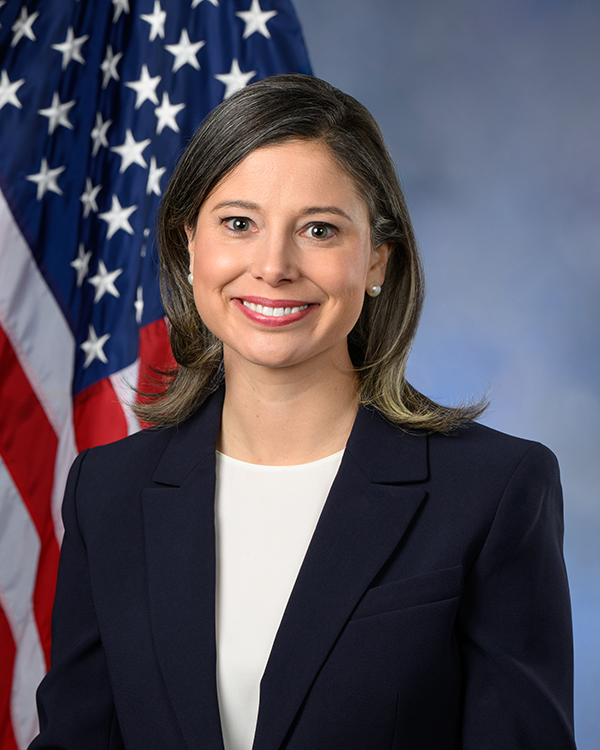
Rep. Maggie Goodlander
Sponsored bills
Maddy summaryThe EAGLE Act of 2025 establishes a $10 million federal grant program to help small local law enforcement agencies (under 350 employees) pay for accredited certification. Agencies must apply demonstrating financial need and specify costs for accreditation fees, on-site assessments, or extension fees charged by recognized bodies like CALEA. Grant funds cover only direct costs related to achieving or maintaining accredited status, not general operations. The program requires the Attorney General to set up the grants within 90 days of the bill becoming law.
Maddy summaryHR 3367, the "Improving Training for School Food Service Workers Act of 2025," requires school food service workers in public schools to receive mandatory training during paid working hours. The bill mandates that training must be offered in-person when appropriate, include hands-on practice, and cost workers nothing. If training occurs outside regular hours, workers must be paid at their regular rate (including overtime), consulted about scheduling, and protected from penalties for not attending. This law amends the Child Nutrition Act of 1966 and does not override existing state or local labor laws governing employer-employee relationships.
Saving Our Veterans Lives Act of 2025 This bill requires the Department of Veterans Affairs (VA) to implement a program to provide, upon request, a firearm lockbox (or voucher for such item) to eligible individuals. Currently, there is a pilot program under which certain veterans may be prescribed a lockbox by a VA clinician. The VA must also provide information with respect to the benefits of and options for secure firearm storage. The VA must develop an informational video on the secure storage of firearms as a suicide prevention strategy and publish the video on its website. Additionally, the VA must publish information to inform individuals who participate in the lockbox program that such lockboxes are not for resale. The VA must also implement a public education campaign to educate eligible individuals about the availability of lockboxes under the program and that participation in the program does not affect the rights of an individual with respect to the lawful ownership of a firearm.
Maddy summaryHR 3270, the Air Traffic Control Workforce Development Act of 2025, aims to strengthen the pipeline of air traffic controllers by improving training programs and retention. It provides $20 million annually (2026-2031) for colleges to develop specialized curricula and equipment through the Enhanced-Collegiate Training Initiative program, allowing graduates to be hired noncompetitively as controllers. The bill also establishes a committee to modernize training curricula and the Air Traffic Skills Assessment exam, while creating retention bonuses for certified controllers and mental health training for medical examiners. These changes directly affect colleges offering air traffic control programs, prospective controllers, and current FAA air traffic controllers.
Maddy summaryThe SERVICE Act of 2025 creates a federal grant program to fund local veteran response teams within law enforcement agencies. These teams, composed of veteran officers and community partners, will provide 24/7 crisis response for at-risk veterans, coordinate with the Department of Veterans Affairs, and offer mental health training focused on military-related issues like PTSD. The program directly affects veterans in crisis and law enforcement agencies that receive grants to establish these teams. It requires teams to track outcomes and share best practices, with funding tied to existing crime control grants for fiscal years 2026-2030.
Maddy summaryHR 3304, the Providing Child Care for Police Officers Act of 2025, establishes a federal grant program to help law enforcement agencies provide child care for officers' minor children during nonstandard shifts. The program awards competitive 3-year grants to state or local "lead agencies" (like state child care offices) to fund child care services through eligible law enforcement agencies or consortia, with 20% of funds reserved for small agencies (under 200 officers). Grants cover startup costs, provider training, sick child care, facility construction, and other needs, requiring local matching funds (10% to 33% over three years). The program is authorized for $24 million annually from 2026-2030 and includes studies to evaluate its impact on child care access for officers and other first responders.
Maddy summaryHR 3243, the Therapeutic Fraud Prevention Act of 2025, bans the provision of paid conversion therapy aimed at changing a person's sexual orientation or gender identity, and prohibits advertising such therapy as effective, safe, or without risk. It directly affects LGBTQ+ individuals and their families who might be targeted by these practices, as professionals have determined conversion therapy is ineffective and harmful. The law treats violations as deceptive acts under consumer protection laws, empowering the Federal Trade Commission and state attorneys general to enforce it through civil actions. It explicitly excludes legitimate gender transition support and non-discriminatory counseling from the ban.
Maddy summaryThe ACES Act (HR 530) mandates a study by the National Academies to examine cancer rates and deaths among veterans who served as aircrew members (e.g., pilots, navigators) in fixed-wing military aircraft. The study will identify potential exposure risks (like chemicals) linked to 12 specific cancers (including brain, lung, prostate, and melanoma) and use VA, DoD, and CDC data to analyze prevalence and mortality. It does not change benefits or laws but requires a final report to the VA and congressional committees. The study directly affects veterans with the defined aircrew service history.
Maddy summaryHR 3178, the Save Healthcare Workers Act, creates a new federal crime for assaulting hospital staff while they are performing their duties, with penalties including fines and up to 10 years in prison (up to 20 years for aggravated cases involving weapons or injuries). The bill directly affects hospital employees - including nurses, doctors, and support staff - across all covered facilities (such as emergency rooms, long-term care centers, and children’s hospitals) by criminalizing violence that disrupts patient care. It also establishes a $25 million annual grant program (2025-2034) to help hospitals implement safety measures like staff de-escalation training, security technology, and coordination with local law enforcement. These provisions aim to address workplace violence in healthcare settings, which the bill cites as a growing problem affecting service delivery and staff retention.