

Maddy summaryThe Words Matter Act of 2023 replaces the outdated term "mental retardation" with "intellectual disability" across numerous federal laws and regulations. It amends over 20 provisions in the U.S. Code, Social Security Act, and other statutes - including healthcare, disability programs, and legal definitions - to update terminology used in areas like nursing home care, criminal justice, and federal grants. The bill explicitly states this is a purely linguistic change, not a policy shift, and does not alter eligibility, benefits, or program requirements for individuals with intellectual disabilities. It affects all federal programs and legal references that previously used the terms "mental retardation," "mentally retarded," or "developmentally disabled."
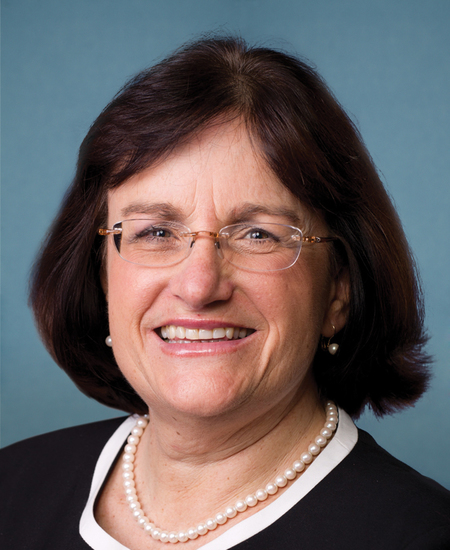
Rep. Ann M. Kuster
Sponsored bills
Helping Our Heroes Act This bill allows a charitable tax deduction for the service of bona fide volunteer firefighters and emergency medical and rescue personnel. The amount of the deduction is $20 for each hour of service provided by such personnel, limited to 300 hours with respect to any individual in a taxable year. The deduction is available to taxpayers who do not otherwise itemize their deductions.
Maddy summaryHR 3073 creates a federal grant program to fund community-based mental wellness and resilience initiatives. It provides planning grants (up to $250,000) for organizations to form community networks and assess needs, followed by program grants (up to $500,000 annually for 4 years) to implement evidence-based programs. The bill requires grantees to use a public health approach, collect community input, and develop strategic plans addressing protective factors and risk factors for mental wellness. At least 20% of funds must support rural communities, and programs must involve diverse community groups like schools, faith organizations, health professionals, and local government. The bill authorizes $36 million over 2024-2028 to support these community-led efforts.
Maddy summaryThis bill removes a restriction that previously barred people in jail or prison while awaiting trial from receiving Medicaid health benefits. It directly affects individuals in custody pending legal proceedings by allowing states to provide Medicaid coverage for their medical care during this time. The bill also allocates $50 million in planning grants to help states develop systems to enroll these individuals, recruit healthcare providers who can serve them, and establish electronic billing for services provided in correctional facilities or through outpatient care. Key provisions require states to assess healthcare needs, eliminate policy barriers, and create plans to increase provider participation in Medicaid for this population.
Stop The Overuse of Petitions and Get Affordable Medicines to Enter Soon Act of 2023 or the STOP GAMES Act of 2023 This bill specifies factors that the Food and Drug Administration (FDA)must use in determining if a petition is submitted with the primary purpose of delaying the approval of a pending new or generic drug application. (Current law allows third parties, including interested parties, to file petitions asking the FDA to take various actions, such as to consider certain issues pertaining to an application for market approval for a drug; current law also allows the FDA to deny a petition that is submitted with the primary purpose of delaying approval of an application.) The factors include (1) whether the petitioner filed serial petitions raising issues that could have been known to the petitioner when an earlier petition was filed, and (2) whether the petition has any data or information to support its scientific positions. If the FDA finds that delay is the primary purpose of the petition, it must refer the matter to the Federal Trade Commission. A party filing a petition must do so within 60 days of when the party first learned of the information on which the petition is based.
Maddy summaryHR 3008, the Drug Shortage Prevention Act of 2023, requires manufacturers of critical essential medicines (like life-saving or emergency drugs) to notify the FDA earlier about potential supply disruptions. Specifically, manufacturers must report permanent production stops, interruptions, or unexpected demand spikes (not seasonal) at least six months in advance for production issues, or within 48 hours for sustained demand increases. The notification must include reasons, ingredient sources, alternative suppliers, and expected duration. The FDA will then share this information with healthcare providers and patient groups to help manage shortages. This law applies to drugs critical for life-sustaining care, excluding certain radio pharmaceuticals.
Maddy summaryThe SAFE Banking Act of 2023 would protect banks and financial institutions that provide services to state-legal marijuana businesses and hemp-related businesses by preventing federal regulators from taking adverse actions against them solely for serving these businesses. It clarifies that income from state-legal marijuana businesses can be considered for mortgage applications, and requires regulators to update guidance on suspicious activity reports related to these businesses. The bill does not require financial institutions to serve these businesses, but ensures they won't face penalties for doing so. It extends similar protections to hemp-related businesses, which have faced banking challenges despite being federally legal under the 2018 Farm Bill.
Maddy summaryThis bill prohibits forced arbitration for race discrimination claims under federal, tribal, state, or local law. It makes pre-existing arbitration agreements unenforceable for disputes involving discrimination based on race, color, or national origin, allowing affected individuals to pursue cases in court instead. The law directly impacts employees, job applicants, and others facing alleged race discrimination who would otherwise be barred from court by mandatory arbitration clauses. It requires courts - not arbitrators - to decide if the law applies to a dispute, ensuring legal clarity for affected parties.
Maddy summaryThis bill establishes a Space National Guard as part of the organized militia in states, territories, Puerto Rico, and D.C. where the Space Force operates, creating two distinct components: state-level "Space National Guard" forces and a federal "Space National Guard of the United States" that serves as the Space Force's reserve component. It defines these terms in federal law, clarifies their structure (including personnel requirements and status when not on active duty), and requires implementation within 18 months, with annual congressional briefings on progress. The bill does not create new missions or funding but formalizes existing National Guard roles within the Space Force framework.
Maddy summary# Summary of EDUCATORS for America Act Provisions This comprehensive legislation makes significant changes to educator preparation, certification, and support systems, with a strong focus on loan forgiveness and retention of educators in high-need settings. ## Key Provisions: 1. **Enhanced Loan Forgiveness Programs**: - Creates new "Educator Loan Forgiveness Programs" under sections 428J and 460 of the Higher Education Act - Provides 100% loan forgiveness for educators who complete 5 years of qualifying service in high-need schools or early childhood education programs - Offers monthly loan forgiveness/cancellation during the service period (in addition to annual forgiveness) 2. **Expanded Eligibility**: - Defines "high need school" as schools where: * Over 30% of students meet poverty measures * School is identified for comprehensive support * School is Bureau of Indian Education funded * School is operated by Tribal educational agencies - Includes Tribal early childhood programs, Native Hawaiian education systems, and Bureau of Indian Education programs as eligible settings - Special rule for educators providing instruction in Native American languages 3. **"Qualifying Educator" Definition**: - Includes elementary/secondary teachers (with full certification) - Includes school leaders (with full certification) - Includes early childhood educators and program directors - Includes educators working in Native American language instruction regardless of certification status 4. **New Support Programs**: - Centers of Excellence for teacher preparation at institutions serving underrepresented populations - Recruitment and completion grants for underrepresented students in education - Resiliency grants for technology integration and educator workforce partnerships - Doctoral fellowships to diversify faculty in high-need education areas 5. **Implementation Details**: - Monthly loan credit program for eligible educators in income-driven repayment plans - Allows counting of partial service years under specific conditions - Prevents double benefits with other service programs - Allows for promotions within qualifying schools without losing eligibility This legislation aims to create a more diverse, stable, and well-prepared educator workforce by reducing financial barriers to entering and remaining in the education profession, particularly in high-need schools and early childhood education settings.