

Targeting Resources for Equitable Access to Treatment for Long COVID Act or the TREAT Long COVID Act This bill requires the Department of Health and Human Services to award competitive grants to create or expand the capacity of clinics that treat patients with persistent, long-term symptoms following recovery from acute COVID-19 (i.e., Long COVID) and associated conditions. Eligible recipients include federally qualified health centers, rural health clinics, urban Indian health centers, and state and local health departments.
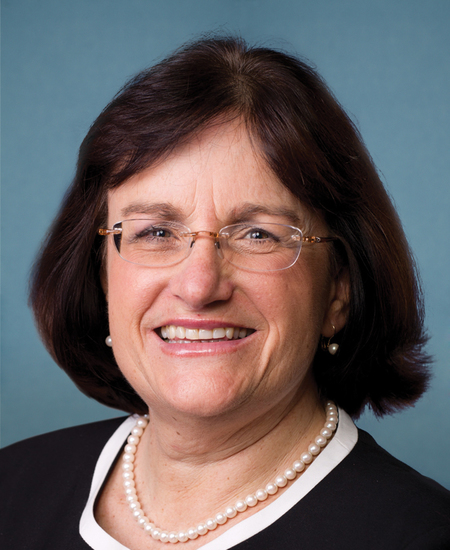
Rep. Ann M. Kuster
Sponsored bills
Maddy summaryThe BIDIRECTIONAL Act establishes a $500 million federal grant program to support electric school buses with bidirectional energy capabilities, allowing them to supply power back to the grid. Eligible entities like school districts, utilities, and manufacturers can apply for grants to cover costs related to bidirectional charging infrastructure and vehicle retrofits, with requirements for demonstrating economic viability and replicability. The bill also amends existing law to require states to consider implementing policies that enable vehicle-to-grid integration, including fair compensation for energy exported from vehicles to the grid. This legislation aims to create new revenue opportunities for schools while advancing grid resilience through innovative electric vehicle technology.
Health Center Service Expansion and Provider Shortage Reduction Act This bill provides funding through FY2028 for certain services under the Community Health Center Program, which supports outpatient health care facilities that provide comprehensive primary care to medically underserved populations. It also provides funding through FY2028 to expand the National Health Services Corps, which provides scholarships and student loan repayment awards to health care providers who agree to work in areas with health care provider shortages. In particular, the bill requires that health centers provide behavioral health, mental health, and substance use disorder services and provides funding for those services. (Currently, centers may provide those as additional services.) Furthermore, the bill provides funding for (1) expanding the operating hours of community health centers; and (2) New Access Point Grants, which assist centers to establish new delivery sites for care.
Maddy summaryThe PAST Act of 2023 amends the Horse Protection Act to ban specific devices used to cause pain (soring) in horses at shows, particularly affecting Tennessee Walking Horses, Racking Horses, and Spotted Saddle Horses. It defines prohibited "action devices" (like boots or chains causing friction) and requires licensed, conflict-free inspectors at events to enforce rules. The bill increases penalties for violations to up to $5,000 fines or 3 years in jail, and mandates longer disqualifications for repeat offenses (180 days → 1 year → 3 years). Horse show organizers, exhibitors, and participants must comply with these new inspection and penalty requirements.
Maddy summaryHR 3240 grants a federal charter to the Veterans Association of Real Estate Professionals (VAREP), a California-based nonprofit already recognized as a veterans service organization under IRS tax law. The bill establishes specific rules for VAREP, requiring it to maintain its tax-exempt status, submit annual reports to Congress, and follow restrictions like not issuing stock, making political contributions, or claiming government authority. VAREP must continue its existing mission of supporting veterans through financial literacy programs, housing assistance (including foreclosure prevention), workforce development, and suicide awareness initiatives. This charter does not create new government benefits but formally recognizes and regulates this specific organization's federal status.
Maddy summaryHR 3238, the Affordable Housing Credit Improvement Act of 2023, updates the Low-Income Housing Tax Credit (LIHTC) program to increase the availability of affordable housing across the United States. The bill makes several key changes including increasing state funding formulas, modifying tenant eligibility rules to better serve vulnerable populations (such as domestic violence victims and students), and expanding credit eligibility for projects in rural and Native American communities. Specific provisions raise the credit for properties serving extremely low-income households, clarify rules around tenant income increases, and require housing providers to protect victims of domestic violence. The bill also updates terminology from "low-income" to "affordable" throughout the tax code and enhances program transparency through data sharing requirements. These changes aim to make the LIHTC program more effective at creating and preserving affordable housing units for low-income households nationwide.
Maddy summaryThe Pay Our Correctional Officers Fairly Act adjusts pay for Bureau of Prisons employees currently assigned to the "Rest of U.S." pay locality. It directs that if an employee's worksite is within 200 miles of another pay locality, they will be paid according to the nearest locality with the highest pay rate - replacing the lower "Rest of U.S." rate. This applies to correctional officers and other Bureau of Prisons staff, but excludes employees whose worksite is more than 200 miles from any other locality. The change takes effect 180 days after the bill is enacted.
Maddy summaryThe HELPER Act of 2023 creates a new FHA mortgage insurance program specifically for first responders and K-12 teachers. It allows eligible first-time homebuyers in these professions to secure mortgages with 100% financing (no down payment required) for purchasing or repairing a primary residence. To qualify, applicants must be employed as law enforcement, firefighters, paramedics, or K-12 teachers, have completed housing counseling, and meet specific employment history requirements (e.g., 4 years in the role or disability-related release). The program authorizes $660,000 for fiscal year 2024 and $160,000 annually through 2030, with authority expiring after 5 years.
Maddy summaryHR 3148, the POWER Act, provides $20 million in federal grants to state, local, and Tribal law enforcement agencies to purchase chemical screening devices and train staff. The devices identify narcotics like fentanyl, methamphetamine, and synthetic opioids, helping officers quickly and safely analyze seized substances. Agencies must use funds to supplement, not replace, existing budgets and submit annual reports on device usage and effectiveness. The bill directly affects law enforcement agencies by enhancing their ability to investigate drug cases and share data with other agencies.
Maddy summaryHRES 362 is a symbolic House resolution recognizing elementary and secondary school teachers' contributions to U.S. civic, cultural, and economic well-being. It specifically thanks teachers and encourages students, parents, school leaders, and officials to acknowledge National Teacher Appreciation Week (May 8-12, 2023). The resolution has no binding effect or policy changes - it solely promotes public appreciation for the teaching profession through a formal expression of gratitude. It directly affects teachers by affirming their societal value but does not alter laws, funding, or educational standards.