

Rebuild Rural America Act of 2021 This bill directs the Department of Agriculture (USDA) to establish the Rural Innovation and Partnership Administration and the Rural Future Partnership Fund to provide five-year renewable rural partnership block grants to certified rural regions to implement locally-developed regional revitalization plans. For purposes of these grants, the following areas may constitute a rural region: a micropolitan statistical area (i.e., at least 10,000 but fewer than 50,000 people); a collection of rural census tracts or counties that fall outside of a micropolitan or metropolitan statistical area (i.e., 50,000 people or more) and that demonstrate evidence of economic, social, and cultural cooperation; or an Indian reservation. To be eligible to receive a grant, a rural region must be certified by its state (or in the case of an Indian reservation, approved by USDA) after having formed a rural partnership council made up of representatives from across different sectors. USDA must provide each rural partnership council with training, education, support, and advice to enhance the technical assistance, research, organizational, and other capacities of the council. The bill also establishes a Rural Future Corps to (1) help rural communities expand critical services such as child care, health, nutrition assistance, education, and job training; and (2) strengthen the capacity of local governments and economic and community development organizations.
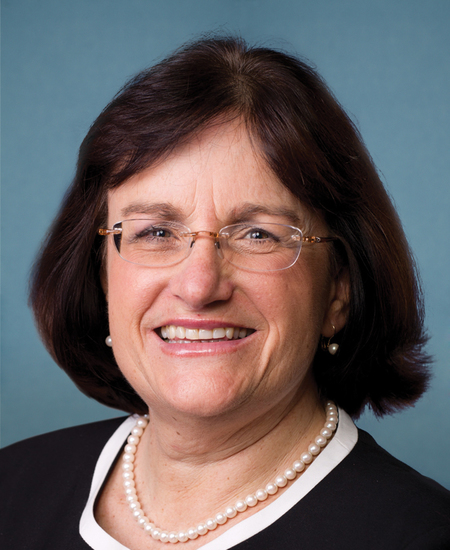
Rep. Ann M. Kuster
Sponsored bills
Doctors of Community Act or the DOC Act This bill reauthorizes and provides mandatory funding for graduate medical education programs operated by teaching health centers. The bill sets out funding levels through FY2033. Funding for FY2034 and beyond equals the preceding fiscal year's amount adjusted for medical inflation.
Clean Water Standards for PFAS Act of 2021 This bill directs the Environmental Protection Agency (EPA) to develop requirements and incentives to limit the discharge of perfluoroalkyl and polyfluoroalkyl substances (PFAS) into certain waters of the United States. PFAS are man-made and may have adverse human health effects. A variety of products contain the compounds, such as nonstick cookware or weatherproof clothing. Within two years, the EPA must publish water quality criteria for each measurable perfluoroalkyl substance, polyfluoroalkyl substance, and class of PFAS. The water quality criteria must determine how much of these substances can be present in water before it is likely to harm human health. Within four years, the EPA must publish a final rule that establishes, for each priority industry category specified in the bill, effluent limitations guidelines and standards for the discharge of each measurable perfluoroalkyl substance, polyfluoroalkyl substance, and class of PFAS. Under the Clean Water Act, effluent limitations restrict the quantities, rates, and concentrations of chemical, physical, biological, and other constituents which are discharged from point sources (e.g., a discernible source such as a pipe) into navigable waters, the ocean, or other specified waters. In addition, the EPA must award grants to owners and operators of publicly owned treatment works for implementing the effluent limitations guidelines and standards.
Army Security Agency Monument Act This bill directs the Department of the Army to place in Arlington National Cemetery a monument honoring Army Security Agency veterans if the National Army Security Agency Association agrees to certain requirements, including that the association pay the monument's site preparation, construction, and maintenance costs.
United States Army Rangers Veterans of World War II Congressional Gold Medal Act This bill provides for the award of a single Congressional Gold Medal to the U.S. Army Rangers Veterans of World War II in recognition of their dedicated service during World War II.
Increasing Access to Mental Health in Schools Act This bill directs the Department of Education (ED) to establish a grant program and a student loan forgiveness program to increase the number of school-based mental health services providers in elementary and secondary schools. First, ED must award grants to partnerships between educational agencies and graduate institutions to increase the number of school-based mental health services providers employed by low-income local educational agencies (LEAs). Grant funds may be used for specified purposes, including to provide student loan forgiveness and tuition credits and to support recruitment, hiring, and training. In addition, ED must establish a program to provide student loan forgiveness for individuals who (1) are not, and have never been, participants in the grant program established by the bill; and (2) have been employed by low-income LEAs for five or more consecutive school years as mental health services providers.
Veteran Education Empowerment Act This bill reauthorizes through FY2029 and otherwise revises a Department of Education (ED) grant program for student veteran centers. Specifically, ED must make grants to institutions of higher education (IHEs) or consortia of IHEs to establish, maintain, improve, or operate a student veteran center. A student veteran center is a dedicated space on a campus that provides students who are veterans or members of the Armed Forces with (1) a lounge or meeting space for themselves, their spouses or partners, their children, and veterans in the community; and (2) a centralized office for student veteran services that serves as a single point of contact to coordinate comprehensive support services for student veterans.
Reproductive Rights are Human Rights Act of 2021 This bill directs the Department of State to include in its annual reports on human rights in countries receiving U.S. development and security assistance a discussion of the status of reproductive rights in each country. This must include whether a country has adopted and enforced policies to (1) promote access to contraception and accurate, nondiscriminatory family planning and sexual health information; (2) provide services to ensure safe and healthy pregnancy and childbirth; (3) expand or restrict access to safe abortion services; and (4) prevent and treat sexually transmitted diseases. For each country, the reports shall also contain (1) data concerning pregnancy-related injuries and deaths; and (2) a description of the nature and extent of discrimination and violence against women, girls, and LGBTQI+ individuals in health care settings and the relevant government's response to such actions.
Trees for Residential Energy and Economic Savings Act of 2021 or the TREES Act of 2021 This bill directs the Department of Energy (DOE) to establish a grant program for states, local governments, Indian tribes, and other entities to facilitate tree planting projects that reduce residential energy consumption. Under the program, DOE may award grants to facilitate the planting of at least 300,000 trees annually in residential neighborhoods.
John Lewis Every Child Deserves a Family Act This bill prohibits discrimination on the basis of sexual orientation, gender identity, marital status, or religion in the provision of child welfare programs and services by entities receiving federal funding. The Department of Health and Human Services (HHS) must provide technical assistance to help states follow this requirement, including (1) guidance for bringing state laws into compliance, (2) developing training to increase cultural competency related to social identity, and (3) training for judges and attorneys involved in child welfare cases, among other supports. Additionally, HHS must establish the National Resource Center on Safety, Well-Being, Placement Stability, and Permanency for LGBTQ Children and Youth Involved with Child Welfare Services to provide training, technical assistance, and guidance to applicable state and local agencies and service providers. Further, the Religious Freedom Restoration Act may not be the basis for challenging the application or enforcement of this bill. The Government Accountability Office must study and report on states' compliance with the requirements of the bill no later than three years after enactment.