

National Heritage Area Act of 2021 This bill establishes a National Heritage Areas System to recognize certain areas of the United States that tell nationally significant stories and to conserve, enhance, and interpret the areas' natural, historic, scenic, and cultural resources that illustrate significant aspects of U.S. heritage, and authorizes appropriations through FY2034 for each National Heritage Area. Through such system, the Department of the Interior may provide technical and financial assistance to local coordinating entities to support the establishment, development, and continuity of such areas. The bill extends the authority for the Erie Canalway National Heritage Corridor Commission and the Gullah/Geechee Cultural Heritage Corridor Commission until September 30, 2034. The local coordinating entity of a National Heritage Area, not later than three years after the area is included in the National Heritage Area System, shall submit to Interior a management plan for approval. Interior, not later than one year before the authorization for federal funding expires for a National Heritage Area, shall (1) conduct an evaluation of the accomplishments of that area, and (2) submit a report detailing the evaluation to specified congressional committees. Based upon the evaluation, Interior shall prepare a report with recommendations for the National Park Service's continued role, if any, with respect to the area. Interior may carry out or certify a study to assess the suitability and feasibility of designating a specific geographic area as a National Heritage Area to be included in the National Heritage Area System.
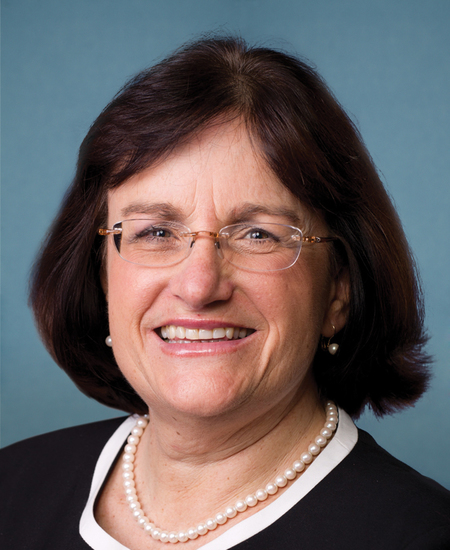
Rep. Ann M. Kuster
Sponsored bills
Teacher Education for Computer Science Act or the Teach CS Act This bill authorizes the Department of Education to award grants to institutions of higher education for establishing and maintaining teacher education programs for computer science. It also includes computer science as an eligible education category with respect to receiving various teacher preparation grants and graduate fellowships.
Codifying Useful Regulatory Definitions Act or the CURD Act This bill provides statutory authority for a definition of natural cheese . Under the bill, natural cheese is defined as cheese that is produced from animal milk or certain dairy ingredients and is produced in accordance with established cheese-making standards.
Pink Tax Repeal Act This bill prohibits product manufacturers or service providers from selling substantially similar products at different prices based on the gender of the intended purchaser. If, for example, the only difference between two products is the color, they are substantially similar. The bill provides authority for the Federal Trade Commission and state attorneys general to enforce these requirements.
Katherine's Law for Lung Cancer Early Detection and Survival Act of 2021 This bill requires private health insurance plans to cover, without cost sharing, screenings for the detection of lung cancer for certain high-risk individuals.
Medical Nutrition Equity Act of 2021 This bill expands coverage under Medicare, Medicaid, other specified federal health care programs, and private health insurance to include foods, vitamins, and individual amino acids that are medically necessary for the management of certain digestive and metabolic disorders and conditions.
FAIR Leave Act or the Fair Access for Individuals to Receive Leave Act This bill repeals the limit on the aggregate number of workweeks of family and medical leave that spouses employed by the same employer may be entitled to during any 12-month period. The current limit is 12 aggregate workweeks.
Paycheck Fairness Act This bill addresses wage discrimination on the basis of sex, which is defined to include pregnancy, sexual orientation, gender identity, and sex characteristics. Specifically, it limits an employer's defense that a pay differential is based on a factor other than sex to only bona fide job-related factors in wage discrimination claims, enhances nonretaliation prohibitions, and makes it unlawful to require an employee to sign a contract or waiver prohibiting the employee from disclosing information about the employee's wages. The bill also increases civil penalties for violations of equal pay provisions. Additionally, the Equal Employment Opportunity Commission (EEOC) and the Office of Federal Contract Compliance Programs must train EEOC employees and other affected parties on wage discrimination. The bill directs the Department of Labor to (1) establish and carry out a grant program to provide training in negotiation skills related to compensation and equitable working conditions, (2) conduct studies to eliminate pay disparities between men and women, and (3) make available information on wage discrimination to assist the public in understanding and addressing such discrimination. The bill establishes the National Award for Pay Equity in the Workplace for an employer who has made a substantial effort to eliminate pay disparities between men and women. It also establishes the National Equal Pay Enforcement Task Force to address compliance, public education, and enforcement of equal pay laws. Finally, the bill requires the EEOC to issue regulations for collecting from employers compensation and other employment data according to the sex, race, and national origin of employees for use in enforcing laws prohibiting pay discrimination.
Total Recall Act This bill modifies the notification requirements for consumer product recalls, including by requiring manufacturers, distributors, importers, or retailers subject to certain recall orders by the Consumer Product Safety Commission to advertise such recalls based on their previous marketing expenditures and to publish notification of such recalls on their websites and on social media.
This bill directs the Federal Emergency Management Agency (FEMA) to establish a grant program to modify, upgrade, and construct fire and emergency medical services (EMS) department facilities. Grant recipients may use funds received to build, rebuild, or renovate fire and EMS department facilities; upgrade existing facilities to install exhaust emission control systems, install backup power systems, upgrade or replace environmental control systems (such as HVAC systems), remove or remediate mold, and construct or modify living quarters for use by male and female personnel; and upgrade fire and EMS stations or build new stations. The bill sets forth provisions regarding (1) grant fund allocations between career and volunteer fire and EMS departments, and (2) prevailing rate of wage and a requirement for using materials produced domestically for public contracts.