

Maddy summaryThis bill requires federal agencies collecting demographic survey data to begin including questions on sexual orientation, gender identity, and variations in sex characteristics (intersex traits) within 360 days of enactment. Agencies must review existing surveys to identify gaps, develop privacy-protective methods for collecting this data (including anonymization and data destruction protocols), and incorporate it into relevant reports within three years. The law applies to all federal surveys that collect standard demographic data (like race, ethnicity, and age), such as the census or health surveys, but does not compel individuals to disclose their status. It emphasizes maintaining confidentiality, allows limited agency waivers if standards can't be met, and mandates a congressional report on implementation within two years.
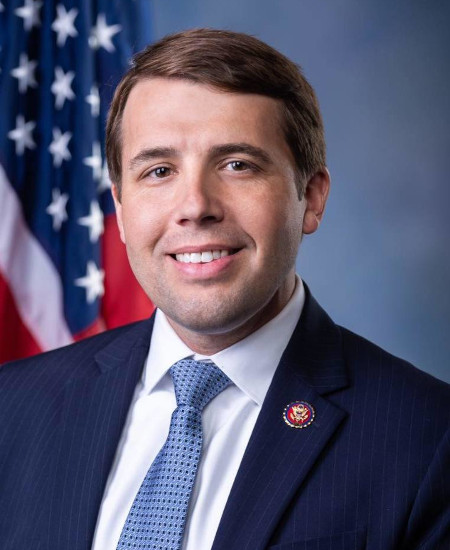
Rep. Chris Pappas
Sponsored bills
Maddy summaryHR 3850, the Pride In Mental Health Act of 2023, establishes a federal grant program to improve mental health and substance abuse services for LGBTQ+ youth (including nonbinary, intersex, and Two Spirit individuals). The bill directs the Health and Human Services Secretary to fund eligible organizations to provide trauma-informed care, cultural competency training for caregivers, school bullying prevention guidelines, and family support resources. It explicitly prohibits grant funds from being used for conversion therapy or advertising related to such therapy. The bill also requires data collection on LGBTQ+ youth mental health and a federal survey to measure psychological distress.
This resolution states that BridgeUSA programs are vital to the economy and to U.S. national interests. The resolution also states that U.S. embassies and consulates should prioritize processing J-1 visas for such programs. (BridgeUSA is the name for what was formerly known as the Exchange Visitor Program. Participants from other countries come to the United States to participate in various exchange programs, such as exchange programs for professors, trainees, interns, and au pairs.)
Maddy summaryHR 3907 increases annual funding for U.S.-Israel development cooperation from $2 million to $4 million, extending support through 2026 instead of 2023. It requires USAID to report within 180 days on expanding projects to include multilateral partnerships with Arab countries, particularly in Africa, and assesses the need for additional resources. The bill directly affects USAID, Israel's MASHAV agency, and developing nations in Africa, Eastern Europe, and Latin America where joint projects focus on water, agriculture, education, and health. Key provisions adjust funding levels and mandate a formal review of expanding cooperative development efforts. The legislation aims to strengthen existing U.S.-Israel collaboration on global development initiatives.
Maddy summaryThe American Family Act establishes a monthly child tax credit of $250 per month for each child under age 6 and $300 per month for each child aged 6-18, with income limits of $150,000 for joint filers and $112,500 for other filers. The credit is refundable, meaning it can be paid even if the taxpayer owes no income tax, and will be adjusted annually for inflation. The bill includes detailed rules for determining eligibility, including requirements that the child resides with the taxpayer for more than half the month and provisions to prevent fraud through recapture of improperly received payments. The credit will be paid monthly in advance rather than as a single annual payment, with specific mechanisms for calculating and distributing the payments.
Maddy summaryHR 3869, the Trucker Bathroom Access Act, requires certain businesses (like warehouses, distribution centers, and shipping/receiving facilities) to allow commercial truck drivers access to their restrooms when delivering or waiting to transport goods. It specifically applies to drivers regulated by the Department of Transportation and excludes small businesses (under 800 sq ft) with employee-only restrooms. The bill mandates that businesses provide access without requiring physical restroom modifications, and for port terminals, requires operators to provide sufficient restrooms with parking access for large cargo trucks (over 33,000 lbs) while avoiding obvious safety risks.
Maddy summaryHR 698, the Assault Weapons Ban of 2023, prohibits the sale, manufacture, transfer, and possession of specific firearms and ammunition devices commonly referred to as "assault weapons" and "large capacity magazines" in interstate commerce. The bill defines "semiautomatic assault weapons" to include rifles like AR-15s and AK-47s, as well as firearms with specific features such as folding stocks, pistol grips, threaded barrels, and detachable magazines holding more than 15 rounds. It exempts law enforcement, military, antique firearms, and weapons already lawfully owned before the law's enactment (known as "grandfathered" weapons). The bill also requires new identification markings on these weapons and large capacity magazines, and adds background check requirements for transfers of grandfathered weapons.
Maddy summaryThis bill requires federal agencies to incorporate bird-safe design features in public buildings during construction, acquisition, or major renovations (over 50% facade alteration). It mandates the General Services Administration to develop and update a design guide with strategies like specialized glass, lighting modifications, and maintenance practices to reduce bird collisions. The guide must be shared with all federal agencies and include input from bird conservation experts. Exemptions apply to historic sites, the White House, Supreme Court, and Capitol complex. Annual reports on compliance and bird fatality assessments must be submitted to Congress.
Maddy summaryHR 3792 extends U.S. security funding for Israel through 2028 (Section 3) and expands energy cooperation to include advanced nuclear technologies and carbon capture (Section 5). It requires annual reports on regional security partnerships involving Israel (Section 6) and ensures countries in the Abraham Accords can access U.S. development programs (Section 8). The bill also mandates reports on diplomatic efforts against ICC investigations targeting the U.S. and Israel (Section 10) and encourages people-to-people programs to strengthen the Abraham Accords (Sections 7, 9). These provisions directly affect Israel’s diplomatic engagement, security partnerships, and economic cooperation in the Middle East.
Maddy summaryThe Universal School Meals Program Act of 2023 would establish a universal school meals program providing free breakfast and lunch to all children enrolled in participating schools, regardless of family income. Key provisions include eliminating income-based eligibility requirements for school breakfast and lunch programs, setting specific reimbursement rates ($2.80 for breakfast and $4.63 for lunch with annual inflation adjustments), and prohibiting schools from collecting debt for unpaid meals or "shaming" students. The bill also replaces references to "free or reduced price" with "economically disadvantaged students" in related laws and establishes new methods for identifying children from low-income backgrounds. This legislation would directly affect all public schools participating in the National School Lunch Program and School Breakfast Program.