

Maddy summaryHR 4893, the Scientific Integrity Act, requires federal agencies that fund, conduct, or oversee scientific research to adopt policies preventing political interference in science. The bill mandates these agencies to prohibit suppression or distortion of research findings, establish Scientific Integrity Officers to enforce policies, and implement training and reporting systems. It directly affects scientists and engineers employed by or contracted with covered agencies (like the EPA or NIH), ensuring their work remains free from political pressure. Key mechanisms include annual public reporting on misconduct complaints, whistleblower protections, and requiring scientific conclusions to be based on evidence, not ideology.
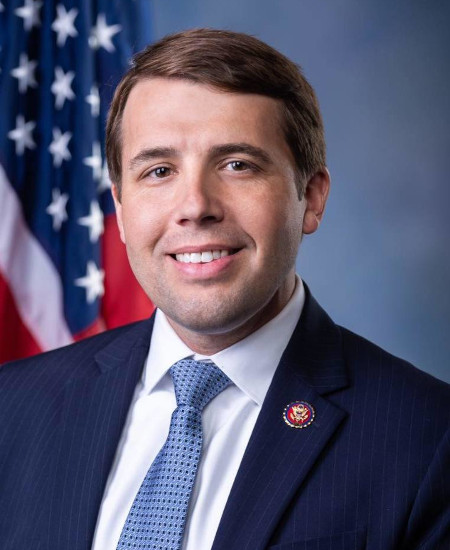
Rep. Chris Pappas
Sponsored bills
Maddy summaryHR 4157, the "Not Just a Number Act," requires the Department of Veterans Affairs (VA) to produce annual reports on veteran suicide rates and their connection to VA healthcare and benefits. The reports must break down suicide rates by age, gender, and race, and examine how engagement with VA services (like Vet Centers, healthcare enrollment, benefits claims, and housing loans) correlates with suicide trends. The bill also mandates a VA toolkit for state/local coroners to improve veteran suicide death reporting, and a study on creating a dedicated VA suicide prevention office. These measures aim to standardize data collection and identify effective prevention strategies, directly affecting VA operations, congressional oversight, and veteran care systems.
Maddy summaryHR 4769, the PFAS Alternatives Act, funds research and training to develop PFAS-free turnout gear for firefighters. It authorizes $25 million annually (2024-2028) for grants to eligible organizations to research, develop, and test next-generation gear without per- and polyfluoroalkyl substances (PFAS), which are linked to firefighter cancer risks. The bill requires partnerships with firefighting organizations to ensure research translates into practical training and gear care guidance, including decontamination protocols. It also allocates $2 million yearly for training programs on proper gear use and maintenance, aiming to reduce exposure to hazardous chemicals during fire operations.
Maddy summaryThe SWIFT Detection Act of 2023 amends federal health laws to allow states, localities, and tribes to use public health grants for wastewater testing to track trends in controlled substance use, provided evidence shows this method is effective. It also establishes a pilot program for public health laboratories to partner with public, private, and academic entities to detect fentanyl and similar synthetic opioids through wastewater analysis. The bill directly affects community health agencies and labs by adding wastewater surveillance as a tool for monitoring drug trends, without changing drug laws or treatment requirements. It focuses on data collection to inform public health responses to opioid use.
Maddy summaryHR 4787, the Volunteer First Responder Housing Act, provides housing benefits for volunteer firefighters and emergency medical responders who meet specific service requirements. It allows qualified volunteers to receive an $18,000 annual income deduction when applying for USDA single-family home loans, and qualifies them for discounted home purchases under HUD’s Good Neighbor Next Door program (normally for certified firefighters/EMTs). To qualify, volunteers must have served continuously for two years (meeting minimum hour requirements or active membership) and hold state certification, with employer verification confirming their eligibility. This directly affects volunteer first responders in communities served by eligible fire departments or emergency services organizations.
Maddy summaryThis bill creates two tax credits to support local media and small businesses. It provides a credit for small businesses (under 50 full-time employees) that advertise in qualifying local newspapers or broadcast stations, covering 80% of first-year ad costs up to $5,000 and 50% of subsequent-year costs up to $2,500. It also establishes a payroll tax credit for employers hiring local news journalists, covering 50% of wages for the first four quarters (capped at $12,500 per journalist) and 30% thereafter, with a maximum of 1,500 journalists per employer. Both credits expire after five years and require strict definitions of "local media" (e.g., publishers with local journalists and community focus) to prevent misuse.
Maddy summaryThe Taiwan Tax Agreement Act of 2023 authorizes the President to negotiate a tax agreement with Taiwan through the American Institute in Taiwan (AIT), aiming to reduce double taxation and prevent tax evasion for U.S. and Taiwanese businesses and investors engaged in cross-border trade and investment. The agreement must follow standard U.S. tax treaty practices (like the 2016 Model Convention), exclude entities based in China or without a U.S. tax treaty, and include anti-evasion measures. Before taking effect, Congress must approve the agreement via a specific concurrent resolution that simply states approval without debate or amendments.
Maddy summaryHR 3504 requires the VA Secretary to conduct annual surveys of staff at VA medical centers about security conditions, including criminal activity, vacant police positions, equipment adequacy, and training. The bill mandates that the VA submit annual reports to Congress detailing survey results, analyses of security weaknesses, and action plans with specific goals and deadlines. It directly affects VA medical center staff, VA leadership, and congressional committees overseeing veterans' affairs. The law creates a new reporting mechanism but does not change existing security policies or funding.
Maddy summaryHR 2733, the Department of Veterans Affairs Office of Inspector General Training Act of 2023, requires new VA employees hired after the bill's enactment to complete mandatory training about the Office of Inspector General (OIG). The training, developed by the OIG, covers the OIG's role, how to report fraud/waste/abuse confidentially, protections against retaliation for reporting, and ways to collaborate with the OIG to improve VA services. Employees must complete this training within one year of starting their VA job, and the training must be separate from existing VA ethics training. The bill ensures VA employees can access this training through the agency's talent management system and receive regular OIG updates on reporting procedures.
Maddy summaryH.J.Res. 25 would remove the 1979 deadline for states to ratify the Equal Rights Amendment (ERA), which was originally proposed in 1972. This bill directly affects states that ratified the ERA after the deadline (such as Nevada, Illinois, and Virginia in 2017-2018) by making their ratifications legally valid. The key provision states that the ERA is valid as part of the Constitution if ratified by three-fourths of states, regardless of the original deadline. The bill does not create new rights but aims to finalize the constitutional amendment process by eliminating the time limit.