

Maddy summaryHR 509, the Debt Cancellation Accountability Act of 2023, prohibits the federal government from canceling student loan debt for groups of borrowers (e.g., all teachers or all borrowers in a specific state) without explicit congressional approval. It directly affects borrowers with federal student loans under parts B, D, or E of the Higher Education Act by requiring the Education Secretary to submit detailed requests to Congress before any "class-based" cancellation exceeding $1 million total. The bill mandates that Congress must specifically appropriate funds for such programs, and the Secretary must justify the need, legal authority, and why group cancellation is used instead of individual reviews. Existing targeted programs (like those for specific professions) remain exempt if they assess eligibility on a case-by-case basis.
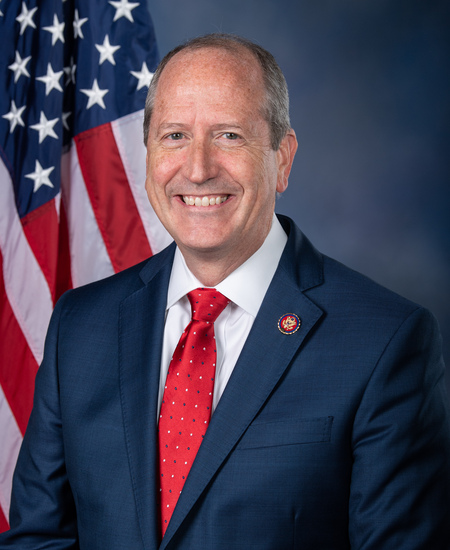
Rep. Dan Bishop
Sponsored bills
Maddy summaryThis bill requires healthcare providers to give the same medical care to infants born alive during abortions as they would to any newborn, and to immediately admit such infants to a hospital. It mandates reporting of non-compliance to law enforcement and imposes penalties including up to 5 years in prison for violations. Women who undergo abortions can file civil lawsuits seeking money damages for injuries, three times the abortion cost, and punitive damages if care standards are not met. The bill also clarifies that abortion includes intentionally killing an unborn child or terminating pregnancy without specific exceptions (e.g., after viability to preserve life or removing a dead fetus).
Maddy summaryHR 453 (the AMERICANS Act) prevents the Department of Defense from imposing new COVID-19 vaccine mandates without new congressional approval. It requires the military to adjust discharge statuses to "honorable" for service members discharged solely over vaccine refusal, and allows them to be reinstated to their previous rank with back pay and benefits. The bill also mandates that unvaccinated service members receive equal professional development and promotion opportunities, and creates processes for exemptions based on natural immunity, health conditions, or religious beliefs. It applies to all service members affected by previous vaccine-related discharges or adverse actions, regardless of whether they sought accommodations.
Maddy summaryHCONRES 3 is a non-binding congressional resolution expressing support for pro-life facilities, groups, and churches targeted by vandalism and threats following the Supreme Court's Dobbs decision. It condemns specific incidents like graffiti, window-smashing, and arson at pregnancy centers and churches (e.g., in Frederick, MD, and Portland, OR), while recognizing the role of these organizations in supporting pregnant women. The resolution calls on the Biden Administration to use law enforcement to protect these facilities but does not create new laws or policies. As a symbolic measure, it has no legal effect on the incidents described.
This resolution declares that every state within the United States has the sovereign right to exclude any person who does not have the right to be there. It also declares that the states along the southern border (1) are being invaded by terrorists, narco-terrorist cartels, and criminal actors; and (2) have the sovereign and unilateral authority to defend themselves against such an invasion.
Life at Conception Act This bill declares that the right to life guaranteed by the Constitution is vested in each human being at all stages of life, including the moment of fertilization, cloning, or other moment at which an individual comes into being. Nothing in this bill shall be construed to authorize the prosecution of any woman for the death of her unborn child.
Maddy summaryThis bill denies tax deductions for employers covering two specific expenses: travel costs for employees obtaining abortions, and medical procedures related to gender transition for minor children (under age 18). It defines "gender transition procedure" broadly to include surgeries, hormones, and puberty blockers, but excludes medically necessary treatments for disorders of sex development or complications from such procedures. The law applies to taxable years starting after its enactment, directly affecting employers who provide health coverage for these services. It does not ban the procedures themselves but removes tax benefits for employer-paid expenses related to them.
Leaker Accountability Act of 2023 This bill establishes a new federal crime for the unauthorized disclosure of confidential information by officers or employees of the Supreme Court. Specifically, the bill prohibits an officer or employee of the Supreme Court from knowingly publishing, divulging, disclosing, or making known in any manner or to any extent not authorized by law any confidential information coming to that officer or employee in the course of the employment or official duties of that officer or employee. A violation is subject to criminal penalties—a fine, a prison term of up to five years, or both.
Teleabortion Prevention Act of 2023 This bill restricts the use of telehealth for chemical abortions (also known as medication abortions). Specifically, it requires a provider who dispenses or prescribes medication for a chemical abortion to physically examine the patient, be physically present at the location of the chemical abortion, and schedule a follow-up visit for the patient. The bill provides an exception for a chemical abortion that is necessary to save the life of a mother whose life is endangered by a physical disorder, illness, injury, or condition. The bill establishes criminal penalties—a fine, a prison term of up to two years, or both—for a provider who does not comply with the requirements. A patient who undergoes a chemical abortion may not be prosecuted.
Standardizing Thresholds Of Penalties for Fentanyl Act or the STOP Fentanyl Act This bill reduces the drug quantity thresholds that trigger a mandatory minimum prison term for a defendant who manufactures, distributes, imports, exports, or possesses with intent to distribute fentanyl. The bill also creates enhanced criminal penalties for certain violations involving fentanyl that was imported along the U.S.-Mexico border. Specifically, the bill reduces from 400 to 5 grams the fentanyl quantity and from 100 to 0.05 grams the fentanyl analogue quantity that trigger a mandatory minimum prison term for high-level first-time or repeat offenders. It also reduces from 40 to 0.5 grams the fentanyl quantity and from 10 to 0.005 grams the fentanyl analogue quantity that trigger a mandatory minimum prison term for low-level first-time or repeat offenders. Additionally, the bill creates enhanced mandatory minimum prison terms for importing or exporting fentanyl that was imported along the U.S.-Mexico border.