

Maddy summaryHR 29, the Border Safety and Security Act of 2023, grants the Secretary of Homeland Security authority to restrict entry at U.S. land or maritime borders for certain immigrants deemed "covered aliens" (those inadmissible under immigration law due to lack of proper documentation). The bill requires the Secretary to suspend entry if they cannot detain or process these individuals as required by existing immigration law. It also allows state attorneys general to sue the Secretary in federal court if they believe border policies harm their state's residents. The law defines "operational control" using terms from the Secure Fence Act of 2006. This bill directly affects immigrants seeking entry who fall under the specified inadmissibility category.
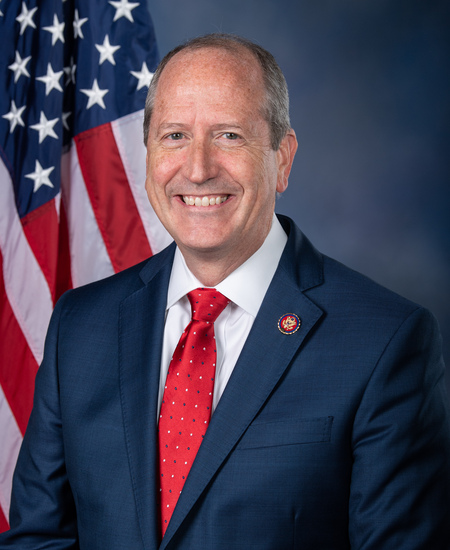
Rep. Dan Bishop
Sponsored bills
Maddy summaryHCONRES 9 is a symbolic resolution passed by the U.S. House of Representatives that formally denounces socialism as incompatible with American values, citing historical examples of socialist regimes causing widespread suffering and authoritarian rule. It states Congress opposes the implementation of socialist policies in the United States. This resolution has no legal effect, does not change any laws, and serves solely as a non-binding statement of congressional opinion. It directly affects no individuals or policies, as it is purely a declarative position.
Maddy summaryHR 812, titled the "Inflation Reduction Act of 2023," would repeal the Inflation Reduction Act of 2022 (Public Law 117-169) and rescind unobligated funds from that law. This bill does not establish new policy but reverses the existing 2022 legislation, halting its ongoing programs and redirecting unused funding. It directly affects the continuation of the 2022 act's provisions, including climate and healthcare initiatives, by formally terminating them. The key mechanism is the repeal of the 2022 law and the rescission of remaining unobligated balances.
Child Interstate Abortion Notification Act This bill creates new federal crimes related to transporting a minor across state lines for an abortion. Specifically, the bill makes it a crime to knowingly transport a minor across a state line to obtain an abortion without satisfying the requirements of a parental involvement law in the minor's resident state. A parental involvement law requires parental consent or notification, or judicial authorization, for a minor to obtain an abortion. The bill prohibits an individual who has committed incest with a minor from knowingly transporting the minor across a state line to receive an abortion. Finally, the bill makes it a crime for a physician to knowingly perform or induce an abortion on an out-of-state minor without first notifying the minor's parent.
Repealing Illegal Freedom and Liberty Excises Act or the RIFLE Act This bill repeals the excise tax on the transfer of firearms. The bill shall not be construed as placing any regulated firearms under the jurisdiction of the U.S. Consumer Product Safety Commission.
Maddy summaryThe Restoring Military Focus Act (HR 678) repeals the Chief Diversity Officer position in the Department of Defense and prohibits the creation of similar roles. It specifically eliminates two existing positions: the Chief Diversity Officer (under pre-2021 Title 10, U.S. Code) and the Senior Advisor for Diversity and Inclusion (under the 2021 National Defense Authorization Act). The bill bans federal funding for any new position that matches or closely resembles these roles. This directly affects the Department of Defense's organizational structure by removing diversity-focused leadership roles and preventing their replacement.
Maddy summaryThe A PLUS Act (HR 631) allows states to consolidate federal education funds into a single funding stream, reducing administrative burdens for school districts. It requires states to submit a "declaration of intent" outlining which programs they’ll bundle (excluding special education funds), report annual student progress data to parents, and ensure federal funds supplement - rather than replace - state education spending. States must limit administrative costs to 1% of consolidated funds (3% if excluding Title I) and maintain public accountability through transparent reporting on achievement gaps and funding use. The act directly affects states, school districts, and students - particularly disadvantaged groups - by streamlining fund management while mandating public reporting on educational outcomes.
Maddy summaryHR 403, the No Mandates Act, prohibits federal agencies from requiring COVID-19 vaccinations through rules or guidance (Section 2). It also bans requiring vaccination for access to federal property, services, or congressional grounds (Section 3). The bill further restricts entities receiving federal funds - such as those from the CARES Act, American Rescue Plan, or other COVID-19 relief packages - from mandating vaccines as a condition for services (Section 4). Noncompliant entities must return all received federal funds (Section 4(b)).
Maddy summaryThis bill prohibits federal funding to Planned Parenthood Federation of America and its affiliates for one year unless they certify they won't perform or fund abortions (with exceptions for rape/incest or life-threatening conditions). It redirects $235 million in existing funding to community health centers for women's health services like contraception, cancer screenings, and prenatal care. The bill explicitly states that redirected funds will continue to support all women's health services previously provided by Planned Parenthood. It also requires repayment of funds if Planned Parenthood violates the certification, and clarifies that overall federal funding for women's health services remains unchanged.
Maddy summaryHR 570, the CRT Act, prohibits federal funding for elementary, secondary, and higher education institutions that promote specific race-based theories. It bans schools from using federal funds if they teach or require students to adopt beliefs such as "any race is inherently superior," the U.S. being "fundamentally racist," or individuals bearing racial responsibility for others' actions. The bill includes key exceptions: it protects outside speech, allows research access to prohibited materials, and permits teaching about these theories in educational contexts without endorsing them. The law directly affects schools receiving federal education funds, not individual students or teachers.