

Maddy summaryThis bill would require the U.S. to withhold funding for the UNRWA (United Nations refugee agency for Palestinians) unless the State Department certifies UNRWA staff, materials, and facilities comply with specific conditions. Key conditions include confirming no ties to terrorism or anti-Israel rhetoric (like denying Israel's right to exist or promoting BDS), no misuse of UNRWA resources for terrorist activities, and adherence to international financial audits. It also caps U.S. contributions to UNRWA at levels comparable to Arab League countries and mandates annual reports to Congress on phasing out UNRWA support. These changes directly affect U.S. foreign aid decisions for Palestinian refugees in Jordan, Lebanon, Syria, Gaza, and the West Bank.
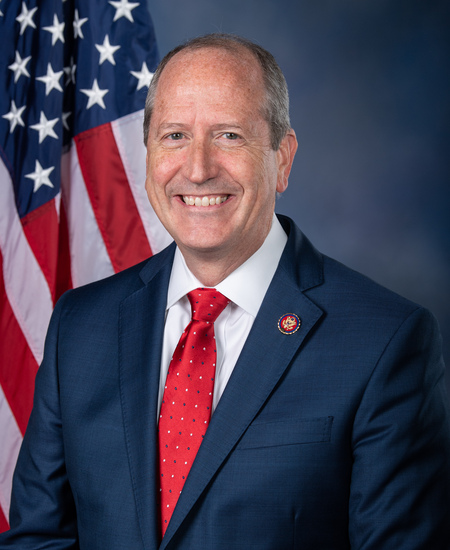
Rep. Dan Bishop
Sponsored bills
Prohibiting IRS Financial Surveillance Act This bill prohibits the Department of the Treasury from requiring a financial institution to report the transfers into and out of a financial account. This prohibition does not apply to laws or regulations in effect on January 1, 2023.
Protect Farmers from the SEC Act This bill prohibits the Securities and Exchange Commission from requiring the disclosure of greenhouse gas emissions related to agricultural products.
Maddy summaryHR 976, the TCJA Permanency Act, makes permanent many tax provisions from the 2017 Tax Cuts and Jobs Act (TCJA) that were scheduled to expire after 2025. The bill affects individual taxpayers by keeping lower tax rates, higher standard deductions, increased child tax credits, and other key changes permanently. Key provisions include permanent modifications to income tax brackets, repeal of personal exemptions, limits on state and local tax deductions, and increased estate and gift tax exemptions. These changes would prevent the tax code from reverting to pre-TCJA rates and rules for millions of taxpayers.
Maddy summaryThis bill requires states receiving Medicaid funds for family planning services to submit standardized abortion data to the CDC annually. Specifically, states must report 10 mandatory data points (including maternal age, gestational age, race, ethnicity, procedure type, and survival status) by December 31 of the prior year, starting two years after enactment. Failure to submit accurate data or submitting false information could result in loss of Medicaid funding for family planning services in the following fiscal year. The law aims to create uniform national abortion data collection, addressing current gaps where some states report no data at all. The CDC will maintain a standardized surveillance system and publish annual reports by the third year following the data year.
Maddy summaryHR 899 would end the U.S. Department of Education by requiring its termination on December 31, 2023. This bill directly affects the Department of Education itself, eliminating its federal structure and operations. The key provision is a specific termination date, ending the agency's existence as a standalone cabinet-level department. No other mechanisms or affected groups are specified in the bill text.
Maddy summaryHR 935, the Safety and Opportunity for Girls Act of 2023, amends Title IX of the Education Amendments of 1972 to define "sex" as determined by reproductive biology and genetics at birth, and clarifies that "sex-segregated" means limited to or separated by that sex. The bill explicitly prohibits the Secretary of Education from requiring schools to eliminate sex-segregated bathrooms, locker rooms, or athletic/academic programs as a condition for receiving federal funding under Title IX. It directly affects educational institutions receiving federal funds by preventing federal enforcement actions that might compel them to abandon existing sex-segregated facilities or programs. The bill focuses on altering the legal interpretation of Title IX regarding sex-based accommodations, not creating new programs or services.
Maddy summaryHR 932 repeals two key congressional authorizations for military force in Iraq: the 1991 resolution (Public Law 102-1) and the 2002 resolution (Public Law 107-243). This bill removes the legal foundation that has permitted U.S. military operations in Iraq for over two decades. It directly affects the executive branch’s authority to conduct military actions under these specific resolutions, requiring future operations to seek new congressional approval. The repeal is a procedural change that would end the statutory basis for ongoing military engagement in Iraq without altering other laws or policies.
Bring Entrepreneurial Advancements To Consumers Here In North America Act This bill provides tax incentives for relocating manufacturing facilities in the United States. Specifically, it allows accelerated depreciation (20-year recovery period) for nonresidential real property acquired in connection with the relocation of manufacturing facilities in the United States. It also excludes from gross income, for income tax purposes, gain on the sale or exchange of such relocated facilities. Finally, the bill allows permanent 100% expensing of manufacturing property relocated in the United States.
Finish the Wall Act This bill requires the Department of Homeland Security (DHS) to resume activities related to the construction of a barrier system along the U.S.-Mexico border and addresses other border-related issues. DHS must resume all such construction activities that were planned or underway prior to January 20, 2021. DHS must also expend all funds appropriated or explicitly obligated since October 1, 2016, for construction of this barrier system. DHS may not cancel contracts for activities related to such construction entered into on or before January 20, 2021. Furthermore, within 14 days of this bill's enactment, DHS must certify to Congress that U.S. Customs and Border Protection facilities that process adults taken into custody at the border are fully compliant with certain laws related to the collection of DNA. (Among other things, these laws allow for the collection of DNA samples from non-U.S. persons detained under U.S. authority.)