

Maddy summaryHR 820, the Foreign Adversary Communications Transparency Act, requires the Federal Communications Commission (FCC) to publish and annually update an online list of communications companies (like phone and internet providers) that have ownership ties to governments of specific countries deemed "covered" by the law: China, Russia, Iran, North Korea, Cuba, and Venezuela. The list includes entities holding FCC licenses or authorizations where a foreign government owns equity, or where the FCC determines it's necessary after consulting national security agencies. This bill directly affects telecommunications companies with such foreign government connections by mandating public transparency about their ownership structure. The key mechanism is the FCC's annual public listing, aiming to increase visibility into foreign influence in U.S. communications infrastructure.
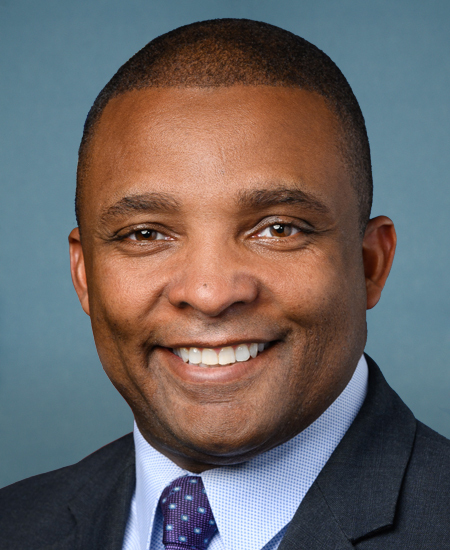
Rep. Donald G. Davis
Sponsored bills
Maddy summaryThis bill establishes a 3-year pilot program to coordinate care between the Department of Veterans Affairs (VA) and Medicare for veterans enrolled in both systems. It directly affects "covered veterans" (those enrolled in both VA health services and Medicare), primarily senior veterans and wounded warriors who use both programs. The key mechanism assigns each participant a VA case manager to develop personalized care plans, navigate VA and Medicare services, and eliminate gaps in care. The program aims to improve access, outcomes, quality, and cost-efficiency while tracking metrics like patient satisfaction, care coordination, and cost data.
Maddy summaryHRES 1447 is a non-binding resolution expressing support for designating the week of September 22-28, 2024, as "Gold Star Families Remembrance Week." It directly honors families who lost loved ones while serving in the U.S. military (referred to as "Gold Star Families") and families of veterans. The resolution encourages Americans to observe the week by performing community service and celebrating the sacrifices of fallen service members, without creating new laws or obligations. It aligns with existing recognition of Gold Star Mother’s Day (the last Sunday in September) but expands the focus to all affected families.
Maddy summaryHR 9568, the SAW Act, makes it illegal to intentionally use a motor vehicle to run over, strike, or kill wolves or coyotes on U.S. public lands (excluding tribal trust lands). The law prohibits this action except when avoiding personal injury, protecting property, or conducting authorized wildlife management. Violators face fines up to $5,000, up to one year in prison, or both. The Secretary of the Interior is responsible for investigating violations and can collaborate with state and local law enforcement. This bill specifically targets motor vehicle use against wolves and coyotes on federal lands, with no broader wildlife protections.
Maddy summaryThis bill creates a presumption of service connection for specific health conditions in veterans who served at Karshi Khanabad Air Base in Uzbekistan. It directly affects those veterans by automatically linking certain diseases to their military service at that location, without requiring them to prove the connection. Key provisions include presuming service connection for all cancers, thyroid diseases, bone disorders, cardiovascular conditions, skin issues, neurological problems, reproductive diseases, respiratory illnesses, endocrine disorders, liver/kidney diseases, and cataracts. The bill amends existing law to add this presumption as a new category under veterans' health benefits.
Maddy summaryThis bill allows VA health care professionals to prescribe controlled medications via telemedicine without requiring an in-person exam, directly affecting veterans receiving VA telehealth services. It permits prescriptions for controlled substances (like certain pain medications) when the provider is licensed under state law, acting within professional practice, and the prescription serves a legitimate medical purpose. The law requires the VA Secretary to establish regulations for this process but clarifies it doesn’t change existing Controlled Substances Act obligations. This expands access to telemedicine for veterans needing controlled medications while maintaining safety and licensing standards.
Maddy summaryThis bill amends the Disabled Veterans' Outreach Program to expand eligibility for career services to include Gold Star spouses (spouses of service members who died while on active duty) and surviving spouses (spouses of veterans who died from service-connected causes). It updates existing program language to replace references to "veterans" with "veterans or eligible persons" and adds a new definition clarifying that "eligible person" includes these spouses. The change directly affects spouses who lost their partners in military service, allowing them to access the same career counseling and job placement services previously available only to veterans. The bill modifies existing program provisions without creating new services or funding.
Maddy summaryThe LIFT AI Act (HR 9211) provides federal funding to develop AI literacy education for K-12 students and teachers. It directs the National Science Foundation to award grants to colleges, nonprofits, or consortia for creating classroom curriculum, teacher training, and evaluation tools focused on AI skills like ethical use, critical interpretation, and problem-solving. The bill specifically targets schools (K-12) and aims to integrate AI literacy into existing lessons through project-based learning and professional development. Key provisions include developing learner-centered materials, training educators on AI proficiency, and creating tools to assess student progress in AI literacy.
Maddy summaryThis symbolic resolution expresses congressional support for designating September 29, 2024, as "Veterans of Foreign Wars of the United States Day" to honor the organization's 125th anniversary. It requests the President issue a proclamation encouraging government agencies and the public to observe the day with ceremonies, though it creates no new laws or policy changes. The resolution recognizes the VFW's historical service to veterans but does not directly affect any individuals or programs.
Maddy summaryHRES 1436 is a symbolic resolution (not a law) introduced in the U.S. House of Representatives. It recognizes suicide as a preventable public health crisis by citing statistics from the CDC, VA, and SAMHSA showing rising suicide rates across age groups, including veterans and adolescents. The resolution formally supports designating September as "National Suicide Prevention Month" and September 10, 2024, as "World Suicide Prevention Day." It does not create new policies, allocate funding, or directly affect any individuals - its purpose is solely to express congressional support for suicide prevention awareness and efforts.