

Maddy summaryThe SAVES Act establishes a 5-year pilot program where the VA awards competitive grants to accredited nonprofits (e.g., Assistance Dogs International or International Guide Dog Federation members) to provide service dogs to veterans with specific disabilities like mobility issues, PTSD, TBI, or visual/hearing impairments. It requires veterans with mental health conditions to undergo a VA mental health evaluation to confirm the dog is the optimal treatment, prohibits nonprofits from charging veterans fees, and mandates VA-provided veterinary insurance for the dogs. The program is funded with $10 million annually for five years and directly affects eligible veterans enrolled in VA care with qualifying disabilities and participating nonprofit service providers.
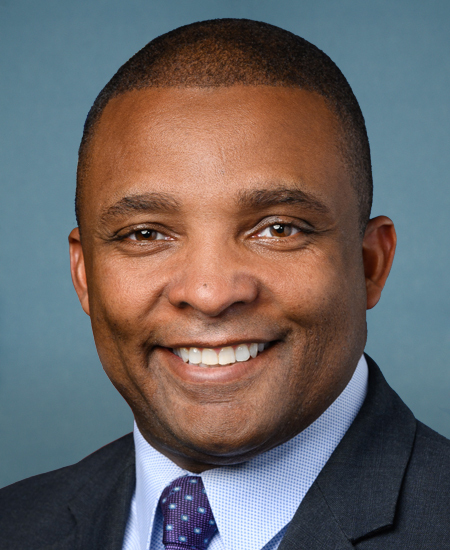
Rep. Donald G. Davis
Sponsored bills
Maddy summaryThe BIOSECURE Act prohibits U.S. federal agencies from contracting for or using biotechnology equipment and services from designated "biotechnology companies of concern," such as BGI, MGI, Complete Genomics, WuXi AppTec, and WuXi Biologics, and bans federal funds for these purposes. It requires the Office of Management and Budget to create and update a list of these companies based on national security risks, with implementation phased in over 60-180 days after regulations are issued. Exceptions include intelligence activities, overseas health care for U.S. personnel, and publicly available multiomic data, while limited waivers for national security or overseas health care are permitted with congressional notification. The law does not require new funding and mandates annual reviews of the designated companies.
Maddy summaryThis bill, HR 7593, grants the Congressional Research Service (CRS) direct authority to request and receive necessary government data from executive branch agencies, including departments, regulatory commissions, and agencies. It requires these agencies to provide the requested information in a timely manner while maintaining the same confidentiality standards as the source agency. CRS staff must follow identical confidentiality rules and face the same penalties for unauthorized disclosure as the agencies they obtain data from. This change streamlines CRS’s access to government information for its research and analysis, directly affecting how Congress receives nonpartisan policy support.
Maddy summaryThe Stand with Ukraine Act of 2024 establishes a framework for sustained U.S. security assistance to Ukraine in response to Russia's invasion. It endorses a 10-year bilateral security agreement and directs the U.S. government to provide military equipment, training, and security assistance to strengthen Ukraine's defense capabilities against Russian aggression. Key provisions include treating Ukraine as a major non-NATO ally for defense transfers, fast-tracking military sales through the Foreign Military Sales program, and creating mechanisms to prioritize defense article transfers. The bill also includes specific support for Ukraine's recovery, reconstruction, and demining efforts following the conflict. This legislation directly affects U.S. foreign policy implementation, military assistance programs, and Ukraine's ability to build a credible defense against Russian threats.
Maddy summaryHR 9480, the Empowering Law Enforcement to Combat Financial Fraud Act, allows state, local, and Tribal law enforcement agencies to use specific federal grant funds (from Justice Department and Homeland Security programs) to investigate senior financial fraud (targeting elderly/disabled victims), pig butchering scams (crypto investment frauds), and general financial fraud. The bill directs funds toward hiring specialized staff, training on blockchain tools and transnational fraud, purchasing investigative software, and improving data collection. Agencies must report annually to grant providers on fund usage and fraud statistics, with federal agencies then reporting to Congress on these efforts. This policy change expands the allowable use of existing grants to specifically address these fraud types through enhanced investigative capabilities.
Maddy summaryThis bill prioritizes funding for rural healthcare facilities through the USDA's Community Facilities Program. For fiscal years 2025-2031, the Secretary of Agriculture must give priority to rural hospitals and healthcare providers seeking loans or grants to develop essential facilities. Funds can be used for medical supplies, telehealth expansion, staffing support, or renovating closed facilities. Additionally, 10% of guaranteed loan funds under the program must be reserved annually to support these rural healthcare projects.
Maddy summaryThis bill temporarily expands SNAP (food assistance) eligibility for households including recently separated veterans. For 100 days after a veteran receives their discharge paperwork (DD-214), only the veteran's income is counted toward household eligibility under SNAP rules, ignoring other household members' income. It directly affects veteran households transitioning from military service during this 100-day period. The provision takes effect 90 days after the bill is enacted.
Maddy summaryThis bill creates a program to help resolve ownership disputes on farmland or forest land held by multiple heirs, primarily affecting underserved heirs (low-income, socially disadvantaged, or veteran landowners with undivided ownership). It authorizes $60 million annually (2024-2028) for the USDA to fund cooperative agreements with nonprofit legal/accounting providers, offering free services to these heirs to transition land to farming, maintain agricultural use, or meet eligibility for USDA programs. Eligible entities must provide services at no cost, submit annual progress reports, and focus on properties in agricultural production or viable for it, with strict criteria for defining "underserved heirs." The bill does not change land ownership rights but provides structured support to resolve succession issues through legal assistance.
Maddy summaryHR 8675 requires the Transportation Security Administration (TSA) to study digitizing data collection for law enforcement officers flying armed on commercial flights. The study, to be completed within 180 days of the bill's enactment, must examine projected timelines and resource needs for implementing this digital process. The TSA Administrator must then brief specific congressional committees (House Homeland Security and Senate Homeland Security) and make the study publicly accessible. This bill does not enact new policy but mandates a study to assess how to modernize an existing data collection process for armed law enforcement officers traveling by air. It directly affects TSA operations and future planning for law enforcement air travel protocols.
Maddy summaryHR 7920, the AG VETS Act, creates a federal grant program to help military veterans enter or grow in farming and ranching. It authorizes $5 million annually (2025-2029) for competitive grants to eligible groups like land-grant universities, state agriculture departments, nonprofits, and community organizations. These grants fund training programs, curriculum development, workshops, and field experiences focused on farm business management. Recipients must match federal funds dollar-for-dollar, and the program directly supports veterans seeking agricultural careers through hands-on education.