

Maddy summaryThe Kids Online Safety Act (HR 7891) would require major online platforms (with high revenue or user numbers) to implement safety features for children and teens, including default protective settings, parental controls, and age verification. It would mandate platforms to report annually on risks to minors and their safety measures, and prohibit advertising harmful products (like tobacco, alcohol, or gambling) to minors. The bill directly affects social media platforms, online video games, and video streaming services that are used by minors, with the goal of preventing mental health harms, compulsive usage, and cyberbullying.
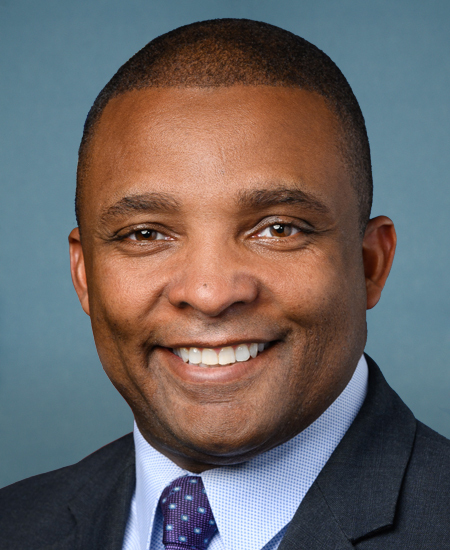
Rep. Donald G. Davis
Sponsored bills
Maddy summaryThe TELEMH Act of 2024 would require Medicare to establish a specific code or modifier for claims related to mental health services provided via telehealth by support staff (such as nurse practitioners or physician assistants) when billed under a physician's supervision. This change would directly affect healthcare providers who deliver telehealth mental health services through auxiliary personnel and submit claims to Medicare. The Secretary of Health and Human Services must create this requirement within two years of the bill becoming law. The bill aims to standardize billing for these services, improving clarity in Medicare claims processing for telehealth mental health care.
Maddy summaryThis bill requires the Department of Veterans Affairs (VA) to commission an independent review of its notices sent to veterans applying for benefits. The review, to be completed within 30 days of the bill's enactment, must assess whether notices can be made clearer for claimants while reducing paper use and government costs. The VA must then implement the recommended changes within 90 days and report the findings to Congress. This directly affects veterans receiving VA claims communications by aiming to make those notices more understandable and efficient.
Maddy summaryThis bill directs the Joint Committee on the Library to procure a statue of Benjamin Franklin and place it in the U.S. Capitol. The committee must secure the statue within two years of the bill's enactment and install it in a public-accessible location by January 1, 2026, for viewing during Capitol Visitor Center guided tours. It is a procedural measure with no policy changes or direct impact on constituents or legislation.
Maddy summaryThis bill modifies Medicaid and CHIP rules to let eligible out-of-state healthcare providers enroll without extra state screening. It applies to providers already in Medicare or their home state program, with low fraud risk, serving children under 21 with complex medical conditions. Providers would receive 5 years of enrollment under this streamlined process, eliminating state-level barriers. The change directly affects children seeking specialized care across state lines and the providers who serve them.
Maddy summaryHR 4424, the Vietnam Veterans Liver Fluke Cancer Study Act, directs the Department of Veterans Affairs to study the rate of cholangiocarcinoma (a type of bile duct cancer) among veterans who served in the Vietnam theater during the Vietnam era. The bill requires the VA, working with the CDC, to analyze existing cancer registry data to compare cancer rates between these veterans and the general U.S. population, breaking down results by age, gender, race, ethnicity, and location. The VA must report its findings and recommendations to Congress within one year of completing the study, with ongoing periodic updates. This study aims to identify patterns and inform potential future actions for affected veterans, without changing current benefits or eligibility.
Maddy summaryHR 3800, the Chronic Disease Flexible Coverage Act, clarifies that certain services for chronic conditions (like diabetes or heart disease) listed in IRS Notice 2019-45 must be treated as preventive care under federal tax rules. This means health insurance plans covering these services must provide them without cost-sharing (like copays) for enrollees, directly affecting individuals with chronic conditions and their insurance providers. The bill’s key mechanism simply aligns existing IRS guidance with the tax code, ensuring these specific services are consistently classified as preventive care without altering other IRS rules. It does not create new benefits or change coverage requirements beyond this administrative clarification.
Maddy summaryThis bill requires federal agencies to create a public, searchable database containing ethics records for certain employees, including financial disclosures, gift approvals, and ethics waivers. Agencies must submit these records electronically within 60 days of enactment, include records from the previous 9 years, and ensure they remain publicly available for 10 years. The database must be free to access, fully accessible (meeting Web Content Accessibility Guidelines), and exclude only specific sensitive information like trade secrets or safety risks. It directly affects executive branch agencies and employees in political or sensitive roles, such as presidential appointees and noncareer staff covered under federal ethics rules.
Maddy summaryHRES 1456 is a symbolic resolution designating September 17, 2024, as "Constitution Day" to honor the signing of the U.S. Constitution on September 17, 1787. It calls for the people of the United States to observe the day with ceremonies and activities, recognizing the Constitution's historical significance and foundational role in American governance. This resolution does not create new laws or affect any individuals or policies; it is purely a non-binding expression of support by the House of Representatives.
Maddy summaryThis resolution honors the American Kennel Club (AKC) on its 140th anniversary, recognizing its nationwide work through dog events, health research, pet reunification programs, and educational initiatives promoting responsible pet ownership. It specifically highlights the AKC's role in hosting over 26,000 events annually, funding canine health research, reuniting lost pets, and supporting community programs like police K-9 donations and disaster relief for pets. As a ceremonial resolution, it does not create new laws or affect any individuals or organizations financially.