

Maddy summaryHR 964, the Rosa Parks Day Act, would designate Rosa Parks Day as a legal public holiday for federal employees and institutions. The bill amends Title 5 of the U.S. Code to add "Rosa Parks Day" to the list of recognized federal holidays, following Thanksgiving Day. This change would establish a new annual observance on the day designated by the President, requiring federal offices to close and employees to receive paid time off. The bill directly affects federal operations and employees, creating a new standard for federal holiday observance.
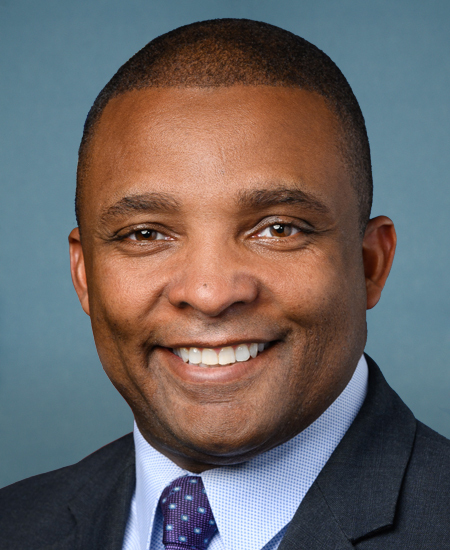
Rep. Donald G. Davis
Sponsored bills
Maddy summaryHRES 81 is a symbolic House resolution commending the Global Polio Eradication Initiative (GPEI) for reducing wild poliovirus cases by over 99.9% since 1988, from 350,000 annual cases to only Afghanistan and Pakistan currently reporting transmission as of 2024. The resolution highlights GPEI’s work protecting vulnerable children globally, including in conflict zones, and notes that polio eradication would make it only the second human disease (after smallpox) to be eliminated worldwide. It urges continued U.S. funding for GPEI and international support to achieve full global eradication, emphasizing that polio remains a threat until transmission stops everywhere.
Maddy summaryThe Expanding Access to High-Impact Tutoring Act of 2025 creates a federal grant program to fund evidence-based tutoring programs in K-12 public schools, requiring at least 30 minutes of daily tutoring, 3 days per week in math or reading, with a 3-to-1 student-to-tutor ratio. It allocates funds to state education agencies to distribute to school districts that must develop detailed plans, provide monthly progress reports, and partner with research organizations to evaluate program effectiveness. The bill establishes an Advisory Board to oversee implementation, approve tutoring models, and develop a nationwide tutoring workforce, with specific focus on schools serving students who have experienced academic setbacks, particularly those eligible for Title I services.
Maddy summaryThis bill expands the Anti-Boycott Act of 2018 to cover boycotts promoted or enforced by international governmental organizations (IGOs), not just foreign countries. It adds "international governmental organization" to key definitions in the law and requires the President to annually report to Congress on foreign countries and IGOs that foster or impose such boycotts. The law directly affects U.S. businesses and entities subject to boycotts by IGOs, like the United Nations or World Trade Organization. The changes are technical amendments to existing definitions and reporting requirements.
Medicare Patient Access and Practice Stabilization Act of 2025 This bill increases certain payment adjustments under the Medicare physician fee schedule for services furnished between April 1, 2025, and January 1, 2026.
Maddy summaryHR 844, the "Black History is American History Act," amends the Elementary and Secondary Education Act to require that Black history be included in all American history and civics education programs for K-12 students. The bill specifically adds "which shall include Black history" to multiple provisions, ensuring it becomes a standard part of curriculum standards, teacher training, and national assessments like the National Assessment of Educational Progress. This policy change directly affects public school curricula, educators, and students across the U.S. by mandating historically accurate instruction on African American contributions as integral to American history. The bill references the National Museum of African American History and Culture as a resource provider for educators implementing these changes.
Maddy summaryHR 760, the Restoring Access to Mountain Homes Act, allows FEMA to reimburse state, tribal, and local governments in North Carolina for repairing private roads and bridges damaged by Tropical Storm Helene - specifically those serving as the sole access to homes or essential services. It overrides standard FEMA rules by removing the requirement that roads must be in pre-existing good condition, enabling funding for repairs even if the infrastructure was already deteriorated. The bill requires inspections to verify needs, ensures roads stay open during repairs, and mandates documentation of costs, while clarifying that prior FEMA aid for similar repairs doesn’t count toward assistance limits. This directly affects mountain communities in North Carolina where Helene destroyed critical access routes, making recovery possible through federal reimbursement for previously ineligible private infrastructure.
Maddy summaryHCONRES 4 is a symbolic resolution expressing Congress's support for tax-exempt fraternal benefit societies (like mutual aid organizations). It recognizes these groups, which have over 7 million members nationwide, as historically and currently providing critical community benefits - including life/health insurance, charitable work, and volunteer services - valued at over $3.8 billion annually. The resolution affirms that their tax-exempt status under Section 501(c)(8) of the Internal Revenue Code remains beneficial and should continue to be promoted. This is a non-binding expression of congressional sentiment, not a policy change.
Maddy summaryThis resolution expresses the House of Representatives' position that Congress should take steps to prevent the privatization of the United States Postal Service (USPS), ensuring it remains a federal independent agency. It highlights USPS’s constitutional role, self-sustaining nature (relying on service revenue, not taxpayer funds), and critical functions - serving 168 million addresses daily, supporting rural communities, and underpinning e-commerce. The resolution opposes privatization, noting it would raise prices, reduce services, and harm the $1.9 trillion mailing industry. As a non-binding resolution, it reflects the House’s stance but does not create new law or policy.
Sustainable Cardiopulmonary Rehabilitation Services in the Home Act This bill permanently allows services relating to cardiac rehabilitation programs, intensive cardiac rehabilitation programs, and pulmonary rehabilitation programs to be furnished via telehealth at a beneficiary's home under Medicare.