

Maddy summaryHR 768, the Holocaust Education and Antisemitism Lessons Act, requires the U.S. Holocaust Memorial Museum Director to study how states and school districts currently teach about the Holocaust and antisemitism in K-12 schools. The study will examine curriculum requirements, teacher training, educational materials used, and assessment methods across all states and a representative sample of school districts and schools. It specifically aims to identify gaps, resources needed, and how schools address antisemitism and genocide prevention in their teaching. The Museum must submit a report to Congress within three years of the bill's enactment, detailing findings on current practices and challenges. This bill does not mandate new teaching requirements but seeks to understand existing approaches to Holocaust education.
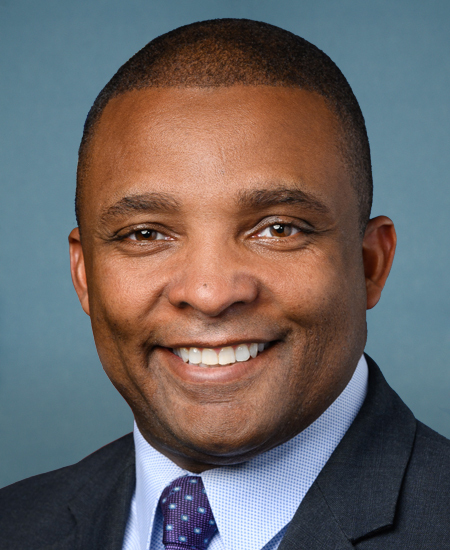
Rep. Donald G. Davis
Sponsored bills
Maddy summaryHR 786 extends Medicare incentive payments for providers participating in "eligible alternative payment models" (like bundled care programs) by adjusting key timeline and percentage references in the Social Security Act. It specifically delays the expiration of these incentives from 2026 to 2027 for certain payments (adding a 3.53% rate for 2027) and extends subsequent years' references accordingly. This bill directly affects Medicare providers using alternative payment models by preserving their access to these financial incentives for an additional year. The key mechanism is technical, updating specific years and payment percentages in Medicare law without changing the underlying program structure. The bill does not create new programs but ensures existing incentives continue for providers in 2027 and beyond.
Maddy summaryHR 801, the Charitable Act, creates a new tax deduction for individuals who do not itemize deductions on their federal tax returns. It allows these taxpayers to deduct up to one-third of their standard deduction amount for charitable contributions in 2026 and 2027. The bill directly affects non-itemizing individual taxpayers by providing a limited, direct deduction for charitable giving without requiring them to itemize. The deduction is capped at 1/3 of the standard deduction amount for those tax years, effective for returns filed in 2027 and 2028.
Maddy summaryHR 737, the *Extraordinary Measures Transparency Act*, requires the U.S. Treasury Secretary to provide detailed reports to Congress when the federal debt approaches the statutory limit. Specifically, it mandates a 30-day report before hitting the limit (describing planned actions, costs, and funding duration), daily updates during the use of "extraordinary measures" (like suspending certain investments or selling securities), and a final summary after such measures end. These reports must detail the specific financial actions taken, their costs, and administrative expenses. The bill directly affects Congress by increasing transparency around the Treasury’s temporary financial strategies to avoid breaching the debt ceiling, without changing debt limit rules or funding.
Maddy summaryHR 715, the BNA Fairness Act, amends the tax code to exclude the basic needs allowance provided to members of the Armed Forces from taxable income. This allowance, paid for daily living expenses like food and housing, directly affects active-duty service members who receive it. The bill adds a specific provision clarifying that this allowance qualifies as a non-taxable "qualified military benefit" under existing tax law. The change takes effect for tax years after the bill becomes law, ensuring service members no longer pay income tax on this specific benefit.
Maddy summaryHR 628, the Honor Our Living Donors Act, amends federal law to protect living organ donors by changing how reimbursement grants operate. It prohibits grant recipients from considering the organ recipient's income when reimbursing donors and removes any expectation that organ recipients pay donors directly. The bill also requires the Secretary to submit an annual report detailing whether grants fully covered all donor expenses and estimating any funding gaps. This directly affects living organ donors participating in federal grant programs under the Public Health Service Act.
Supporting Accurate Views of Emergency Services Act of 2025 or the 911 SAVES Act This bill requires the Office of Management and Budget to categorize public safety telecommunicators as a protective service occupation under the Standard Occupational Classification system no later than 30 days after the enactment of this bill. (The Standard Occupational Classification system is a federal statistical standard used by federal agencies to classify workers into occupational categories for the purpose of collecting, calculating, or disseminating data.)
Maddy summaryThe PURR Act of 2025 creates a uniform federal regulatory framework for pet food in the United States, replacing inconsistent state and historical livestock feed regulations. It preempts state laws on pet food labeling, advertising, and marketing (while preserving state food safety oversight), establishes a 90-day review timeline for new pet food ingredients, and allows ingredients listed in the AAFCO publication to be considered "Generally Recognized as Safe" without specific FDA approval. The bill sets clear rules for ingredient labeling (including "sometimes present" for fats, flavors, and grains) and permits certain marketing claims like "natural" or "hairball control" without premarket approval, provided specific conditions are met. This legislation directly affects pet food manufacturers, pet owners, and veterinarians by creating a more consistent regulatory environment for pet food products nationwide. The FDA must issue specific guidance on pet food nutrition, labeling, and safety within 18 months of enactment.
Maddy summaryThis bill creates a new tax deduction for cash tips received by workers in specific service occupations that traditionally accepted tips before 2024 (like servers, barbers, and beauticians). It allows a deduction of up to $25,000 per year for qualified tips included on employer statements, but excludes employees who earned over a certain threshold ($220,000 in 2023) from the same employer the previous year. The deduction applies to taxable years beginning after December 2024 and is designed to reduce taxable income for eligible workers. It directly affects service industry workers in qualifying tip-dependent jobs who receive cash tips, not the general public.
Maddy summaryThis bill updates federal reporting requirements for subawards (funds given by a recipient of federal funding to another entity). It directly affects federal agencies and recipients of federal awards (like universities, nonprofits, and contractors) by requiring them to track and report second-tier subawards (sub-sub-recipients) starting in 2025. Key provisions include standardizing reporting across agencies, reducing paperwork burden through simplified certifications for no-subaward cases, and improving public access to subaward data. The bill mandates annual progress reports to Congress and requires agencies to implement changes within two years of enactment.