

Maddy summaryThis resolution expresses the House of Representatives' support for blockchain technology and digital assets. It states the House believes the U.S. should prioritize understanding blockchain's potential, foster innovation to improve financial systems, avoid losing digital asset development to less regulated countries, and create tailored regulations that maintain investor protections while acknowledging the unique benefits of the technology. As a non-binding resolution, it does not change laws or directly affect specific groups, but reflects congressional sentiment toward the digital asset industry.
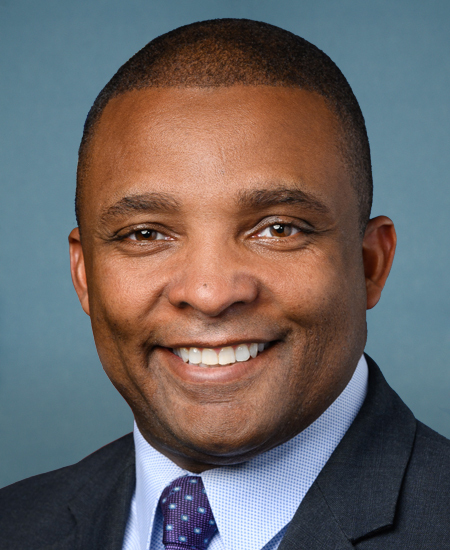
Rep. Donald G. Davis
Sponsored bills
Maddy summaryThis bill expands access to family and medical leave under the FMLA by reducing the required employment period from 12 months to 90 days for most workers. It also lowers the employer size threshold from "50 or more employees" to "1 or more employees," requiring nearly all employers to provide this leave. The changes specifically apply to private-sector workers, federal employees (covered under Title 5), and congressional staff, removing previous eligibility barriers. Key provisions include updating definitions in the FMLA and modifying federal employee leave rules to align with the 90-day requirement. This directly affects millions of workers who previously had to wait a full year for leave eligibility.
Maddy summaryThis bill modifies corporate tax rules to prevent companies from avoiding US taxes by moving operations overseas. It targets tax breaks that companies currently use when they outsource work to foreign countries or reorganize as foreign entities (so-called "inverted corporations"). The bill requires companies to pay tax on foreign profits based on each country where they operate, limits tax deductions for interest by multinational corporations, and treats foreign corporations managed in the US as domestic for tax purposes. These changes aim to close loopholes that allow companies to reduce their US tax burden through foreign operations.
Maddy summaryHR 1007, the Antisemitism Awareness Act of 2025, clarifies how the Department of Education enforces Title VI of the Civil Rights Act of 1964 to address discrimination against Jewish individuals. It requires the Department to consider the International Holocaust Remembrance Alliance (IHRA) definition of antisemitism when investigating complaints involving discrimination based on actual or perceived Jewish ancestry or ethnic characteristics. This affects Jewish students and communities in K-12 schools and colleges receiving federal funding, as it ensures antisemitism is assessed under existing civil rights protections. The bill does not create new laws but specifies that the IHRA definition - already used by the Department since 2018 - must be applied in Title VI enforcement cases.
Maddy summaryThis resolution (HRES 95) is a commemorative measure recognizing the Greensboro Four sit-in during Black History Month. It honors Joseph McNeil, Jibreel Khazan, Franklin McCain, and David Richmond for initiating the 1960 sit-in at a Woolworth’s lunch counter in Greensboro, North Carolina, which catalyzed the civil rights movement. The resolution specifically acknowledges their role as catalysts for student-led activism, the value of racial diversity, and the effectiveness of nonviolent protest, while encouraging states to include their history in school curricula. As a symbolic gesture with no binding policy changes, it directly affects public recognition of this historical event and its significance to civil rights education.
Maddy summaryHR 916, the Rosa Parks Commemorative Coin Act, authorizes the U.S. Treasury to mint and sell commemorative coins (gold $5, silver $1, and half-dollar) in honor of Rosa Parks, a pivotal civil rights leader whose 1955 bus protest sparked the Montgomery Bus Boycott. The coins, to be issued in 2029, will feature designs reflecting her legacy and be sold to the public at face value plus a fixed surcharge ($35 for gold, $10 for silver, $5 for half-dollar). All surcharge funds will be directed to the Rosa and Raymond Parks Institute for Self Development to support its youth development and civil rights education programs. The bill ensures the coins are legal tender, with the Treasury recovering all costs without net government expense.
Maddy summaryHR 942, the "Banning SPR Oil Exports to Foreign Adversaries Act," prohibits the export of petroleum products drawn from the U.S. Strategic Petroleum Reserve to China, North Korea, Russia, Iran, and any entity owned or controlled by these countries or the Chinese Communist Party. The Secretary of Energy may grant a waiver for such exports if certified as serving U.S. national security interests, but must issue implementing rules within 60 days of enactment. This policy directly affects U.S. energy exports and entities seeking to purchase SPR oil from the listed adversaries.
Maddy summaryThis bill reauthorizes the Dr. Lorna Breen Health Care Provider Protection Act, extending mental health support programs for healthcare professionals through 2030 (previously ending in 2024). It requires funded programs to specifically address reducing administrative burdens on healthcare workers while continuing to promote access to mental health and substance use disorder services. The legislation directly affects healthcare providers across the U.S. who may access these federally supported resources. Key provisions include extending funding periods and mandating that grant recipients focus on easing workplace administrative tasks, alongside maintaining existing awareness initiatives. The bill does not create new programs but continues and refines existing mental health support for the healthcare workforce.
Maddy summaryThe HOPE Act of 2025 creates tax-advantaged "HOPE Accounts" for individuals to pay qualified medical expenses. These accounts allow tax-free savings with annual contribution limits of $4,000 for self-only coverage or $8,000 for family coverage, and employers can contribute up to 50% of these limits. Distributions for qualified medical expenses are tax-free, but amounts used for non-medical purposes are taxed at ordinary rates plus a 30% penalty. The bill would take effect for taxable years beginning after December 31, 2025, and applies to individuals with minimum essential health coverage who don't participate in other similar accounts like HSAs or FSAs.
This bill provides for the presentation of a Congressional Gold Medal to the Freedom Riders, in recognition of their contribution to civil rights by fighting for equality in interstate travel.