

Maddy summaryHR 1086, the Agriculture Export Promotion Act of 2025, increases funding for two key U.S. Department of Agriculture export programs to boost agricultural trade. It raises the Market Access Program budget from $255 million to $489.5 million annually and doubles the Foreign Market Development Cooperator Program base funding from $200 million to $400 million, with cooperator funding increasing from $34.5 million to $69 million. These changes, effective through 2029, address years of stagnant funding while aiming to counter competitive disadvantages from foreign agricultural export programs. The bill directly supports U.S. agricultural producers - from apple growers to seafood exporters - by expanding access to international markets through these programs.
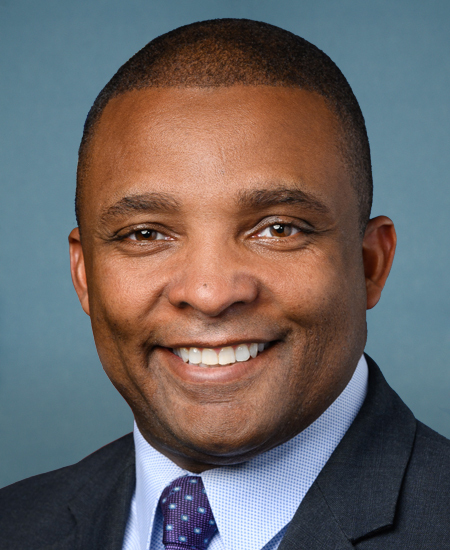
Rep. Donald G. Davis
Sponsored bills
Maddy summaryThis bill requires manufacturers to include a unique physical or chemical identifier on each pill of certain controlled substances in solid oral dosage form (like tablets or capsules). It directly affects pharmaceutical companies producing these specific medications, mandating the identifier to be added to every dose manufactured five years after the bill's enactment. The identifier must be machine-readable and help verify the product's authenticity throughout the supply chain. This change aims to improve tracking and combat counterfeit drugs in the distribution system.
Maddy summaryThe CARGO Act of 2025 prohibits the National Institutes of Health (NIH) from funding any research involving live animals conducted outside the United States. It directly affects foreign organizations and researchers who previously received NIH grants for animal research abroad, including projects funded under the $2.2 billion in grants from 2011-2021. The key provision amends the Public Health Service Act to ban NIH support for such overseas research, requiring all animal research funded by the NIH to occur within the U.S. (including territories and the District of Columbia). This change aims to address concerns about inadequate oversight of animal welfare in foreign labs where self-reported data may be inaccurate.
Protect Our Letter Carriers Act of 2025 This bill requires or authorizes certain actions related to the U.S. Postal Service (USPS). The bill requires the Department of Justice to appoint an assistant U.S. attorney in each judicial district to coordinate and supervise the investigation and prosecution of various crimes related to postal services (for example, assault on a postal service employee, breaking into a post office, or obstruction of mails). The bill also requires the U.S. Sentencing Commission to amend sentencing guidelines to provide that the assault or robbery of a postal employee shall be treated the same as the assault of a law enforcement officer. Additionally, the bill authorizes appropriations for the USPS to install high security collection boxes and replace older versions of the universal mailbox key with electronic versions.
Maddy summaryHR 1046, the Marc Fischer Memorial Act, requires the Bureau of Prisons to implement digital mail scanning technology at all federal prisons to detect fentanyl and other synthetic drugs in inmate mail. It mandates a strategy within 90 days of an evaluation, including 100% scanning of all mail, digital copies of mail to inmates within 24 hours, and physical mail delivery within 30 days for non-contaminated items. The bill directly affects federal prison staff, inmates, and the Bureau of Prisons by aiming to reduce drug-related overdoses and alleviate staff workload tied to mail processing. Implementation must be completed within three years, with annual reports tracking detected drugs and strategy efficiency. The legislation focuses on concrete technological and procedural changes to enhance safety, referencing a successful pilot program at two facilities.
Maddy summaryThis bill permanently extends the New Markets Tax Credit (NMTC), a federal tax incentive that encourages private investment in low-income communities. It directly affects community development entities (CDEs) that channel capital into underserved neighborhoods for projects like housing, healthcare, and businesses. Key provisions include permanently extending the credit beyond 2025, adding annual inflation adjustments to the credit amount starting in 2026, and ensuring the credit isn't reduced by the alternative minimum tax for investments made after December 2024. The changes apply to taxable years beginning after December 2024, providing long-term stability for community development financing.
Maddy summaryThe CONSTRUCTS Act of 2025 creates a federal grant program to fund training programs at community colleges and career schools focused on residential construction careers. It targets rural areas and underserved populations - including veterans, low-income individuals, and groups with historically low representation in construction - to develop skills in trades like carpentry, plumbing, electrical work, and HVAC. Grants, totaling $20 million annually from 2026-2030, require flexible scheduling, partnerships with construction employers, and plans to increase affordable housing supply through workforce development. The bill directly affects community colleges in rural or underserved regions and their students seeking residential construction careers.
Maddy summaryThis bill creates a tax exclusion for landowners who sell certain property interests through the Defense Department's Readiness and Environmental Protection Integration (REPI) program. It excludes the gain from taxable income when selling "qualified real property interests" (including full ownership, remainder interests, or surface use restrictions) to a qualified organization under the REPI program, which protects military readiness areas while conserving environmentally sensitive lands. The exclusion does not apply if the property was purchased within three years prior to sale (except for family partnerships or family-owned entities). This policy change directly affects landowners participating in the REPI program by reducing tax liability on qualifying sales.
Maddy summaryHR 1102 establishes a commission to study the feasibility of creating a National Museum of Italian American History and Culture in Washington, D.C. The commission, composed of 8 members appointed by congressional leaders, will examine factors like location options, costs, fundraising potential, and impacts on existing museums, and must report back within 18 months. It will not create the museum itself but will develop recommendations for Congress on whether to proceed, with all funding coming from private sources - no federal funds may be used for the commission’s work. The bill focuses solely on the study process, not on building or operating the museum.
Maddy summaryThe ORPHAN Cures Act (HR 946) adjusts how the government calculates approval timelines for certain rare disease treatments under the Drug Price Negotiation Program. It clarifies that periods when a drug was previously designated as an "orphan drug" (for rare diseases) won't count toward the timeline for price negotiations. The bill also broadens the definition of "rare disease" to cover multiple conditions simultaneously, aligning with existing federal law. This directly affects manufacturers of orphan drugs by potentially extending their exclusivity periods before price negotiations begin.