

Rural Telehealth and Education Enhancement Act of 2025 This bill reauthorizes the Distance Learning and Telemedicine Program through FY2030. This Department of Agriculture program provides grants to help rural communities gain the technology and training necessary to engage in telemedicine and distance learning.
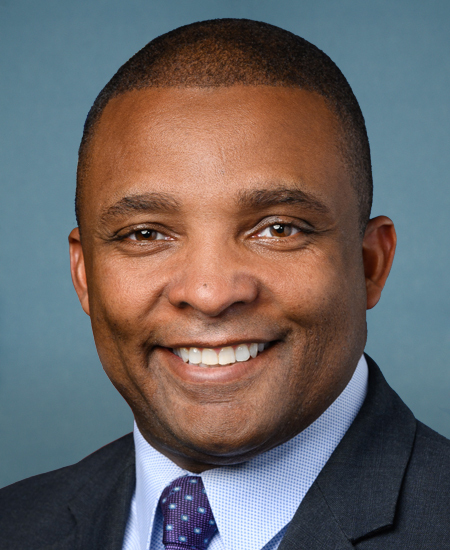
Rep. Donald G. Davis
Sponsored bills
This concurrent resolution declares that Congress should not impose any new performance fee, tax, royalty, or other charge relating to the public performance of sound recordings on a local radio station for broadcasting sound recordings over the air, or on any business for such public performance of sound recordings.
Maddy summaryHRES 133 is a symbolic House resolution supporting the designation of February 15-22, 2025, as "National FFA Week." It recognizes the National FFA Organization’s role in developing student leadership through agricultural education and celebrates two milestones: the 90th anniversary of the New Farmers of America (which served Black students until merging with FFA in 1965) and the 75th anniversary of FFA’s federal charter (granted by Congress in 1950). The resolution has no policy impact or funding provisions - it simply expresses congressional support for these observances. It directly affects no individuals or entities, as it is a non-binding gesture honoring an educational organization.
Maddy summaryHR 1301, the Death Tax Repeal Act, would eliminate the federal estate tax and generation-skipping transfer tax for estates of individuals dying on or after its enactment date. It directly affects individuals inheriting significant assets, as it removes taxes on estates exceeding $10 million (adjusted for inflation) and repeals taxes on large transfers between generations. The bill modifies the gift tax by establishing a $10 million lifetime exemption with annual inflation adjustments, replacing previous tax brackets. It applies to estates, gifts, and transfers occurring on or after the bill's effective date.
Maddy summaryThis bill updates federal vehicle safety standards to permit pulsating light systems on high-mounted stop lamps, directly affecting vehicle manufacturers and safety regulators. It requires the Transportation Secretary to issue new regulations within 180 days establishing performance rules for these systems. The key provision defines a "pulsating light system" as one that emits rapid pulses (max 4 pulses within 1.2 seconds) when brakes are applied, then switches to steady light, with a mandatory 5-second lockout period before pulses can repeat after brake release. The bill amends Federal Motor Vehicle Safety Standard 108 to formally allow this technology under specific technical parameters.
Maddy summaryHR 1300, the PSA Screening for HIM Act, requires health insurance plans and issuers to cover prostate cancer screenings without cost-sharing (like copays or deductibles) for men aged 40+ who are at high risk of prostate cancer. This directly affects African-American men and men with a family history of prostate cancer, as defined by the bill. The law amends existing insurance coverage rules to mandate this specific screening coverage, effective for plan years starting January 1, 2026. It does not change screening guidelines but removes financial barriers to recommended screenings for these high-risk groups.
Border Enforcement, Security, and Trade Facilitation Act of 2025 or the BEST Facilitation Act This bill establishes a pilot program for positions within U.S. Customs and Border Protection (CBP) to review inspection images of vehicles and cargo entering or exiting the United States. Specifically, the bill establishes the position of image technician 1 within the CBP Office of Field Operations. An image technician must (1) review nonintrusive inspection images of vehicles and cargo entering or exiting the United States; (2) assess whether such vehicles and cargo contain contraband, illicit drugs, weapons, or persons seeking to unlawfully enter the United States; and (3) refer suspicious vehicles and cargo for further inspection by a CBP officer. These reviews must take place at one of five regional command centers established pursuant to this pilot program. The bill also establishes the position of image technician 2 with additional responsibilities, including receiving and reporting intelligence to the National Targeting Center about techniques used by malign actors to transport contraband, illicit drugs, weapons, and persons seeking to unlawfully enter the United States. Image technicians must be supervised by a supervisory CBP officer. The bill establishes annual training requirements for both positions, including training on privacy and civil liberties and how to analyze inspection images. This pilot program ends five years after the date of enactment of this bill. Individuals employed as image technicians at the end of the pilot program may transfer to comparable positions within CBP or the Department of Homeland Security.
More Homes on the Market Act This bill increases the amount of gain from the sale of a principal residence that an individual may exclude from gross income (for federal tax purposes). Under the bill, an individual may exclude from gross income gain from the sale of a principal residence of up to $500,000 (currently $250,000), and taxpayers who are married and file a joint federal income tax return may exclude up to $1 million (currently $500.000). The bill also requires these amounts to be adjusted annually for inflation.
Maddy summaryThis bill creates a new National Center for Alternatives to Animals in Research and Testing within the National Institutes of Health (NIH). It requires NIH to establish incentives for researchers to adopt non-animal methods - such as organoids, AI models, and 3D human cell systems - before approving animal-based studies, and mandates that all federally funded institutions publicly report annual animal usage data by species. Covered entities must also submit biennial plans to reduce animal use and update their reports every two years. The law aims to implement a 1993 congressional mandate for reducing animal research through transparency, new resources, and standardized evaluation of alternatives.
Maddy summaryHR 1339, the Safeguarding Social Security and Medicare Act, requires the Comptroller General to conduct a study within one year of enactment on how inflation and rising living costs impact Social Security and Medicare benefits. The study will examine these effects and provide Congress with specific recommendations for legislative actions to maintain full benefits for these programs. This study directly addresses the needs of 71.7 million Social Security recipients and 66.6 million Medicare beneficiaries, focusing on financial pressures faced by seniors and disabled individuals. The bill itself does not change current benefits but aims to inform future policy decisions through evidence-based analysis.