

Maddy summaryThis bill establishes a Veterans Affairs grant program to fund peer-to-peer mental health support for veterans. It provides up to $250,000 per grant to eligible organizations (like veteran nonprofits, service groups, or state agencies) to hire veterans as peer specialists who host nonclinical support groups and offer 24/7 mental health assistance. The program prohibits grant recipients from collecting or reporting veterans' personal information. It directly affects veterans seeking accessible, nonclinical mental health support through peer-led services.
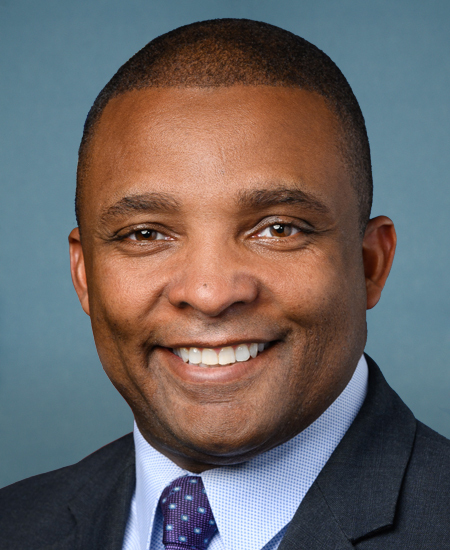
Rep. Donald G. Davis
Sponsored bills
Maddy summaryThis bill expands Veterans Affairs (VA) coverage for veterans with permanent and total service-connected disabilities needing medical care outside the U.S. It allows the VA to pay for hospital care and medical services abroad if the care meets U.S. medical standards and uses FDA-approved medications. Key provisions include requiring direct deposit for faster reimbursements, enabling digital submission and tracking of forms via VA mobile apps, and mandating a VA report to Congress within two years on implementation. The policy directly affects veterans with qualifying disabilities seeking necessary medical treatment overseas, modernizing how the VA handles foreign medical coverage.
Maddy summaryThis bill amends the Indian Health Care Improvement Act to replace the term "contract health care" with "purchased/referred care" throughout federal law. It ensures patients who pay out-of-pocket for authorized purchased/referred care (such as services arranged by the Indian Health Service) can receive reimbursement from the IHS within 30 days of submitting documentation electronically or in person. The IHS must establish these reimbursement procedures within 120 days and update all relevant documents, including the Indian Health Manual, within 180 days. The changes apply to all purchased/referred care authorized by the IHS after enactment, but do not affect tribal self-determination programs unless tribes agree to the new terms.
Maddy summaryHR 1433, the Kids’ Access to Primary Care Act of 2025, sets a minimum Medicaid payment rate of 100% of Medicare’s rate for primary care services provided to children. It directly affects Medicaid-covered children and expands eligibility for providers to include pediatricians, family medicine physicians, nurse practitioners, physician assistants, certified nurse-midwives, and rural health clinics or Federally-qualified health centers (FQHCs) under specific conditions. Key provisions require Medicaid managed care plans to pay these providers at the minimum rate, with documentation requirements to verify compliance, and exclude emergency department services from the definition of primary care. The bill also mandates a study to track enrollment and payment rate changes across states after implementation.
Maddy summaryHR 1421, the "Make American Flags in America Act of 2025," requires all flags of the United States displayed on federal property or procured by federal agencies to be 100% manufactured in the United States. This directly affects federal agencies (including executive departments, military branches, and legislative/judicial offices) by banning the use of foreign-made flags for official displays or purchases. The bill sets a 90-day deadline for procurement changes and a two-year timeline for display requirements, while excluding private entities from these rules. It also mandates a Federal Trade Commission study on enforcing country-of-origin labeling for flags, with a report due within one year of enactment.
Maddy summaryHR 1414, titled "Cameron’s Law," increases the tax credit for pharmaceutical companies developing orphan drugs (medicines for rare diseases) from 25% to 50% of qualified research expenses. This change directly affects drug manufacturers investing in treatments for conditions affecting fewer than 200,000 people in the U.S. The bill amends the Internal Revenue Code to implement this higher credit rate, effective for taxable years starting after the law’s enactment. It provides a concrete financial incentive to encourage research into rare disease treatments without altering eligibility criteria or adding new requirements.
Maddy summaryHR 1410 expands access to mental health care for 9/11 responders and survivors by allowing licensed mental health providers (not just physicians) to conduct initial health evaluations and certifications under the World Trade Center Health Program. It adjusts the program’s funding formula to account for changing enrollment numbers by linking annual funding to the previous year’s enrollment ratio, and clarifies that deceased individuals are excluded from enrollment counts. The bill also extends the timeframe for adding new health conditions to the program’s list and requires a 2028 report assessing long-term funding needs through 2090. These changes aim to streamline eligibility, improve care access, and ensure sustainable funding for the program.
Maddy summaryHR 1363 designates the "Honor and Remember Flag" (created by Honor and Remember, Inc.) as the official symbol honoring U.S. military members who died in service. It requires federal locations - including the Capitol, White House, military memorials, VA medical centers, and all post offices - to display this flag on specific days like Memorial Day, Veterans Day, and Flag Day. The bill mandates visible public display at these locations and sets deadlines for implementing the requirement (180 days for regulations, 30 days for flag procurement). It does not alter military benefits or create new programs, focusing solely on symbolic recognition through flag display.
Maddy summaryHR 1377, the Sarah Keys Evans Congressional Gold Medal Act, authorizes a Congressional Gold Medal to honor Sarah Keys Evans for her pivotal role in ending interstate bus segregation. The bill directs the Treasury Secretary to strike a gold medal (and bronze duplicates for sale) to commemorate her 1952 refusal to give up her bus seat, which led to the ICC ruling that outlawed racial segregation on interstate buses in 1955. This is a ceremonial honor recognizing her civil rights contribution, not a policy change affecting any laws or people.
Creating Access to Rural Employment and Education for Resilience and Success Act or the CAREERS Act This bill reauthorizes the Rural Innovation Stronger Economy (RISE) Grant Program and expands the program to include support for career pathway programs or industry or sector partnerships in industries in rural communities. As background, this Department of Agriculture (USDA) program offers grant assistance to create and augment high-wage jobs, accelerate the formation of new businesses, support industry clusters, and maximize the use of local productive assets in eligible low-income rural areas. Under the bill, RISE grant program funds may be used to support career pathway programs (i.e., a combination of rigorous and high-quality education, training, and other services) or industry or sector partnerships in industries in rural communities. These industries may include public utilities (i.e., telecommunications, broadband, water, wastewater, disposal, and electric supply services), conservation practices and management, health care, child care, manufacturing, and agribusiness. The bill removes the current requirement that the program provide grants (to the maximum extent practicable) for job accelerators in at least 25 states. Instead, USDA must ensure the regional diversity of grant recipients or participants in providing for job accelerators, career pathway programs, and industry or sector partnerships. The bill also includes additional reporting requirements for career pathway programs and industry or sector partnership grant recipients.