

Maddy summaryThis bill modifies tax credit rules to help businesses recover after disasters. It allows businesses operating in designated disaster areas to treat certain unused tax credits (carryforwards) as transferrable credits against current tax liability, rather than letting them expire. Specifically, it applies to taxpayers making eligible expenditures for business operations in areas with a major disaster declaration after December 31, 2023, or a state-declared disaster meeting specific criteria. The change affects businesses in affected zones by providing immediate tax relief for qualifying expenses incurred within two years of the disaster declaration. It does not involve energy policy or new funding, but adjusts existing tax credit rules for disaster recovery.
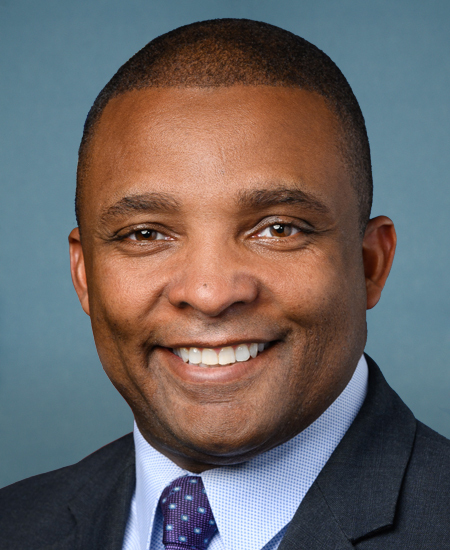
Rep. Donald G. Davis
Sponsored bills
Maddy summaryHR 7391, the Community Health Center Drug Pricing Protection Act, requires that Federally Qualified Health Centers (FQHCs) pay the discounted 340B ceiling price for covered drugs **at the time of purchase**, not later through rebates or adjustments. This directly affects FQHCs, which rely on 340B discounts to provide affordable care to low-income patients. The bill amends the Public Health Service Act to prohibit manufacturers from entering agreements where FQHCs initially pay more than the ceiling price, with later reimbursement. It takes effect immediately upon enactment for all new drug purchases and applies to existing agreements starting then.
Maddy summaryThe Mammography Access for Veterans Act of 2025 expands the Department of Veterans Affairs' telescreening mammography program by removing the "pilot" designation and extending its timeline until May 1, 2027. This legislation requires the VA to offer at least one mammography option - such as telescreening, full-service screening, or mobile units - in every state and Puerto Rico within two years of enactment. The bill also mandates that these services remain accessible to veterans with paralysis, spinal cord injuries, or other disabilities. Additionally, it allows the VA to continue expanding these services to facilities outside the current pilot group or in states where breast imaging is not yet available.
Maddy summaryThe PASTEUR Act of 2026 creates a new government contracting program to incentivize development of new antimicrobial drugs for treating drug-resistant infections. The Health and Human Services Secretary would award contracts to pharmaceutical sponsors meeting specific criteria on clinical benefits, innovation, and public health impact, with annual payments ranging from $75 million to $300 million (adjusted for inflation). Contract requirements include ensuring drug availability, tracking resistance data, promoting appropriate use, and maintaining supply chains. The bill also establishes antimicrobial stewardship programs for hospitals and outpatient facilities and improves surveillance of antimicrobial use and resistance. This legislation aims to address antibiotic resistance by creating financial incentives for new treatments and improving how antimicrobials are used and monitored.
Maddy summaryThis bill modifies federal budget rules for unspent agency funds. It requires federal agencies to allocate 49% of unused funds to the next fiscal year, 49% toward paying the national debt, and 2% for retention bonuses (capped at 10% of an employee's base pay). Agencies must also limit future budget requests to the previous year's amount adjusted for inflation. The bill directly affects all executive branch agencies (excluding the Red Cross), altering how they manage leftover budget authority. It does not create new savings programs for individuals but changes government fiscal management procedures.
Maddy summaryThis bill amends federal energy conservation law to require federal agencies to consider mechanical insulation as a standard energy-saving measure during building evaluations. It defines "mechanical insulation property" as materials that reduce energy loss in mechanical systems while meeting ASHRAE 90.1 standards, including insulation placed in service with those systems. The law adds mechanical insulation to the list of measures agencies must evaluate for potential installation in federal buildings as part of their required energy and water assessments. This directly affects federal agencies managing buildings, ensuring they formally assess this specific efficiency measure during routine evaluations.
Maddy summaryThis bill creates a tax exclusion for certain disaster mitigation payments received by property owners. It allows individuals to exclude from gross income funds paid by state programs (or approved entities) to make improvements that reduce damage from windstorms, earthquakes, or wildfires. The exclusion applies to payments made for specific property upgrades like storm shutters or fire-resistant roofing. The change takes effect for 2021+ tax years and includes a retroactive option for taxpayers to amend prior returns. It directly affects homeowners participating in qualifying state disaster resilience programs.
Maddy summaryHR 1458, the VETS Opportunity Act of 2025, amends VA education benefits rules to ensure veterans using these benefits for independent study courses receive meaningful instruction. It requires that such courses include regular, substantive interaction between students and instructors, and limits eligibility to programs at institutions approved for federal student aid under the Higher Education Act. This directly affects veterans pursuing online or self-paced courses using VA education benefits. The changes apply to courses starting August 1, 2025, and aim to standardize benefit access for qualifying educational programs.
Maddy summaryThis bill prevents the Secretary of Homeland Security from requiring their personal approval for any Federal Emergency Management Agency (FEMA) expenditure exceeding $100,000 related to disaster costs. It directly affects FEMA's internal approval processes for disaster response funding. The key provision removes a specific bureaucratic requirement, allowing lower-level officials to approve larger disaster-related spending without needing the Secretary's direct sign-off.
Maddy summaryHR 6635, the Bus Operator Safety and Security Act, requires new fixed-route buses over 30 feet long (with a 10+ year lifespan) purchased using federal transit funds to have physical barriers at the driver's workstation. These barriers must extend from floor to ceiling, fully enclose the workstation to block entry of people or objects, and not obstruct the driver's view. Transit agencies must install these barriers within two years of the law's enactment, unless the labor union representing bus drivers agrees to waive the requirement. The rule applies only to new buses bought with federal funds (excluding those from rural transportation programs) and directly affects transit agencies and bus drivers operating large fixed-route vehicles.