

Maddy summaryThis bill exempts certain less-than-lethal projectile devices from federal sales taxes and National Firearms Act restrictions. It directly affects manufacturers, importers, and producers of these devices, which are defined as non-lethal tools (like rubber bullets or beanbag rounds) designed not to cause serious injury and unable to be easily converted to use standard firearm ammunition. Key mechanisms include a 90-day classification process for manufacturers seeking exemption, an annual public list of approved devices, and annual congressional reports on devices excluded from the exemption. The policy change applies to devices meeting specific safety criteria, such as projectile velocity limits and design features preventing misuse as conventional weapons.
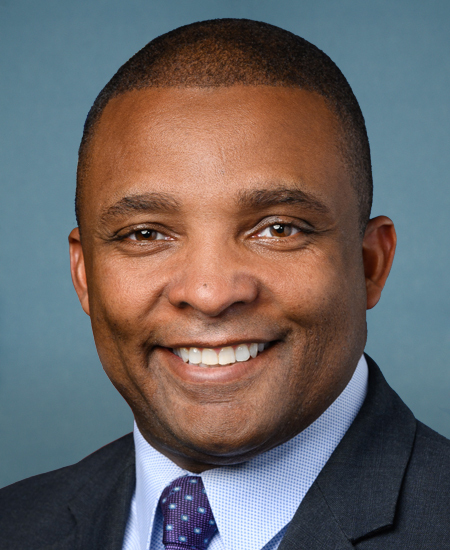
Rep. Donald G. Davis
Sponsored bills
This resolution supports the designation of the International Year of the Woman Farmer and recognizes the critical role of women in agriculture. The resolution also encourages citizens to celebrate the impact these women have on the food systems and agricultural workforce of the United States by encouraging and empowering women to pursue careers in agriculture and cultivate leadership opportunities.
Maddy summaryThis bill requires the Social Security Administration to regularly inform disabled beneficiaries about the Ticket to Work program. Specifically, the Commissioner must send program information to each disabled beneficiary within one year of the law's enactment, and then every six months thereafter. The program helps disabled individuals access employment services while retaining benefits. This change directly affects Social Security disability beneficiaries by mandating ongoing outreach about work support options, without altering the program's existing rules or benefits.
Maddy summaryThe Human Trafficking Awareness Training Recognition Act of 2026 creates a certification program for employers in industries with high human trafficking prevalence, allowing them to earn recognition after providing employee training on identifying and responding to human trafficking. Employers must apply annually between January 31 and April 30, detailing their training efforts, and the Secretary of Homeland Security will issue a one-year certificate to qualifying employers. The program prohibits false displays of certification, mandates annual reports to Congress on participation and costs, and authorizes application fees to cover administrative expenses.
Maddy summaryThis bill creates a tax credit for businesses selling products made with U.S.-grown cotton. The credit equals 24% of the cotton's market value if processed only in the U.S. or in countries with U.S. trade deals, or 18% for other processing locations. To qualify, cotton must be digitally traced from U.S. farms to finished products and certified by the USDA as meeting origin requirements. It directly affects clothing and textile manufacturers selling qualifying products in the U.S. market.
Maddy summaryThe Veteran Suicide Prevention Act requires the Department of Veterans Affairs (VA) to conduct a comprehensive review of all veterans who died by suicide during the five years before the bill's enactment. The review must analyze demographics, medication history (including black box warnings and psychotropic drugs), prescribing patterns, combat trauma, and facility-specific suicide rates. The VA must submit a public report to Congress within 30 days of completing the review, detailing findings and recommendations to improve veteran safety. This applies to all veterans who received VA care during the relevant five-year period. The law aims to identify systemic patterns and inform future suicide prevention efforts.
Maddy summaryThe MOLD Act (HR 7188) establishes uniform health and safety standards for military housing managed by private contractors, directly affecting approximately 700,000 service members and their families living in privatized housing across 78 developments. It requires the Defense Secretary to set enforceable limits on indoor humidity (below 50%), mandate third-party inspections after tenant complaints or unit turnover, and hold contractors fully responsible for mold remediation, relocation costs, and property damage. The bill also mandates public reporting of complaints, inspection results, and remediation timelines, and requires contractors to use certified professionals for mold assessments. These provisions aim to reduce mold-related health risks and improve accountability in privatized military housing.
Maddy summaryHR 7178, the U.S.-Israel Anti-Killer Drone Act of 2026, requires enhanced U.S.-Israel cooperation to counter Iranian unmanned systems. The bill directs the U.S. and Israel to jointly develop, test, and deploy counter-drone technologies through their existing Operations Technology-Working Group, including sharing threat intelligence and conducting joint training. It increases annual funding for this cooperation from $55 million to $100 million and mandates detailed annual reports to Congress on progress, threat assessments, and the adequacy of current counter-drone capabilities. The bill directly affects U.S. and Israeli military forces by accelerating joint efforts to address threats from Iran-origin drones targeting U.S. allies and military assets in the Middle East.
Maddy summaryHR 4105, the VET Act of 2025, establishes a federal grant program to help veterans, active-duty service members transitioning out of the military, and their spouses secure jobs in the energy industry. The program provides grants to energy companies (including manufacturers of solar, wind, or nuclear equipment) to cover costs like job training, recruitment, and relocation for eligible individuals - prioritizing those with military energy experience, in opportunity zones, or facing barriers like homelessness. Grants are capped at $10,000 per hire, with a maximum $500,000 annual limit per company, funded at $60 million yearly from 2026-2031. Companies must report on job retention, employee satisfaction, and program outcomes to the Department of Labor, with a final evaluation due to Congress by 2030.
Maddy summaryThis bill establishes a Senior Advisor for National Security within the USDA to coordinate national security efforts related to food and agriculture. It requires the USDA Secretary to submit biennial reports to Congress and the National Security Council identifying vulnerabilities such as foreign control of agricultural data, supply chain disruptions, cybersecurity risks, and dependence on foreign-sourced inputs. The bill mandates improved interagency coordination, including sharing personnel with defense and intelligence agencies, and requires the USDA to assess gaps in security efforts and propose solutions. The primary direct effect is on the USDA's internal operations and reporting structure, not on agricultural policies or farmers.