

Maddy summaryThe PORCUPINE Act amends the Arms Export Control Act to include Taiwan alongside New Zealand and Israel in specific certification and reporting requirements related to U.S. arms exports. This legislative change ensures Taiwan is treated similarly to these allied nations in certain foreign policy contexts involving defense article transfers. The bill also directs the Secretary of State to assess the feasibility of creating an expedited licensing process for military equipment transfers from designated allies to Taiwan within 90 days. Additionally, the act requires biennial reports on the implementation of these amendments and includes a provision stating that the legislation does not alter existing U.S. policy toward Taiwan under the Taiwan Relations Act. The entire measure is set to expire seven years after its enactment.
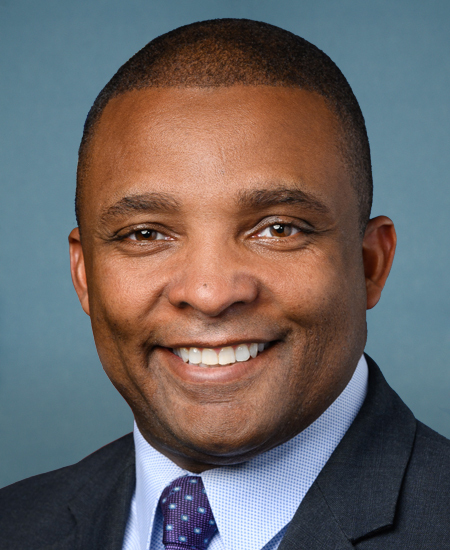
Rep. Donald G. Davis
Sponsored bills
Maddy summaryHR 7137, the Shutdown Fairness Act, requires federal agencies to pay covered employees (including most federal workers and military personnel) and covered contractors their regular pay during government shutdowns. It appropriates funds from the Treasury to cover standard employee compensation and contractor payments for work performed during a lapse in regular appropriations, ensuring pay continues without delay (within 7 days if a shutdown is ongoing at enactment) and aligns with regular pay schedules. The bill applies only to individuals employed or with accepted offers before the shutdown began and mandates that these payments be charged to future appropriations. It does not change agency obligations under existing contracts or authorize new spending beyond the specified shutdown period.
Maddy summaryHR 7095 bans the importation of energy products (like refined oil) classified under chapter 27 of the U.S. tariff system if they were produced using crude oil originating from Russia, even if processed outside Russia. This directly affects U.S. importers and companies handling such energy products. The bill amends existing law to prohibit these imports by requiring customs to block shipments tied to Russian crude oil, regardless of where refining occurred. It targets "laundered" Russian oil that might otherwise enter the U.S. market through third-country refineries. The policy change focuses on restricting the flow of Russian energy revenue through import channels.
Maddy summaryThis bill amends the Social Security Act to provide work incentives for Purple Heart recipients receiving disability benefits. It removes the standard earnings penalty that would reduce benefits when veterans earn above the "substantial gainful activity" (SGA) threshold, instead allowing benefits to continue with a reduced rate ($1 reduction for every $4 earned above the threshold, but not below $0). It also specifically applies a higher SGA earnings limit to Purple Heart recipients under Social Security disability rules. The changes affect veterans who received a Purple Heart for a service-connected injury and are currently receiving Social Security disability benefits. The bill takes effect six months after enactment.
Maddy summaryHR 7094 prohibits U.S. exports of petroleum equipment and services to Russia, directly affecting U.S. companies and foreign subsidiaries that supply oil/gas industry tools, software, engineering services, or related technologies to Russian entities. The bill mandates asset freezes and visa bans for violators, including foreign persons involved in such transactions, while exempting medical isotopes (like Carbon-13) and humanitarian aid for food, medicine, or agricultural commodities. Key provisions require the President to block transactions involving U.S. persons or entities, extend sanctions to parent companies for subsidiary violations, and implement regulations within 180 days. This targets energy sector support for Russia without disrupting medical, agricultural, or aid-related operations.
Maddy summaryHR 6662, the Department of Defense and Department of Veterans Affairs Medical Credentialing Integration Act of 2025, requires the Defense and Veterans Affairs departments to create a single, unified system for medical provider credentialing and privileging. It directly affects military and VA medical staff (like doctors and nurses) by replacing separate, non-interoperable systems currently used by each department. Key provisions mandate a joint report on existing systems within 120 days, selection of one unified system by January 2027, and full implementation by January 2028, ensuring seamless sharing of provider credentials across both departments. This eliminates redundant credentialing processes and improves administrative efficiency for medical providers working across DoD and VA facilities.
Maddy summaryThe Veterans Career Connection Act establishes a "Veterans Transition Talent Hub" to help veterans and service members transitioning from military service find civilian jobs. The program, run by the VA Secretary, allows eligible participants (veterans or service members eligible for preseparation counseling) to opt into sharing their discharge date, military skills/certifications, location preferences, and resume with approved employers. Employers can search this database to connect with qualified candidates. The hub requires consultation with Defense, Labor, employers, and veterans' organizations during implementation.
Maddy summaryThe Renewed Hope Act (HR 6998) requires the Department of Homeland Security to hire 200 new staff, including 40 forensics analysts and 30 child exploitation investigators for the Victim Identification Laboratory, plus 130 additional personnel for the Child Exploitation Investigations Unit, to improve identification and rescue efforts for victims of child sexual exploitation. It establishes a mandatory training program for law enforcement and related organizations to use updated victim identification techniques and mandates coordination between DHS and the National Center for Missing and Exploited Children to streamline investigations. The bill also includes strict privacy rules to secure victim information and allows temporary hiring of experts for forensic analysis at specified rates.
Maddy summaryHR 6433, the Rural Uplift and Revitalization Assistance Act, requires the U.S. Department of Agriculture (USDA) to provide technical assistance directly or through partners to help local groups - including governments, nonprofits, and healthcare providers - in rural areas designated as "geographically underserved and distressed." These areas are defined as those with high poverty, social vulnerability, economic distress, or lacking basic services like water or housing near the U.S.-Mexico border. The bill mandates that the USDA publish annual reports on this assistance’s impact for Congress. It focuses on improving access to existing USDA rural development programs, not creating new funding or altering program eligibility.
Maddy summaryHR 6385, the Farm Transitions Act of 2025, amends an existing commission study under the 2018 Agriculture Improvement Act. It requires the Secretary to establish the commission within 60 days of the bill’s enactment and expands its study to include heirs’ property, barriers for women and historically underserved farmers in land transfers, leasing trends (including by foreign entities), and how tax policies affect farm transitions. The bill updates deadlines, requiring the commission to submit reports within two years and extending the study period for certain analyses. This directly affects farmers, ranchers, and agricultural landowners involved in succession, inheritance, or purchase processes, particularly those facing equity or ownership challenges.