

Maddy summaryHJRES 114 is a joint resolution seeking congressional disapproval of a Federal Highway Administration (FHWA) rule that would have required tracking greenhouse gas emissions as part of assessing performance for the National Highway System. The rule, published in the Federal Register in December 2023, aimed to establish specific metrics for evaluating highway system performance, including emissions data. If approved, this resolution would nullify the rule, preventing the FHWA from implementing the emissions tracking requirement. This action directly affects how the FHWA measures highway system performance, specifically regarding environmental metrics.
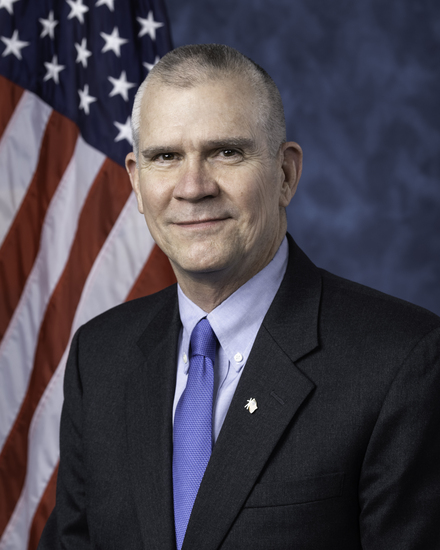
Rep. Matthew M. Rosendale, Sr.
Sponsored bills
This resolution expresses the sense of the House of Representatives that former President Trump did not engage in insurrection or rebellion against, nor give aid or comfort to the enemies of, the United States.
Maddy summaryThis resolution disapproves a Department of Energy rule that would have set new energy efficiency standards for consumer furnaces. The rule, published in the Federal Register (88 Fed. Reg. 87502), aimed to require furnace manufacturers to produce models meeting higher energy conservation levels. If enacted, this resolution would cancel the rule, preventing it from taking effect. As a result, current energy efficiency standards for furnaces would remain unchanged, and manufacturers would not face the new requirements.
Maddy summaryHR 7117, the Driver Data Control Act of 2024, limits access to data from vehicle safety recorders (EDRs) to protect owners' privacy. It requires federal law enforcement to obtain a warrant, court order (with 48-hour owner notice), or use data solely for emergency medical care in crashes. The bill prohibits insurers, lienholders, and lessors from accessing EDR data without written owner consent, banning conditions that tie insurance claims, payments, or lease agreements to data access. This directly affects vehicle owners, law enforcement, and insurance/leasing companies by establishing clear consent rules and restricting data use.
Maddy summaryThis bill repeals a law (18 U.S.C. § 1715) that previously prohibited mailing firearms without a license. It directly affects the U.S. Postal Service, firearm sellers, and individuals mailing firearms by preventing the Postal Service from creating rules that would block firearm mailings or require disclosure of sensitive records like sales receipts or firearm serial numbers. Key provisions include removing the existing ban on mailing firearms and prohibiting the Postal Service from imposing new restrictions on firearm mailings or demanding customer transaction data. The bill ensures that firearm mailings can proceed without these specific federal restrictions, while applying to ongoing legal cases under the repealed law.
Maddy summaryHR 7118, the "Halt the Invasion Act," prohibits federal funding for any efforts to regain control of Shelby Park in Eagle Pass, Texas, without Texas's consent. It requires the federal government to reimburse Texas annually for border security costs at Shelby Park, capping reimbursements at the cost the federal government would have incurred if it maintained control. The bill's provisions sunset one year after enactment if Texas fails to publicly report monthly border security data (including arrests and drug seizures) for two consecutive months. This bill directly affects Texas state government and federal agencies managing border funding, creating a specific funding mechanism tied to Texas's data reporting.
Maddy summaryHR 7083, the RAZOR Act, prohibits federal agencies from removing or altering barriers (like fences or fences) built by states along the U.S. border to prevent unlawful crossings. It directly affects federal departments and agencies, such as the Department of Homeland Security, by restricting their ability to modify state-constructed border infrastructure. The key provision is a clear ban on any federal action that would change or remove these state-built barriers. This bill makes a specific policy change regarding federal-state border infrastructure authority without altering broader immigration law.
Ultrasound Informed Consent Act This bill requires abortion providers to conduct an ultrasound before performing an abortion. Specifically, before a woman gives informed consent to any part of an abortion, the abortion provider must perform an obstetric ultrasound on the pregnant woman; provide a simultaneous explanation of what the ultrasound is depicting; display the ultrasound images so the woman may view them; and provide a complete medical description of the images, including the dimensions of the embryo or fetus, cardiac activity if present and visible, and the presence of external members and internal organs if present and viewable. Providers are subject to civil actions and penalties for violations. The bill's ultrasound requirements do not apply in cases where a physical disorder, illness, or injury caused by the pregnancy endangers a woman's life. A woman is also not required to view the ultrasound images; nor may she or the provider be penalized if she declines to do so.
Maddy summaryThe Death Tax Repeal Act would eliminate the federal estate tax and generation-skipping transfer tax for estates of people who die on or after the bill's enactment date, and for generation-skipping transfers made after that date. It would also establish a new $10 million lifetime gift tax exemption (adjusted annually for inflation) and replace the existing gift tax rate schedule with a revised structure. These changes would primarily affect high-net-worth individuals and their heirs, as the estate tax and gift tax typically apply to large estates or gifts exceeding the new exemption threshold. The bill's provisions would take effect on the date of enactment, with transitional rules for the year the bill is signed into law.
Maddy summaryHR 7047, the "Defund Davos Act," prohibits the use of federal funds from the Department of State, USAID, or any other federal agency to provide financial support to the World Economic Forum. The bill directly affects U.S. government agencies that manage international funding programs by banning their use of taxpayer money for the Forum's activities. Its key provision is a clear funding ban, ensuring no federal resources can be allocated to the World Economic Forum under any circumstances. This is a procedural measure focused solely on restricting federal expenditures, with no other policy changes or impacts described.