

Maddy summaryThis bill provides stopgap funding to maintain pay and operations for specific government personnel if Congress fails to pass full-year budget bills by October 2024. It directly affects military members (including reserves), Defense and Coast Guard civilian staff, border agents (CBP), immigration officers (ICE), Transportation Security Administration staff, air traffic controllers, and Veterans Affairs employees processing benefits. Key provisions ensure continued salaries for these workers during funding gaps, covering mission-critical functions like border security, military support, and VA benefit delivery. The funding expires automatically on October 1, 2024, or earlier if regular appropriations are enacted.
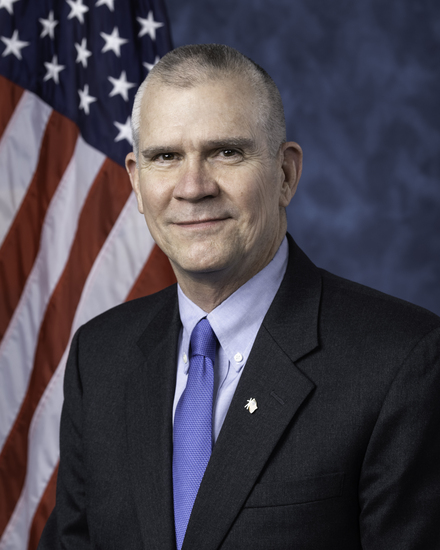
Rep. Matthew M. Rosendale, Sr.
Sponsored bills
Maddy summaryHR 6940, the Mass Immigration Reduction Act of 2024, establishes a 5-year moratorium on most immigration by setting strict annual limits. It directly affects immigrants seeking family reunification (capping family-sponsored visas at zero), employment-based visas (capping at 5,000 annually), and refugees (limiting admissions to 25,000 per year). Key provisions include banning diversity visas, requiring citizenship renunciation for naturalization, and restricting birthright citizenship to children of U.S. citizens or lawful permanent residents. The bill requires the President to submit a report to Congress after 5 years confirming reduced illegal immigration and no negative impacts on wages or public services before ending the moratorium.
Maddy summaryThe REMAIN in Mexico Act of 2024 would require the U.S. government to reinstate the Migrant Protection Protocols (MPP), a policy that forces certain asylum seekers to wait in Mexico while their U.S. immigration cases are processed. It directly affects asylum seekers from Mexico and Central America who are seeking entry to the United States and would be subject to the MPP under this law. The bill mandates implementation of the MPP as described in a 2019 policy memo by former Homeland Security Secretary Nielsen. This would reverse the current administration's decision to end the program, requiring asylum seekers to remain in Mexico during their immigration proceedings.
Maddy summaryHR 6941, the Criminalize Fleeing from Immigration Enforcement Act of 2024, would make it a federal crime for individuals to flee or evade law enforcement officers enforcing specific immigration laws, including unauthorized entry (INA §275), re-entry after deportation (INA §276), or document fraud (INA §274). It directly affects people who flee officers identified as enforcing these immigration provisions or flee immigration checkpoints. The bill would impose penalties of up to five years in prison or fines for fleeing, with up to eight years for fleeing in a vehicle exceeding the speed limit. This amendment to Title 18, U.S. Code, creates a new criminal offense without changing existing immigration enforcement procedures.
Maddy summaryThe Count Only Citizens Act requires the U.S. Census Bureau to include a citizenship or lawful presence question on the 2030 and future decennial census forms. It mandates that the Secretary of Commerce adjust population counts for congressional apportionment to exclude non-citizens and individuals not lawfully present in the U.S. This change directly affects how congressional seats are allocated among states, potentially reducing representation for states with large non-citizen populations. The bill does not alter census counts used for other purposes, such as federal funding distribution.
This resolution impeaches Secretary of Defense Lloyd Austin for high crimes and misdemeanors for failure to demolish or obstruct a Chinese high-altitude balloon flying over North American airspace from January 28-February 4, 2023.
Maddy summaryThis bill would amend federal law to require the rejection of a state's electoral votes for president if a candidate nominated by a major political party did not appear on that state's ballot. It defines "major political party" using the IRS's criteria for "major party" status under the Internal Revenue Code. The change directly affects states' ability to certify presidential election results, as electoral votes from any state failing to include a major party candidate would be disqualified from counting. The bill does not alter voting procedures or ballot access but modifies the federal process for certifying electoral votes.
Maddy summaryHR 6813 blocks the Environmental Protection Agency (EPA) from finalizing, implementing, or enforcing a specific proposed rule about air emissions reporting. The bill directly targets the EPA Administrator, preventing action on the "Revisions to the Air Emissions Reporting Requirements" rule published in the Federal Register on August 9, 2023. This bill does not change current reporting rules but stops the EPA from moving forward with this particular revision. The key mechanism is a direct prohibition on the EPA's regulatory actions regarding this specific rule.
Maddy summaryHR 6753, the PLCAA Federal Jurisdiction Act, amends the Protection of Lawful Commerce in Arms Act to allow gun manufacturers, sellers, and trade associations to move certain lawsuits from state courts to federal courts. Specifically, if these defendants claim a case falls under the PLCAA's protections against liability for gun-related injuries, they can request the case be removed to federal district court. The federal court would then determine if the case qualifies under PLCAA and dismiss it if it does. This change directly affects gun industry defendants by shifting jurisdiction for these specific lawsuits to federal courts.
Maddy summaryHR 6734 prohibits the use of federal funds to finalize, implement, or enforce the Bureau of Alcohol, Tobacco, Firearms, and Explosives' (ATF) proposed rule (2022R-17) defining "engaged in the business as a dealer in firearms." This bill directly affects the ATF by blocking funding for this specific regulatory rule, which was proposed in August 2023. The legislation does not create new requirements but prevents federal resources from being used to advance this particular ATF regulation.