

Maddy summaryThis bill, HR 1097 (Everett Alvarez, Jr. Congressional Gold Medal Act of 2023), authorizes the award of a Congressional Gold Medal to Everett Alvarez, Jr., in recognition of his service as a U.S. Navy pilot and Vietnam War prisoner of war. It directly honors Alvarez, who was the first U.S. pilot shot down in the Vietnam War, spent over 8.5 years in captivity, and later served in the Peace Corps and Veterans Administration. The bill’s key mechanism is directing the U.S. Mint to strike a gold medal bearing his name and image, with bronze duplicates available for sale to cover costs. It does not create new policies or affect any group beyond the honoree.

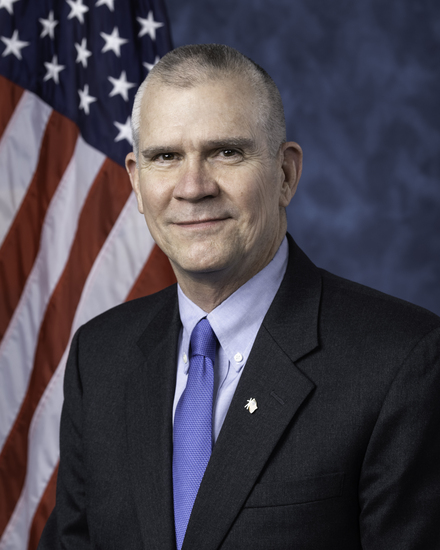
Rep. Matthew M. Rosendale, Sr.
Sponsored bills
Maddy summaryHR 10549, the Sovereign State Environmental Quality Assurance Act, would abolish the Environmental Protection Agency (EPA) 270 days after enactment, requiring the EPA Administrator to wind up operations and submit a progress report within 90 days. It redirects $4.4 billion annually (2026-2029) to state environmental departments based on population, plus $880 million yearly for Treasury oversight. The Congressional Budget Office must also conduct annual efficacy studies and reports on the Act during the same funding period. This bill directly affects all 50 states, the District of Columbia, Puerto Rico, and U.S. territories by shifting federal environmental funding and oversight authority to state-level agencies.
Maddy summaryHJRES 230 is a joint resolution seeking congressional disapproval of a Bureau of Land Management (BLM) rule related to Montana's Miles City Field Office land management. The rule, published in the Federal Register on November 27, 2024, concerns a resource management plan amendment for public lands in that area. If passed, the resolution would nullify the rule, preventing it from taking effect and halting the proposed changes to land use decisions. This directly affects how federal lands are managed in the Miles City region, including activities like grazing, recreation, and resource development.
Maddy summaryHR 200, the Forest Information Reform Act (FIR Act), removes a requirement for federal agencies to restart environmental consultations under the Endangered Species Act (ESA) for approved land management plans. Specifically, it amends the Forest and Rangeland Renewable Resources Planning Act and the Federal Land Policy and Management Act to state that the Forest Service and Bureau of Land Management (BLM) do not need to reinitiate ESA consultations when a species is listed, critical habitat is designated, or new species information becomes available after a plan's approval, amendment, or revision. This change directly affects how these agencies manage federal lands, streamlining their planning process by preventing repeated ESA consultations on existing plans. The bill makes a concrete procedural change to existing law without altering ESA protections or species conservation requirements.
Maddy summaryThe America's Wildlife Habitat Conservation Act creates new funding mechanisms to support wildlife habitat conservation across the United States. It establishes a $300 million annual subaccount for states, territories, and the District of Columbia to restore habitat for species listed as threatened or endangered under federal or state law, and to prevent species from needing such listings, with at least 15% of funds dedicated to endangered species recovery. The bill also creates a $20 million annual account specifically for tribal wildlife conservation programs. Funds must be used for habitat restoration, species conservation, invasive species management, and must be tracked through annual reporting requirements to demonstrate effectiveness.
Maddy summaryHR 4374, the Energy Opportunities for All Act, nullifies Public Land Order No. 7923, which had withdrawn public lands surrounding Chaco Culture National Historical Park in San Juan County, New Mexico. This bill directly affects land management decisions in that specific area by reversing a prior administrative withdrawal. The key provision is the explicit repeal of the order, restoring the lands to their previous management status under federal law. The bill does not create new energy policies or programs, despite its title. (Note: The title appears misleading as the bill addresses land withdrawal, not energy opportunities.)
Maddy summaryThis bill directs the U.S. Fish and Wildlife Service to remove the Northern Continental Divide Ecosystem grizzly bear population from the federal endangered species list within 180 days of the bill's enactment. It directly affects grizzly bears in Montana and Idaho by ending their federal protected status. The key provision mandates the removal without regard to other legal requirements and explicitly prohibits judicial review of the decision. This would shift management authority to state agencies while ending federal protections for this specific bear population.
Maddy summaryThe FOCA Act of 2023 requires federal agencies to stop mandating or banning contractor agreements with labor organizations (like union contracts) in construction project bids and contracts. It directly affects federal contractors, subcontractors, and agencies managing construction projects funded by the government. The bill prohibits favoring or penalizing contractors based on their labor affiliation status, aiming to promote fair competition and reduce costs. It also mandates updates to federal contracting rules within 60 days of enactment to implement these changes.
Maddy summaryThis bill would require the President to ban all imports of platinum and palladium from Russia. It directly affects U.S. importers who currently bring these metals into the country for use in industries like automotive manufacturing and jewelry. The key provision mandates a mandatory prohibition on such imports with no exceptions specified. This policy change would restrict the import of these specific metals from Russia.
Maddy summaryThis bill would make it a federal crime for licensed physicians to perform or attempt to perform an abortion at any point after fertilization, with limited exceptions to save a pregnant woman's life when facing a physical condition, or to remove a dead unborn child from miscarriage or stillbirth, or for ectopic pregnancy. It would prohibit federal funding for abortions through programs like Medicaid, the Children's Health Insurance Program, Indian Health Service, Veterans Health Administration, TRICARE, and Title X family planning services, except in those limited circumstances. The bill also prohibits group health plans and insurance from covering abortions, with the same exceptions. It defines "unborn child" as a human being from fertilization until live birth and "abortion" as any action intended to terminate a pregnancy.