

Maddy summaryHR 7505, the American Worker Protection Act of 2024, would change how H-1B visas are issued by requiring the Department of Homeland Security to prioritize applications based on the highest salary offered to foreign workers. This amendment to the Immigration and Nationality Act would reorder visa issuance from the current first-come-first-served system to rank applicants by the compensation rate stated in their visa applications. The bill directly affects employers seeking H-1B workers and foreign workers applying for these visas, as it would influence which applications are approved first. The key mechanism is the new requirement to process applications in descending order of salary rates, with implementation rules to be issued by the Secretary of Homeland Security after enactment.
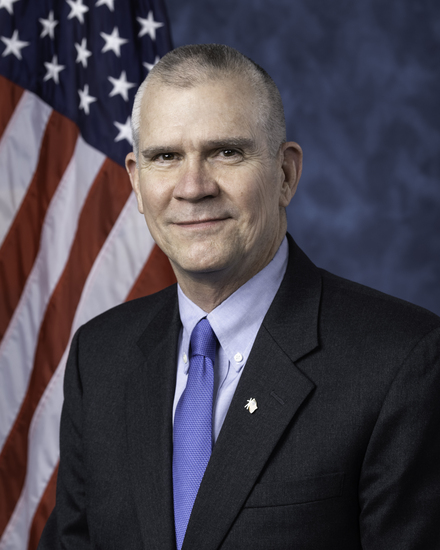
Rep. Matthew M. Rosendale, Sr.
Sponsored bills
Maddy summaryHR 7494, the Protect America’s Lands Act, prohibits national securities exchanges from processing transactions involving stocks issued by companies primarily managing land for conservation. It defines "natural asset companies" as those holding rights to ecological performance of specific land areas, with their core purpose being to conserve, restore, or sustainably manage natural assets without causing material harm. The bill directly affects securities exchanges and these specific companies by banning exchange-based trading of their securities. This is a regulatory change to the Securities Exchange Act of 1934, focusing on financial market rules rather than direct land management policies.
Maddy summaryHR 2595, the Forfeiture Funds Expenditure Transparency Act, requires state and local law enforcement agencies to publicly report how they spend money and property seized through drug and criminal forfeitures. The bill mandates that agencies submit detailed reports to Congress every six months, starting January 1, 2024, showing each receipt of funds and how they were used for specific law enforcement activities. It applies to agencies receiving funds under federal forfeiture laws related to controlled substances (21 U.S.C. §881) and civil forfeitures (18 U.S.C. §981). The key provision is creating a standardized reporting system to increase transparency about the use of forfeiture funds, directly affecting state and local law enforcement agencies that handle such assets.
Maddy summaryThe Airport Immigration Enforcement Act (HR 7445) prohibits the Federal Aviation Administration from authorizing airport space to house undocumented migrants and bans federal funds from being used for this purpose. The bill directly affects the FAA and federal programs that might fund migrant housing at airports. Key provisions include a direct ban on the FAA approving airport facilities for this use and a prohibition on federal spending for housing undocumented migrants in airport settings. This legislation would prevent public airport resources and federal money from being allocated to house undocumented migrants at airports.
Maddy summaryHR 7450, the Protecting Privacy in Purchases Act, prohibits payment card networks and covered entities (like payment processors) from requiring or assigning merchant category codes that specifically identify firearms retailers as different from general stores or sporting goods retailers. This directly affects firearms retailers and payment networks by preventing them from using business classification codes that could flag firearm sales. The bill establishes an enforcement process where the Attorney General investigates complaints, issues remediation notices, and can seek court injunctions for non-compliance, while preempting state or local laws on this issue. It does not create private lawsuits for individuals.
Maddy summaryHR 7154 would rename the Department of Veterans Affairs community-based outpatient clinic in Butte, Montana, as the "Charlie Dowd VA Clinic" to honor Charles A. Dowd, a Pearl Harbor survivor and decorated Navy veteran. The bill designates the clinic's new name officially and updates all federal references to the facility to reflect this change. It directly affects the clinic's official identity and records, with no new funding or policy changes. The renaming is purely commemorative, based on Dowd's service during WWII (including his actions at Pearl Harbor and seven Bronze Star medals) and his lifelong advocacy for veterans.
Maddy summaryHR 7049 repeals a Veterans Affairs directive requiring COVID-19 vaccinations for Veterans Health Administration (VHA) health care personnel. This bill directly affects VA medical staff by removing a specific policy implemented in 2022. The key provision mandates the Secretary of Veterans Affairs to formally cancel the directive (VHA Directive 1193.01) and prohibits issuing any substantially similar future rule. The bill focuses solely on reversing an existing administrative requirement, with no new benefits or obligations added.
This joint resolution nullifies the final rule issued by the Animal and Plant Health Inspection Service (APHIS) titled Importation of Fresh Beef From Paraguay and published on November 14, 2023. The final rule allows for the importation of fresh (chilled or frozen) beef from Paraguay into the United States under certain conditions. The United States prohibits or restricts the importation of certain animals and animal products to prevent the introduction of various animal diseases, including foot-and-mouth disease (FMD). In response to a request from Paraguay to allow the importation of fresh beef from Paraguay into the United States, APHIS conducted a risk analysis. APHIS concluded that fresh beef could be safely imported from Paraguay, provided that certain conditions are met. These conditions include that (1) FMD has not been diagnosed in the exporting region within the previous 12 months; (2) the meat originated from premises where FMD has not been present during the lifetime of any bovines slaughtered for U.S. meat export; and (3) APHIS may periodically conduct on-site evaluations and subsequent inspections of the slaughter facilities, records, and operations.
Maddy summaryHR 3162, the Protecting American Voters Act, requires the Department of Homeland Security and Social Security Administration to provide states with citizenship verification information for voter registration applicants and current registrants using the existing SAVE system. This enables states to confirm U.S. citizenship status and remove noncitizens from voter rolls based on that verification. The law prohibits federal agencies from charging states fees for this service and mandates privacy protections for Social Security numbers. It takes effect for elections held on or after January 1, 2024.
Maddy summaryHR 7273 cancels unspent funds from two federal programs supporting electric vehicle charging infrastructure. It rescinds unused balances from the National Electric Vehicle Infrastructure Formula Program (under the Infrastructure Investment and Jobs Act) and another highway grant program, redirecting them to the U.S. Treasury for deficit reduction. This bill does not affect current grants or future funding for EV projects; it only redirects unobligated money already allocated but not yet spent. The policy change is purely financial, with no new requirements or impacts on states, businesses, or consumers.