

Maddy summary# Summary of Proposed WIOA Amendment This document proposes significant amendments to the Workforce Innovation and Opportunity Act (WIOA), with key changes including: 1. **YouthBuild Program Enhancement**: - Increased annual funding authorization to $108,150,000 - New performance reporting requirements - Added focus on opioid-related training and services 2. **New Reentry Employment Opportunities Program** (Section 172): - Creates a competitive grant program for justice-involved individuals - Requires evidence-based practices and performance metrics - Includes specific requirements for recidivism reduction - Defines "eligible adult" (age 25+) and "eligible youth" (age 14-24) 3. **Strengthening Community Colleges Program** (Section 173): - Creates new grant program with $65,000,000 annual funding - Requires industry partnerships for workforce development - Mandates evidence-based program design - Focuses on recognized postsecondary credentials and career pathways 4. **Performance Accountability System**: - Enhanced data collection and reporting requirements - New requirement for making data available in "linked, open, and interoperable data formats" - More detailed performance metrics for all programs 5. **Funding Increases**: - Increased authorizations for multiple programs: - Native American programs: $61,800,000 annually - Migrant and seasonal farmworker programs: $100,317,900 annually - Technical assistance: $5,000,000 annually - Evaluations and research: $12,720,000 annually 6. **Administrative Changes**: - New consultation requirement with labor organizations for on-the-job training - Revised definitions (e.g., "English language learners" changed to "English learners") - New requirements for public reporting of matching funds 7. **Data Infrastructure**: - New "Workforce Data Infrastructure" provisions (Section 174) - Requirements for interoperable data systems - Focus on credential registries and data sharing The proposed amendment emphasizes data-driven decision making, industry-aligned training, performance accountability, and expanded opportunities for underserved populations including justice-involved individuals, opioid treatment participants, and individuals with barriers to employment.
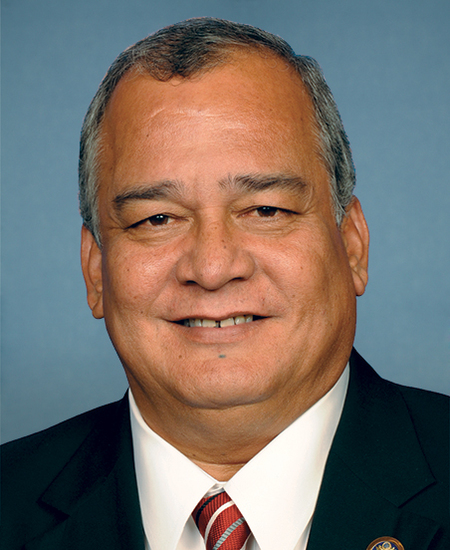
Rep. Gregorio Kilili Camacho Sablan
Sponsored bills
Maddy summaryThis bill amends a 1955 law to expand tribal leasing authority. It allows federally recognized tribes to lease land held in trust for them for up to 99 years, including land for tribes not specifically named in the original law. The change specifically adds language to cover all tribes listed by the Secretary under the 1994 Tribal Recognition Act. This directly affects all federally recognized tribes by giving them standardized leasing flexibility for trust lands. The bill makes a technical update to existing law without creating new programs or funding.
Maddy summaryHR 7770, the Rosie the Riveter Commemorative Coin Act, authorizes the U.S. Mint to produce and sell three commemorative coins honoring women who worked on the U.S. home front during World War II. It specifies $5 gold coins (max 50,000), $1 silver coins (max 400,000), and half-dollar coins (max 750,000), all to be issued between January 1, 2025, and December 31, 2025. Each coin sale includes a surcharge ($35 for gold, $10 for silver, $5 for half-dollar), with all surcharge funds directed to the Rosie the Riveter Trust for maintaining the Rosie the Riveter WWII Home Front National Historical Park and educational programs. The coins will feature designs reflecting the legacy of diverse women workers and must meet specific weight, diameter, and composition standards.
Maddy summaryHR 6727 establishes the United States Foundation for International Conservation, a nonprofit organization that will provide grants to support long-term management of protected and conserved areas in eligible countries. The Foundation requires a 2:1 cost match from other sources, demands host country and community consent through binding agreements, and prioritizes areas with high biodiversity or species of significant importance. It will be governed by a Board of Directors including government officials and private sector experts, operate for 10 years with $1 million authorized for 2024 and $100 million annually from 2025-2035, and must follow international conservation standards while prohibiting funding for countries supporting terrorism or violating human rights.
Maddy summaryHR 5247, the Expedited Hiring for VA Trained Psychiatrists Act of 2023, allows the Veterans Health Administration (VA) to hire psychiatrists who complete VA-residency programs without following standard civil service hiring rules. The bill permits immediate appointment after residency completion (or before, if the process begins early) for positions that have remained unfilled for at least 35 days. This directly affects VA psychiatrists completing specific residency programs and streamlines their hiring into VA clinical roles.
Maddy summaryThis bill clarifies that drug manufacturers must offer 340B discounted pricing for covered outpatient drugs regardless of where or how the drugs are dispensed - specifically including arrangements where covered entities (like community health centers, clinics, and hospitals) contract with pharmacies to dispense 340B drugs to patients. It explicitly prohibits manufacturers from imposing conditions on these arrangements, such as restricting delivery locations or requiring additional data. The bill also establishes civil penalties of up to $2 million per day for manufacturers violating these rules, with penalties assessed by the Secretary of Health and Human Services. This directly affects covered entities that rely on contract pharmacies to access specialty drugs for patients with conditions like cancer or multiple sclerosis, ensuring they can stretch scarce resources to provide comprehensive care.
Maddy summaryThis concurrent resolution (HCONRES 97) recognizes the gender wage gap, noting that women working full-time earn 84 cents for every dollar earned by men. It highlights racial disparities (e.g., Latinas earn 57 cents, Black women 69 cents) and the economic impact of the gap, including $965 billion in annual lost wages for women. As a symbolic resolution, it does not create new laws or policies but formally acknowledges the issue and reaffirms Congress’s commitment to addressing wage inequality.
Maddy summaryHR 7481 establishes a new CDC program to address social determinants of health - such as housing, food access, and transportation - that impact community health outcomes. It authorizes $100 million annually (2025-2029) to fund grants for state/local health agencies, nonprofits, and universities to design and implement community-based strategies tackling unmet health needs. Grantees must collaborate with health systems, housing organizations, and local stakeholders to collect data, develop evidence-based solutions, and monitor impacts on health equity and healthcare costs. The bill requires annual reporting and a national evaluation after five years to assess program effectiveness.
Military Family Leave Act of 2024 This bill entitles an employed family member of a member of the Armed Forces who receives notification of a call or order to active duty in support of a contingency operation, or who is deployed in connection with a contingency operation, to two workweeks of leave per year for each family member who is so called or deployed. Such leave may (1) be taken intermittently or on a reduced leave schedule; and (2) consist of paid or unpaid leave, as the employer considers appropriate. Additionally, the bill (1) allows an employer to require certification of entitlement to such leave within a leave request, (2) provides employment and benefits protection for employees upon their return from such leave, and (3) prohibits an employer from interfering with or otherwise denying the exercise of such leave rights.
Maddy summaryHRES 1032 is a symbolic resolution designating the week of February 26-March 1, 2024, as "Public Schools Week" in the U.S. House of Representatives. It expresses congressional support for public education, highlighting its role in preparing students and communities. The resolution has no legal effect or funding provisions - it solely serves as a formal expression of backing for public schools. It directly affects no individuals or entities but aims to raise awareness about public education. This is a non-binding gesture, not a policy change.