

Maddy summaryThis bill requires the Consumer Financial Protection Bureau (CFPB) and the Department of Education to share student loan complaint data and coordinate oversight. It mandates that each agency transfer complaints about federal student loans (title IV) or private student loans to the other agency within 10 days of receipt. The agencies must collaborate on resolving complaints involving both federal and private loans, including creating a process for handling issues with defaulted federal loans and private collection agencies. This improves transparency for borrowers by ensuring both agencies work together to address concerns about student loan servicing and origination.
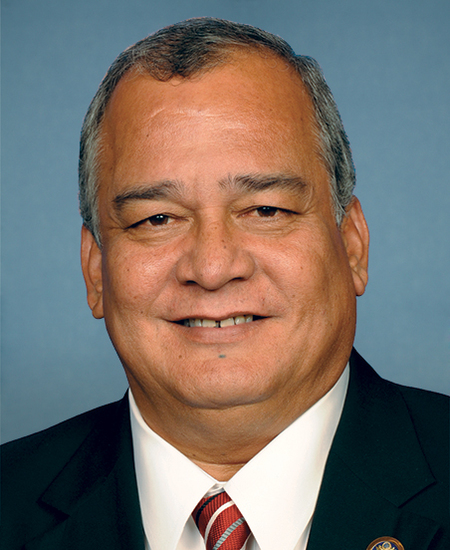
Rep. Gregorio Kilili Camacho Sablan
Sponsored bills
Maddy summaryHRES 1002 is a symbolic House resolution recognizing the cultural and historical significance of Lunar New Year (celebrated as the Year of the Dragon in 2024). It acknowledges the holiday's 4,000-year history in China, its celebration across Asia (including Seollal and Tết), and its significance to Asian Americans and others in the U.S. The resolution expresses respect for those observing the holiday and wishes them a happy new year, but it does not create new laws, policies, or funding. As a ceremonial resolution, it has no direct effect on legislation or constituents.
Maddy summaryThe Northern Mariana Islands and American Samoa College Access Act (HR 7260) provides financial assistance to students from the Northern Mariana Islands and American Samoa to attend college in other U.S. territories or states by covering the difference between in-state and out-of-state tuition rates. It authorizes $10 million annually for six years ($10 million each for the Northern Mariana Islands and American Samoa) to be distributed by their governors to eligible public four-year colleges in the U.S. mainland, DC, Puerto Rico, U.S. Virgin Islands, or Guam. Eligible students must have graduated from a public institution in the Northern Mariana Islands or American Samoa within the past three years and be enrolled in a bachelor’s program at an eligible institution, with a maximum grant of $15,000 per year or $45,000 total. The program requires institutions to use funds to supplement, not replace, existing financial aid for these students and mandates annual reporting on participation and outcomes.
Maddy summaryHR 443, the Enhancing Detection of Human Trafficking Act, requires the Department of Labor to train its employees on identifying human trafficking during their work. The training must be tailored to specific job locations and environments, cover current detection methods, and include clear steps for referring suspected cases to law enforcement. Employees must complete this training within 180 days of the bill's enactment, and the Department must report annually to Congress on training participation, effectiveness, and the number of cases referred to the Justice Department. This bill directly affects Department of Labor staff who interact with workers or workplaces, aiming to improve early detection through structured employee training and reporting.
Maddy summaryHRES 976 is a resolution recognizing Certified Registered Nurse Anesthetists (CRNAs) for their 150+ year contributions to healthcare. It highlights CRNAs as essential providers of anesthesia and pain management, especially in rural areas and military/veterans' healthcare settings, where they administer over 50 million anesthetics annually. The resolution encourages public and professional recognition of CRNAs during National CRNA Week (January 21-27, 2024) and urges stakeholders to utilize CRNAs' full potential. As a non-binding commemorative resolution, it does not create new policies or directly affect healthcare delivery.
Maddy summary# Summary of "Protecting Communities from Plastics Act" (Title II) This comprehensive legislation addresses the environmental, health, and environmental justice impacts of plastics production and use. Key provisions include: ## Environmental Justice Protections - Requires environmental justice assessments for permits of "covered facilities" (plastics manufacturing facilities) - Mandates consultation with "fenceline communities" (communities near facilities) including: * Prompt notification in multiple languages * Public hearings with translation services * Community benefit agreements - Establishes a 45-day waiting period before approving permits after public hearings ## Regulatory Requirements - Amends Clean Air Act to establish new source performance standards for plastics facilities - Requires continuous monitoring of air emissions (benzene, nitrogen oxides, etc.) - Amends Clean Water Act to prohibit discharge of plastic pellets in wastewater - Requires financial assurance for facility closure and emergency response - Prohibits new facility permits within 5 miles of community buildings (schools, hospitals, etc.) ## Research and Monitoring - Requires study of microplastics in food (including fish, meat, fruits, vegetables) - Mandates research on microplastics in human bodies (urine, breastmilk, stool) - Establishes a pilot program to test technologies for microplastic removal - Requires inventory of plastics manufacturing and distribution ## Additional Provisions - Temporary permitting moratorium on new plastics facilities (during "temporary pause period") - Requires listing of discarded polyvinyl chloride as hazardous waste - Limits National Recycling Strategy to exclude chemical recycling technologies - Creates grants to reduce single-use plastics in agricultural packaging - Requires biodegradable alternatives to plastic weed barriers The legislation aims to address the disproportionate environmental and health impacts of plastics production on vulnerable communities while establishing comprehensive regulatory frameworks for plastics manufacturing and disposal.
Maddy summaryThis bill creates a new program to provide financial assistance to struggling rural health care facilities, including hospitals, clinics, and long-term care centers in designated rural areas. Facilities may use existing USDA funds to refinance loans, upgrade telehealth technology or equipment, or cover operating costs and reserves - provided the aid preserves local health services and improves the facility's financial health. It includes a waiver allowing facilities in persistent poverty areas (20%+ poverty for 30+ years) or distressed communities to bypass standard eligibility requirements. The program applies to rural areas defined as having ≤50,000 residents not adjacent to larger cities.
Maddy summaryHRES 962 is a ceremonial resolution honoring Reverend Dr. Martin Luther King, Jr.'s legacy, specifically celebrating his 95th birthday on January 15, 2024. It symbolically affirms his teachings by condemning hate, discrimination, and prejudice against Black Americans, Indigenous people, Jewish, Asian-American/Pacific Islander, Muslim, Hispanic/Latino communities, and LGBTQ+ individuals. The resolution does not create new laws or affect any policies - it solely expresses the House's support for Dr. King's values of diversity, tolerance, and equality through non-binding statements. As a symbolic gesture, it has no legal effect or direct impact on any group or individual.
Maddy summaryHRES 963 is a symbolic resolution honoring Korean American Day, which commemorates the January 13, 1903 arrival of the first large wave of Korean immigrants to the U.S. It recognizes Korean Americans' contributions to U.S. society, including their economic, cultural, and military impacts, and marks the 121st anniversary of this historic migration. The resolution urges all Americans to observe Korean American Day to appreciate these contributions. As a commemorative measure, it does not create new policies or affect specific groups beyond this ceremonial recognition.
Maddy summaryThe Affordable Connectivity Program Extension Act of 2024 allocates $7 billion in funding for the Affordable Connectivity Program (ACP) during fiscal year 2024. The ACP provides subsidies to low-income households to help cover the cost of internet service and connected devices like laptops or tablets. This funding ensures the program can continue supporting eligible households throughout the year, with the money remaining available until fully spent. The bill extends existing program funding without changing eligibility criteria or service requirements.