

Choosing Our Own Lives Over Fast Firearms Act or the COOL OFF Act This bill establishes a three-day waiting period for certain handgun transfers. Specifically, the bill makes it unlawful for a licensed importer, manufacturer, or dealer to sell or transfer a handgun to an unlicensed individual unless three business days have elapsed since the licensee initiated a background check. A violator is subject to criminal penalties—a fine, up to one year in prison, or both. Additionally, the bill makes it unlawful for an unlicensed individual to receive a handgun from another unlicensed individual unless at least three business days have elapsed since the recipient most recently offered to take possession of the handgun. A violator is subject to criminal penalties—a fine, up to five years in prison, or both. The three-day waiting period does not apply to certain handgun transfers, such as for a loan between spouses for a lawful purpose.
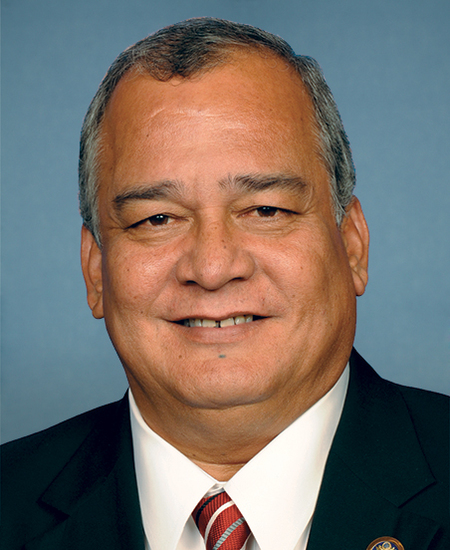
Rep. Gregorio Kilili Camacho Sablan
Sponsored bills
Providing Accountability Through Transparency Act of 2021 This bill requires the notice of a proposed rule by a federal agency to include the internet address of a summary of the rule. The summary must be 100 words or fewer, written in plain language, and posted on regulations.gov.
Pregnant Workers Fairness Act This bill prohibits employment practices that discriminate against making reasonable accommodations for qualified employees affected by pregnancy, childbirth, or related medical conditions. A qualified employee is an employee or applicant who, with or without reasonable accommodation, can perform the essential functions of the position, with specified exceptions. Specifically, the bill declares that it is an unlawful employment practice to fail to make reasonable accommodations to known limitations of such employees unless the accommodation would impose an undue hardship on an entity's business operation; require a qualified employee affected by such condition to accept an accommodation other than any reasonable accommodation arrived at through an interactive process; deny employment opportunities based on the need of the entity to make such reasonable accommodations to a qualified employee; require such employees to take paid or unpaid leave if another reasonable accommodation can be provided; or take adverse action in terms, conditions, or privileges of employment against a qualified employee requesting or using such reasonable accommodations. The bill sets forth enforcement procedures and remedies that cover different types of employees in relation to such unlawful employment practices. The Equal Employment Opportunity Commission must provide examples of reasonable accommodations that shall be provided to affected employees unless the employer can demonstrate that doing so would impose an undue hardship. The bill prohibits state immunity under the Eleventh Amendment to the Constitution from an action for a violation of this bill.
Enhance Access To SNAP Act of 2021 or the EATS Act of 20 21 This bill expands eligibility for the Supplemental Nutrition Assistance Program to students attending institutions of higher education.
Improving Access to Nutrition Act of 20 21 This bill repeals certain work requirements for the Supplemental Nutrition Assistance Program (SNAP, formerly known as the food stamp program). The requirements apply to able-bodied adults who are ages 18-49 and have no dependent children. Individuals who do not meet certain work requirements are generally prohibited from receiving more than 3 months of SNAP benefits over a 36-month period. Under current law, some of the work requirements under SNAP are temporarily suspended due to COVID-19 (i.e., coronavirus disease 2019).
Mental Health Services for Students Act of 2021 This bill provides specific statutory authority for the Project AWARE (Advancing Wellness and Resiliency in Education) State Educational Agency Grant Program that is administered by the Substance Abuse and Mental Health Services Administration. The program supports school-based mental health services, including screening, treatment, and outreach programs.
Northern Rockies Ecosystem Protection Act This bill designates specified National Forest System lands, National Park System lands, and public lands in Idaho, Montana, Oregon, Washington, and Wyoming as wilderness and as components or additions to existing components of the National Wilderness Preservation System. The Department of the Interior and the Department of Agriculture (USDA) must accept donations of leases or permits authorizing grazing on specified public or National Forest System lands. The bill also designates (1) specified federal lands as biological connecting corridors and as special corridor management areas; (2) segments of specified rivers and creeks in Idaho, Montana, and Wyoming as components of the National Wild and Scenic Rivers System; and (3) specified areas as wildland recovery areas. USDA shall develop a wildland recovery plan for each recovery area. A panel of independent scientists shall study roadless lands greater than 1,000 acres that are within the National Forest System in the Wild Rockies bioregion in Idaho, Montana, Oregon, Washington, or Wyoming and that are not designated as components of the National Wilderness Preservation System for their role in maintaining biological diversity in the Northern Rockies and as part of the overall forest reserve system. Any new road construction or reconstruction or timber harvest is prohibited in those lands after the evaluation without an act of Congress. Oil or gas leasing, mining, or other development which impairs the natural and roadless qualities of the land is also prohibited.
This resolution expresses support for the designation of the National Day of Awareness for Missing and Murdered Indigenous Women and Girls.
Boosting Long-term U.S. Engagement in the Pacific Act or the BLUE Pacific Act This bill requires and authorizes activities related to U.S. foreign policy in the Pacific Islands, including the Cook Islands, Fiji, the Marshall Islands, Papua New Guinea, and Vanuatu. The bill requires specified departments and agencies to develop and implement strategies in the region to expand the coverage of the International Law Enforcement Academies program; help build the capacity of local civilian and national security institutions; expand trade capacity and promote regional development; assist in preparing for natural disasters and other emergencies; assist in building public health capacity and improving outcomes, including in response to COVID-19; address climate change, with a focus on improving critical infrastructure and supporting ecosystem conservation efforts; provide expanded media content to the Pacific Islands and partner with journalists; support efforts to reduce gender-based violence and promote gender equality; promote educational and professional development of young adult leaders and professionals; and promote the development of civil society. The bill also requires the Department of State to prioritize efforts to help the Pacific Islands ratify and implement international legal conventions related to transnational crime. The State Department must also coordinate with regional allies and partners in providing assistance to the Pacific Islands. The President may provide assistance to the Pacific Islands to promote quality basic education and to promote the dissemination of free and accurate information.
Ban Conflicted Trading Act This bill prohibits a Member of Congress or certain congressional officers or employees from (1) purchasing or selling specified investments, (2) entering into a transaction that creates a net short position in a security, or (3) serving as an officer or member of any board of any for-profit entity.