

Maddy summaryThis bill authorizes a Congressional Gold Medal to honor the "Hello Girls" - female telephone operators who served in the Army Signal Corps during World War I. They provided critical battlefield communications in France (connecting 26 million calls), wore military uniforms, and faced combat risks, but were denied veteran benefits for 60 years due to being classified as civilian contractors. The medal recognizes their pioneering service, devotion, and the decades-long struggle to gain military recognition. The award follows similar recognition for other WWII women veterans and aims to correct the historical injustice they faced.
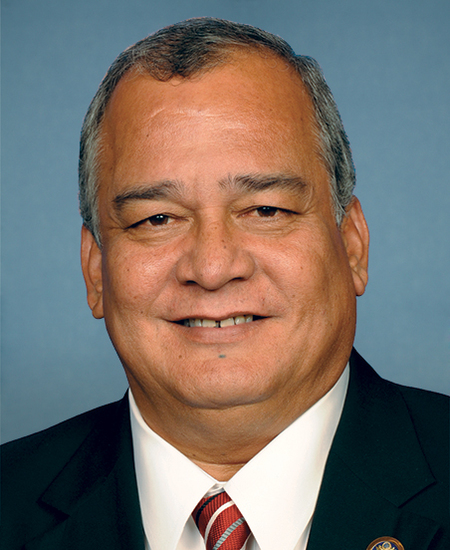
Rep. Gregorio Kilili Camacho Sablan
Sponsored bills
Maddy summaryHRES 219 is a symbolic resolution (not a binding bill) expressing the House’s support for inclusive public schools. It urges schools to adopt historically accurate, diverse educational materials that reflect the nation’s diversity, foster parent-educator partnerships, and eliminate discrimination based on race, disability, LGBTQ+ identity, or other factors. The resolution emphasizes creating safe, well-rounded learning environments that prepare all students for success while protecting students’ civil rights. It directly affects public school districts, educators, families, and students by encouraging practices that promote equity and inclusion.
Maddy summaryThe Paycheck Fairness Act (HR 17) strengthens equal pay protections by amending the Fair Labor Standards Act. It prohibits pay discrimination based on sex, pregnancy, childbirth, sexual orientation, gender identity, and sex characteristics. The bill modifies employer defenses for pay differences to require demonstration that any disparity is job-related, consistent with business necessity, and accounts for the entire pay differential. It also prohibits employers from relying on wage history when making hiring decisions or setting pay, enhances penalties for violations, and requires the EEOC to collect compensation data disaggregated by sex, race, and national origin.
Maddy summaryHCONRES 22 is a symbolic resolution recognizing the persistent gender pay gap in the U.S., documenting that women earn significantly less than men across racial groups (e.g., Black women earn 67 cents for every dollar earned by White men). It highlights the economic impact of this disparity, noting women lose over $958 billion annually in wages and face barriers like occupational segregation and workplace harassment. The resolution does not create new laws or policies but formally acknowledges the issue and reaffirms Congress’s commitment to addressing the gap. It references specific Equal Pay Days (e.g., March 14 for all women) to underscore the time women must work to earn what men did the previous year.
Maddy summaryHR 1510, the Improving Access to Nutrition Act of 2023, removes work requirements for Supplemental Nutrition Assistance Program (SNAP) recipients. It directly affects approximately 6.1 million people, including many Black, Hispanic, and Native American households disproportionately impacted by food insecurity (with rates 2-4x higher than White households), as well as families with children and individuals with health barriers to employment. The bill amends the Food and Nutrition Act by striking provisions requiring work for SNAP eligibility and related administrative requirements. This change aims to prevent vulnerable households from losing critical food assistance during the pandemic and beyond.
Maddy summaryHRES 200 is a non-binding House resolution condemning two mass shootings in California: 11 victims in Monterey Park (January 21, 2023) at a Lunar New Year celebration and 7 victims in Half Moon Bay (January 23, 2023) at a farm. It honors all victims - primarily Asian-American seniors and immigrant farmworkers - expresses condolences to their families, and reaffirms the House’s commitment to supporting Asian-American and Pacific Islander communities. The resolution specifically addresses the rise in anti-Asian hate crimes during the pandemic and recognizes the vulnerability of immigrant communities. As a symbolic gesture, it does not create new laws or allocate funding but formally condemns the violence and affirms solidarity.
Philippine Human Rights Act This bill imposes limitations on providing assistance to the police or military of the Philippines. No federal funds may be used to provide such assistance until the Philippines government has taken certain actions, including (1) investigating and successfully prosecuting members of its military and police forces who have violated human rights; (2) withdrawing the military from domestic policing activities; and (3) establishing that it effectively protects the rights of journalists, civil society activists, and certain other groups. The President shall also direct U.S. representatives at multilateral development banks to vote against providing loans to the police or military of the Philippines.
Maddy summaryHR 1247 would award a Congressional Gold Medal to the Freedom Riders collectively, honoring their pivotal role in challenging segregation in interstate travel during the Civil Rights movement. The medal, to be struck by the U.S. Mint and displayed at the Smithsonian Institution, recognizes their nonviolent protests that led to the 1961 federal ban on segregation in interstate public facilities. This is a symbolic tribute with no legal effect, as the bill does not create new policies or alter existing laws.
Maddy summaryHR 1244 authorizes Congress to award a gold medal collectively to Africans and their descendants who were enslaved in the U.S. from 1619 to 1865, recognizing their contributions to America's economic foundation. The bill directs the Treasury Secretary to design and strike the medal, which will be permanently displayed at the Smithsonian's National Museum of African American History & Culture. It also permits the sale of bronze duplicates to cover costs, with proceeds going to the U.S. Mint. This is a commemorative measure, not a policy change, focusing on symbolic recognition of historical contributions.
Maddy summaryThe Richard L. Trumka Protecting the Right to Organize Act of 2023 strengthens workers' rights to organize unions by making it harder for employers to interfere with organizing efforts. Key provisions include changing the definition of "employee" to make it more difficult to classify workers as independent contractors, prohibiting employers from threatening to permanently replace striking workers, and requiring employers to provide voter lists for union elections. The bill also creates a new electronic voting system for union elections, strengthens whistleblower protections for workers reporting labor violations, and increases penalties for unfair labor practices. These changes directly affect workers seeking to form unions, employers who may interfere with organizing, and labor organizations. The bill aims to make it easier for workers to exercise their right to collective bargaining under the National Labor Relations Act.