

Maddy summaryThe SCAM Act requires online platforms that display paid advertisements (like social media sites) to verify advertiser identities, implement scam detection systems, and remove fraudulent ads within 24 hours of confirmation. It directly affects platforms that accept payment for ads, targeting scams such as fake giveaways, romance scams, and AI impersonations that cost consumers $195 billion in 2024 (per FTC data). Key mechanisms include mandatory identity checks for advertisers, active monitoring systems, and a 72-hour investigation window for reported scams. The law aims to reduce fraud by shifting responsibility to platforms, with enforcement by the FTC and state attorneys general.
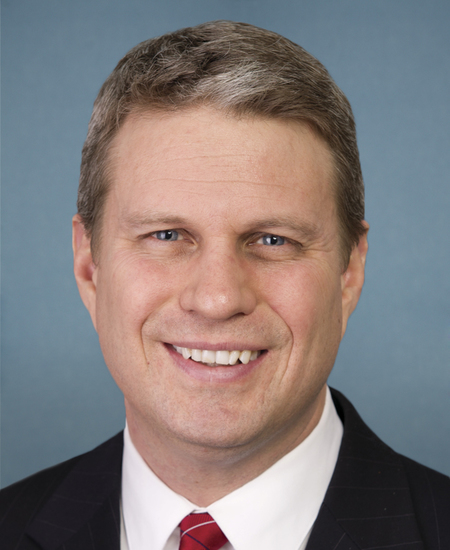
Rep. Bill Huizenga
Sponsored bills
Maddy summaryThis bill amends the process for the Financial Stability Oversight Council (FSOC) when considering actions against U.S. nonbank financial companies. It requires the FSOC to first determine that alternative solutions - such as new regulatory standards, agency actions, or a company's written plan - are not possible or insufficient to protect financial stability before voting on a formal determination. The change directly affects the FSOC and large nonbank financial companies that could face regulatory scrutiny. The key provision adds a new step to ensure the Council explores other options before taking significant action. (Procedural bill; summary limited to 3 sentences as specified.)
Maddy summaryHR 3190, the BRAVE Burma Act, extends sanctions authority for Burma by 10 years and requires annual reports on whether specific Burmese entities - like state-owned enterprises, Myanma Economic Bank, and jet fuel sector operators - meet sanctions criteria. It also limits Burma's potential increase in International Monetary Fund shareholding if the military-led State Administration Council remains in power. The bill creates a U.S. Special Envoy for Burma to coordinate all diplomatic and sanctions policy, develop multilateral sanctions strategies, and work with international partners on issues like arms embargoes and support for Burmese civil society. These provisions directly affect Burmese military entities, Burma's IMF representation, and U.S. diplomatic efforts toward Burma.
Maddy summaryHR 7457, the Nigeria Religious Freedom and Accountability Act of 2026, designates Nigeria as a Country of Particular Concern (CPC) under U.S. law due to ongoing religious persecution. The bill mandates the U.S. Secretary of State to impose targeted sanctions (including visa bans and asset freezes under the Global Magnitsky Act) on specific Fulani militias, officials like former Kano Governor Rabiu Musa Kwankwaso, and groups like MACBAN, and requires annual reports on Nigeria’s compliance with religious freedom standards. Key provisions include urging Nigeria to repeal blasphemy laws, protect religious minorities, investigate violence, and facilitate the return of internally displaced persons. The bill directly affects the Nigerian government, perpetrators of religious violence, and vulnerable religious communities, particularly Christians.
Maddy summaryHR 7391, the Community Health Center Drug Pricing Protection Act, requires that Federally Qualified Health Centers (FQHCs) pay the discounted 340B ceiling price for covered drugs **at the time of purchase**, not later through rebates or adjustments. This directly affects FQHCs, which rely on 340B discounts to provide affordable care to low-income patients. The bill amends the Public Health Service Act to prohibit manufacturers from entering agreements where FQHCs initially pay more than the ceiling price, with later reimbursement. It takes effect immediately upon enactment for all new drug purchases and applies to existing agreements starting then.
Maddy summaryThis bill prevents state or local governments from banning or restricting energy connections (like installation, modification, or access) based on the type or source of energy, such as electricity, natural gas, or renewable fuels. It directly affects consumers choosing energy providers and energy companies seeking to offer services. The key provision prohibits local laws, regulations, or policies that limit energy services sold in interstate commerce, covering all energy types listed in the bill’s definitions. It does not create new programs but limits regulatory authority at the state or local level. The law aims to ensure open access to diverse energy sources without source-based restrictions.
Maddy summaryThis bill amends existing port infrastructure funding programs to require fair geographic distribution of projects across U.S. regions. It adds new requirements to two key programs: the Port and Intermodal Improvement Program (46 U.S.C. § 54301(a)(6)(B)) and assistance for small inland river/coastal ports (46 U.S.C. § 54301(b)(4)). The key provision mandates that selected projects must ensure equitable representation among all U.S. regions, preventing concentration of funds in specific areas. This directly affects how federal port funding is allocated, requiring the Department of Transportation to consider regional balance when approving projects.
Maddy summaryThis resolution is a symbolic gesture supporting the designation of January 25-31, 2026, as "National School Choice Week." It does not create new laws or affect specific groups, but formally expresses the House's backing for raising public awareness about parental education options. The resolution encourages parents to learn about K-12 education choices (including public schools, charters, private schools, and homeschooling) and urges communities to host events during that week. It has no binding effect and focuses solely on recognition and awareness, not policy change.
Maddy summaryHR 7036, the Data Driven Diplomacy Act, requires the U.S. Department of State to coordinate with its Office of Opinion Research to conduct public opinion surveys. These surveys would inform the Bureau of Global Public Affairs about cultural context, target audiences, and shifting attitudes toward U.S. interests in regions where U.S. funded media operates or may operate. The bill directs the Assistant Secretary for Global Public Affairs to request these surveys to better understand local perspectives. It does not create new programs or change funding but mandates a specific internal coordination process. This procedural bill affects how the State Department gathers public sentiment data for its diplomatic communications.
Maddy summaryThe AI OVERWATCH Act requires U.S. exporters to obtain a license for sending certain high-performance integrated circuits (defined by specific technical specifications like processing power or bandwidth) to countries designated as "concerns," including China, Russia, Iran, and North Korea. Before approving such licenses, the Commerce Department must submit detailed certifications to Congress, including assurances the export won’t support military/intelligence capabilities of the recipient country and won’t harm U.S. semiconductor availability or AI leadership. The bill also creates an exemption for U.S. companies meeting strict security and ownership standards ("trusted United States persons") to export these chips to non-target countries without a license. Additionally, it mandates a national security strategy assessing how such exports affect U.S. AI competitiveness, particularly regarding China’s semiconductor production and capabilities.