

This resolution expresses respect for the sovereignty of Mexico and condemns calls for military action in Mexico without Mexico's consent. The resolution also states that while the President has the inherent power to repel sudden attacks, the manufacture and sale of fentanyl does not constitute such a sudden attack or an armed invasion.
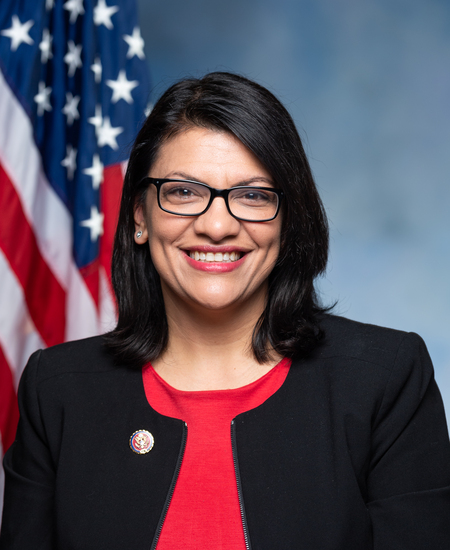
Rep. Rashida Tlaib
Sponsored bills
Maddy summaryThe Safe Schools Improvement Act (HR 6031) requires public elementary and secondary schools to implement comprehensive anti-bullying policies that specifically prohibit harassment based on protected characteristics like race, gender identity, disability, religion, and sexual orientation. It mandates schools to collect and publicly report annual data on bullying incidents while establishing clear grievance procedures for students and parents. The bill also requires states to submit biennial reports on school compliance and supports evidence-based interventions, such as restorative practices, to reduce exclusionary discipline. This legislation directly affects all public K-12 schools and students in the U.S., aiming to create safer learning environments through standardized policy requirements and data transparency.
Maddy summaryThis bill creates a 40% tax credit for individuals and businesses purchasing zero-emission electric lawn, garden, and landscape equipment, such as electric mowers or trimmers. The credit covers 40% of the equipment's cost, with a yearly cap of $25,000 and a 10-year aggregate limit of $100,000 per taxpayer. Qualifying equipment must run on electricity (via solar, batteries, fuel cells, or grid power) and cannot use gasoline, diesel, or manual effort. The bill also includes related items like batteries, repair tools, and retrofitting equipment in the credit scope while preventing double benefits with other tax credits.
Maddy summaryThe Medical Debt Relief Act of 2023 would prevent credit bureaus from reporting medical debt on credit reports and stop creditors from using medical debt information when making credit decisions. It defines medical debt as any debt related to medical services, products, or devices, and requires the removal of existing medical debt entries from credit reports. Within one year of enactment, the Consumer Financial Protection Bureau must update regulations to prohibit creditors from considering medical debt in loan or credit applications. This directly affects consumers with medical debt (who may see improved credit scores) and creditors (who must adjust their credit evaluation practices).
Maddy summaryThe Mount Blue Sky Wilderness Act redesignates the existing Mount Evans Wilderness area in Colorado as the Mount Blue Sky Wilderness. It updates all federal references - including laws, maps, and official documents - from "Mount Evans Wilderness" to "Mount Blue Sky Wilderness." The bill does not change the wilderness area's boundaries, management, or conservation protections. This is a naming update with no substantive policy changes to land use or regulations.
Maddy summaryThe Reforming Disaster Recovery Act establishes a Long-Term Disaster Recovery Fund to improve federal assistance for communities recovering from major disasters, with a focus on helping low- and moderate-income households and distressed areas. It creates a new Community Development Block Grant Disaster Recovery Program that allocates funds based on unmet needs in the most impacted areas, requires at least 70% of funds to benefit low- and moderate-income persons, and allows preliminary funding of up to $5 million before full disaster assessment. The law mandates detailed grantee plans addressing housing, economic revitalization, infrastructure, and disaster mitigation, with requirements for public input, transparency, and coordination with FEMA and other agencies. It aims to strengthen long-term recovery by addressing pre-disaster challenges, reducing future risks through mitigation, and ensuring resources reach vulnerable communities most affected by disasters.
Maddy summaryThis bill amends the federal tax code to exclude strike benefits from taxable income for union members. Specifically, it adds a new tax code section (139J) stating that compensation paid to members of labor organizations (under section 501(c)(5)) as replacement for lost wages during a strike is not counted as gross income. This directly affects union members who receive such benefits during work stoppages. The change applies to benefits received after January 1, 2023, making these payments tax-free under current law.
Maddy summaryThe Rail Worker and Community Safety Act establishes a minimum 2-person crew requirement for most freight trains (with exceptions for smaller carriers or specific low-risk operations), mandates new safety regulations for hazardous materials transportation including advance notification to emergency response agencies, and requires rail carriers to provide employees with earned paid sick time (1 hour for every 30 hours worked). The bill also sets a minimum requirement of 425 federal rail safety inspectors with specialized expertise across various safety domains, along with additional funding for hiring and compensation. These provisions directly affect rail carriers, rail workers, and communities near rail operations, aiming to enhance rail safety and worker protections through concrete policy changes.
Maddy summaryThis resolution (HRES 745) expresses the House of Representatives' profound sorrow over the death of Alexander Michael Odeh, a peace activist and former Southern California Regional Director of the American-Arab Anti-Discrimination Committee (ADC), who was killed in a 1985 pipe bomb attack at the ADC office in Santa Ana. It formally acknowledges his life and legacy, offers condolences to his family (including his wife and three daughters) and the ADC, and directs the Clerk to send the resolution to the Senate and the family. As a commemorative resolution, it has no policy impact and serves only to honor Odeh's memory and the unresolved nature of his murder.
Maddy summaryHRES 751 is a non-binding resolution designating October 1, 2023, as "National Animal Rescue Day" to raise public awareness about animal adoption and spaying/neutering. It directly supports animal shelters, rescue organizations, and the public by encouraging adoption events, educational activities, and charitable support on that date. The resolution aims to reduce shelter overcrowding and euthanasia rates by promoting adoption and responsible pet ownership through nationwide observance. It does not create new laws or funding but expresses congressional support for existing animal rescue efforts.