

Maddy summaryHR 5827, the Tenants’ Right to Organize Act, grants tenants in federally assisted housing the right to form and join tenant organizations to address housing issues without fear of retaliation. It directly affects tenants receiving tenant-based rental assistance (like Section 8 vouchers) and tenants in low-income housing tax credit (LIHTC) properties. Key provisions require public housing agencies and property owners to recognize tenant organizations, allow protected activities (such as leafleting and door-to-door outreach), and prohibit retaliation - while establishing an enforcement protocol for complaints and quarterly reporting to Congress. The bill also mandates annual notifications to tenants about their organizing rights and includes specific protections for LIHTC properties through owner compliance requirements and fines for violations.
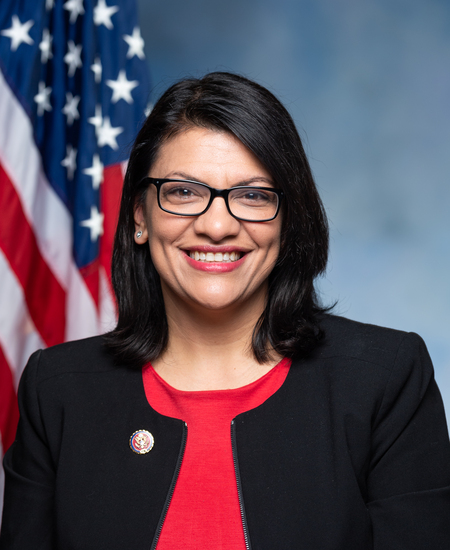
Rep. Rashida Tlaib
Sponsored bills
Maddy summaryThis bill adds a new student loan deferment option for individuals who experienced sex-based harassment. It allows eligible students to pause loan payments for up to 3 years (in periods of 3-12 months) if they reduced their course load due to harassment and submitted documentation to a covered individual (like a Title IX coordinator or healthcare provider). It also waives requirements for students to return federal grants or loans if they withdrew due to harassment and are using the new deferment. The policy directly affects students enrolled in institutions covered under the Higher Education Act who report harassment under defined terms, including sexual harassment, dating violence, domestic violence, stalking, or sexual assault.
Maddy summaryThis bill replaces "Columbus Day" with "Indigenous Peoples’ Day" as the official federal holiday observed on the second Monday in October. It directly affects federal government operations and all federal documents, rules, or laws that previously referenced "Columbus Day" by automatically updating those references to "Indigenous Peoples’ Day" upon enactment. The key mechanism is a simple amendment to federal law (5 U.S.C. § 6103(a)) to change the holiday name and a provision ensuring all existing federal references to Columbus Day are legally treated as referring to Indigenous Peoples’ Day instead. This is a procedural change to federal holidays and references, not a new policy or program.
Maddy summaryThe Eviction Protection Act of 2023 establishes a new Office of Eviction Prevention within the Department of Housing and Urban Development (HUD). This office, led by a career-appointed Director, will administer a new Eviction Protection Grant Program, coordinate eviction prevention strategies across federal agencies, and develop a national eviction database while protecting tenant privacy. The bill directly affects renters (including those in federally subsidized housing), housing providers receiving HUD assistance, and local governments through its focus on preventing both court-ordered evictions and illegal "self-help" evictions like lockouts or utility shutoffs. It authorizes $100 million annually for fiscal years 2024-2028 to fund the grant program and the office's operations, including technical assistance for grantees and tenant education initiatives.
Water Access Act This bill provides FY2024 appropriations to the Department of Health and Human Services for the Low-Income Household Water Assistance Program. The program provides grants to assist low-income households with water and wastewater bills.
Maddy summaryThis bill requires websites and applications used by public entities, businesses, and employers to be accessible to people with disabilities. It directs the Department of Justice and Equal Employment Opportunity Commission to establish accessibility standards within 24 months, with special consideration for small businesses. The law defines accessibility as websites that are perceivable, operable, understandable, and robust for people with disabilities. It also creates a technical assistance center to help entities comply and provides grants to small businesses to fix inaccessible websites. The bill aims to ensure equal digital access for people with disabilities, building on existing ADA protections.
Maddy summaryThis bill requires federal agencies to adjust contract prices to reimburse contractors for paying employees during government funding lapses (e.g., shutdowns). It covers costs for furloughed, laid-off, or reduced-hour workers, or for restoring paid leave used during the lapse, with a weekly cap of $1,442 per employee. Directly affecting federal contractors and their employees who experienced work disruptions due to funding gaps, it mandates agencies to make these adjustments promptly after enactment. Contractors must provide proof of costs, and the Office of Federal Procurement Policy must report on implementation to Congress within a year.
Maddy summaryHR 5784 would provide federal grants to public schools (including Bureau of Indian Education schools) to make them more environmentally sustainable and equitable. It prioritizes schools in the most vulnerable communities (based on CDC Social Vulnerability Index) for full funding to become "healthy zero-carbon schools" through energy-efficient retrofits and new construction, while offering reduced funding for less vulnerable schools. The grants require community engagement in planning, mandate hiring from local communities with specific diversity goals, fund social services and mental health support, and include strict energy efficiency standards for all projects. The bill also includes funding for educational equity planning and climate resiliency programs to help schools serve as community centers during disasters.
Maddy summaryHRES 733 is a non-binding resolution expressing concern about the rising number of book bans in U.S. schools and libraries. It cites data showing nearly 3,400 book removals affecting 1,557 titles from July 2022-June 2023, with disproportionate targeting of books featuring LGBTQ+ themes (36%) and racial justice content (37%). The resolution urges school districts to follow established best practices for handling book challenges and reaffirms the importance of protecting students' access to diverse materials. It does not create new laws but calls for local governments to support free expression as protected by the First Amendment.
Maddy summaryThe Alice Cogswell and Anne Sullivan Macy Act amends the Individuals with Disabilities Education Act to better serve children and youth who are deaf, hard of hearing, deafdisabled, blind, visually impaired, or deafblind. It requires states to identify and provide appropriate services to these students regardless of how they're classified in disability categories, ensures access to language instruction in the student's primary language (including American Sign Language), and mandates improved data collection about these students. The bill establishes the Anne Sullivan Macy Center on Visual Disability and Educational Excellence to support research, training, and program development for blind and visually impaired students. These changes aim to improve educational outcomes by addressing the unique language, communication, and learning needs of students with sensory disabilities through concrete policy changes to IDEA.