

Maddy summaryHRES 1206 is a symbolic House resolution supporting the designation of May 2024 as "Mental Health Awareness Month." It does not create new laws or funding but aims to raise public awareness about mental health challenges, emphasizing the need to reduce stigma and treat mental well-being as equally important as physical health. The resolution cites statistics on rising mental health crises - including increased anxiety, depression, and suicide rates among youth, LGBTQ+ individuals, veterans, and communities of color - to underscore the urgency of the issue. It encourages nationwide efforts to promote mental health awareness and access to care during this designated month.
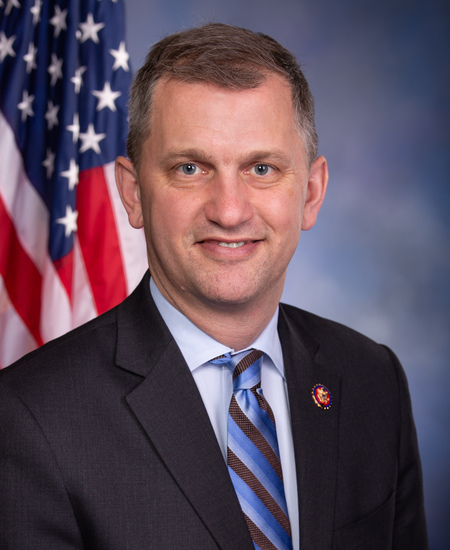
Rep. Sean Casten
Sponsored bills
Maddy summaryThis bill updates the National Construction Safety Team Act by replacing "building" with "structure" throughout the law and adjusting related terminology. It ensures investigations cover a broader range of infrastructure, including bridges, dams, and other structures, not just traditional buildings. Key provisions clarify that investigations may defer to other federal agencies when appropriate and update references to "engineering standards, practices, and building codes." The bill does not change funding levels, maintaining the $5 million annual appropriation for the National Institute of Standards and Technology through 2027. It focuses on modernizing the law's language to reflect current infrastructure safety needs without introducing new requirements.
Maddy summaryThis bill authorizes the placement of a memorial honoring women who contributed to World War II efforts on the National Mall or adjacent federal land in Washington, D.C. It specifically removes a location restriction (under 40 U.S.C. § 8908) to allow the memorial - previously authorized by the 2023 Consolidated Appropriations Act - to be situated within Area I of the National Mall or the National Mall Reserve. The memorial would commemorate over 18 million women who worked as pilots, engineers, mechanics, and codebreakers during the war. The bill directly affects the Women Who Worked on the Home Front Foundation, which is tasked with establishing the memorial.
Maddy summaryThe Blockchain Integrity Act imposes a 2-year moratorium (starting 6 months after enactment) prohibiting financial institutions from handling funds routed through digital asset mixers or sent to them. This directly affects banks and financial services companies that process cryptocurrency transactions. The bill requires the Treasury Secretary to study digital asset mixers, privacy coins, and related technologies, including their use in both criminal activity and legitimate scenarios like journalist payments. The study must report on tracking capabilities, international approaches, and specific illicit activities like sanctions evasion and human trafficking, with findings due to Congress within 18 months.
Maddy summaryThis bill provides $280 million in funding for the Department of Education's Office for Civil Rights (OCR) for fiscal year 2024, with funds available through September 2025. The OCR investigates school discrimination complaints related to race, sex, disability, and other protected characteristics. This funding directly supports the OCR's ability to handle civil rights cases involving students and schools nationwide, without creating new student requirements or altering existing laws.
Maddy summaryThis bill designates the U.S. Postal Service facility at 616 East Main Street in St. Charles, Illinois, as the "Veterans of the Vietnam War Memorial Post Office." It updates all federal references in laws, maps, and records to use this new name, honoring veterans of the Vietnam War. The bill does not change the post office's operations, services, or funding - it is a purely commemorative naming action with no substantive policy impact.
Maddy summaryHRES 1197 is a non-binding House resolution recognizing the contributions of elementary and secondary school teachers. It formally thanks teachers for their role in building civic, cultural, and economic well-being, aligning with National Teacher Appreciation Week (May 6-10, 2024). The resolution encourages students, parents, school leaders, and officials to acknowledge teachers during this week. It does not create new programs, allocate funding, or impose obligations on schools or educators. As a symbolic gesture, it directly addresses the teaching profession without altering any laws or policies.
Maddy summaryHR 8213, the End DWI Act of 2024, requires states to mandate ignition interlock devices (alcohol-detection systems) for all drivers convicted of driving while intoxicated (DWI) for a minimum of 180 days. States that fail to implement this requirement risk losing 3% of federal highway funds in 2027, increasing to 5% annually thereafter. The bill directly affects DWI offenders and states that do not adopt the interlock mandate, using federal funding as an incentive for compliance. It does not create new penalties but establishes a national standard tied to transportation funding. The legislation is based on findings showing interlocks reduce repeat offenses by up to 70% and address rising impaired driving fatalities.
Maddy summaryHR 8192, the High School Voter Empowerment Act of 2024, requires all public high schools (as defined by federal education law) to serve as official voter registration agencies under the National Voter Registration Act. It mandates that each high school conduct at least one annual voter registration drive targeting students enrolled in American Government or Economics courses, aged 17+ by April 10, and eligible to vote for federal office. The bill also establishes a federal grant program to reimburse schools for reasonable costs incurred during these registration drives, including documentation of activities and student registrations. This law directly affects public high schools and state election officials, creating a new requirement for schools to facilitate voter registration for eligible students.
Maddy summaryThe Captive Primate Safety Act prohibits the import, export, sale, transport, breeding, or possession of certain nonhuman primates - including chimpanzees, gorillas, monkeys, and their hybrids - in interstate or foreign commerce. It directly affects private owners, breeders, and commercial traders of these animals, with limited exceptions for pre-enactment animals (requiring registration with the U.S. Fish and Wildlife Service and restrictions on breeding/sale) and registered research facilities. The law amends the Lacey Act to add these primates to prohibited species lists, effective upon enactment, with regulations to be issued within 180 days. Enforcement remains active even if regulations are delayed, ensuring immediate prohibitions on commercial trade and possession.