

Maddy summaryHRES 1166 is a symbolic resolution expressing congressional support for Earth Day. It urges the President to issue an Earth Day proclamation, encourages Americans to take specific environmental actions (like addressing pollution and supporting indigenous stewardship), and calls for global efforts to advance climate goals. The resolution does not create new laws or directly affect any groups - it serves as a non-binding statement of support for environmental action. It references historical environmental milestones but focuses on reaffirming the need for year-round climate and environmental protection efforts.
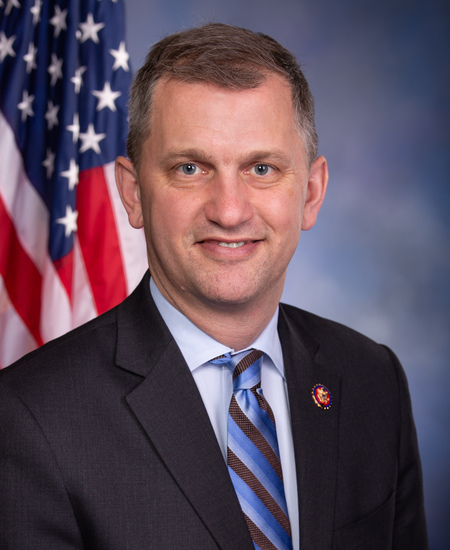
Rep. Sean Casten
Sponsored bills
Maddy summaryThe SERVICE Act of 2024 establishes a 5-year pilot program to create specialized veterans response teams within law enforcement agencies. These teams, funded through federal grants, directly assist veterans in crisis by connecting law enforcement with VA resources, providing mental health training for officers, and organizing 24/7 volunteer response teams. Key provisions include identifying veteran officers to wear service pins, coordinating with VA and community agencies, and developing crisis response plans. The program requires participating agencies to track outcomes and report grant data to Congress annually.
Maddy summaryThis bill creates the Community Economic Development Transmission Fund, which uses a portion of interest from specific federal loans (like those for major electric transmission projects under the Infrastructure Investment and Jobs Act or Inflation Reduction Act) to provide payments to host communities. Host communities - defined as local governments or tribes where transmission projects are built - receive funds within 18 months of project construction start. Communities must use 80% of the funds for local services like schools, broadband, or public infrastructure, and at least 20% for conservation, recreation, or climate resilience projects. The fund aims to support communities hosting large-scale transmission projects by directing resources toward local priorities.
Maddy summaryHR 8122 redesignates Rock Creek Park in Washington, D.C., as Rock Creek National Park to reflect its nationally significant natural, cultural, and recreational resources. The bill updates all federal references to the park in laws, maps, regulations, and documents to use the new name "Rock Creek National Park" instead of "Rock Creek Park." It makes minor technical changes to existing statutes (like Title 40, U.S. Code) to replace the old name with the new one. This is a procedural name change with no new funding or policy provisions for park management.
Maddy summaryHR 8098, the Judicial Ethics Enforcement Act of 2024, creates an independent Office of Inspector General (IG) for the federal judicial branch (excluding the Supreme Court) to investigate misconduct complaints against judges and court staff. The IG would conduct audits, prevent fraud, and report findings to the Chief Justice and Congress, but cannot investigate court decisions or discipline judges. Key provisions include the IG’s authority to subpoena records and require testimony, while explicitly prohibiting oversight of case merits or judicial punishment. The bill establishes strict limits on the IG’s scope to ensure judicial independence, with the Chief Justice appointing the IG after congressional consultation.
Maddy summaryHR 8061, the Crime Victims Fund Stabilization Act of 2024, ensures stable funding for the Crime Victims Fund by directing certain False Claims Act collections into it from 2024 through 2029. Specifically, it adds a provision requiring that amounts collected under the False Claims Act (excluding whistleblower rewards and government reimbursement for damages) be deposited into the fund during this period. This directly affects crime victims who rely on the fund for services like counseling and emergency aid, as it prevents potential shortfalls in funding. The bill makes a concrete policy change by redirecting specific federal civil penalties into the fund, rather than altering the fund's existing purposes or eligibility rules.
Maddy summaryHRES 1154 is a symbolic resolution supporting "Financial Literacy Month" to raise public awareness about the importance of personal financial education. It calls on the Federal Government, states, schools, businesses, and communities to observe the month with programs highlighting how financial literacy helps individuals manage money, credit, and debt. The resolution references statistics on financial challenges (like 37% of adults struggling with emergency expenses) but does not create new laws or funding. As a non-binding resolution, it has no direct effect on policy or affected individuals.
Maddy summaryThis bill prevents the U.S. Postal Service (USPS) from closing, consolidating, or moving operations at any processing and distribution center in a region that missed specific delivery targets in the previous year. It directly affects USPS operations in regions failing to meet two key 2023 performance goals: at least 93% on-time delivery for two-day first-class mail and 90.3% for three-to-five-day first-class mail. The restriction applies annually during any calendar year based on the prior year's performance data. The law aims to protect postal facilities in underperforming areas from closure due to delivery metrics.
Maddy summaryThis bill creates a new federal tax credit for family child care providers who operate from their primary residence and hold state licenses. It allows qualifying providers to claim up to $5,000 in startup costs per year, including licensing fees, supplies, insurance, safety equipment, furniture, and required home renovations. The credit applies only once per provider (no repeat claims) and expires after 7 years. It directly benefits small-scale, licensed family child care providers serving at least two non-family children, aiming to reduce their initial business setup costs.
Maddy summaryThis bill establishes a federal grant program to support accredited zoos, aquariums, and wildlife facilities caring for threatened and endangered species. It creates a "Wildlife Confiscations Network" to coordinate federal law enforcement with qualified facilities handling seized animals (like those from illegal trade), and authorizes a new permit under the Endangered Species Act to streamline rescue, rehabilitation, and reintroduction efforts. Facilities must meet standards for animal care, comply with the Animal Welfare Act, and use grants for specific costs like veterinary care, transportation, and reintroduction - capping federal funding at $1 million per facility annually (except during emergencies). The program directly affects accredited wildlife facilities, federal agencies (like USFWS), and law enforcement, aiming to standardize and fund conservation efforts for species under the Endangered Species Act.