

Maddy summaryThis bill amends the Food and Nutrition Act of 2008 to explicitly include "urban and rural" areas of Hawaii in references to the state's food assistance programs. It makes a technical correction to Section 3(u)(2) by inserting "urban and rural" before "Hawaii" in two places within the law. The change clarifies that Hawaii's food assistance programs must cover both urban and rural communities, without altering eligibility, benefits, or funding. This is a procedural update to the existing statute, not a substantive policy change. The bill directly affects food assistance program administration in Hawaii.
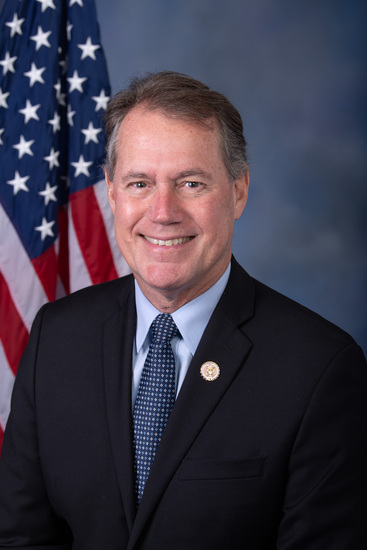
Rep. Ed Case
Sponsored bills
Maddy summaryHR 5162 increases funding and clarifies grant terms for agricultural education programs serving Alaska Native and Native Hawaiian communities. It raises annual funding from $10 million (2023) to $15 million (2024-2028) for grants to Alaska Native and Native Hawaiian-serving institutions focused on agriculture education. The bill also limits each grant to a maximum 3-year period, replacing previous indefinite terms. These changes directly affect institutions receiving these specific agricultural education grants.
Maddy summaryHR 5604, the Agricultural Right to Repair Act, requires farm equipment manufacturers (OEMs) to provide farmers and independent repair shops with necessary repair materials - including documentation, parts, software, tools, and farm equipment data - on "fair and reasonable terms." This directly affects farmers who own equipment and independent repair providers who fix it, ensuring they can access the same resources as authorized repair shops without restrictive conditions like mandatory registration or exclusive partnerships. Key provisions mandate that manufacturers cannot impose unreasonable costs, restrict how materials are used, or hinder access to diagnostic tools, while also allowing limited circumvention of security features for repair purposes under copyright law. The bill is enforced by the Federal Trade Commission (FTC) and explicitly protects safety systems and emissions compliance, prohibiting modifications that would deactivate safety features or violate environmental laws.
Maddy summaryHR 5059 would allow eligible states to receive their emergency food assistance funding as cash instead of in-kind commodities, enabling them to directly purchase food from private suppliers. Currently, the federal government buys and distributes food to states; this bill would let states elect to use cash for their own purchases in the commercial marketplace. The bill defines "eligible states" based on criteria from the 2018 Agriculture Improvement Act and applies only to states that choose this option. This change provides states with greater flexibility in sourcing food for emergency feeding programs.
Maddy summaryThe John R. Lewis Voting Rights Advancement Act of 2023 would strengthen the Voting Rights Act of 1965 by updating the criteria for which states and localities must obtain federal preclearance before changing voting practices. It would establish new standards for proving vote dilution and vote denial by requiring courts to consider historical discrimination, racial polarization in voting, and whether voting practices disproportionately burden minority voters. The bill would also require states and localities to provide public notice of voting changes and share demographic data about polling locations. These changes would primarily affect jurisdictions with a history of voting rights violations, aiming to prevent discriminatory voting practices before they take effect.
Maddy summaryHR 3152, the "Fight CRIME Act," aims to maintain international restrictions on Iran's missile-related activities by requiring diplomatic efforts to extend these restrictions before they expire in October 2023. The bill mandates annual reports detailing U.S. diplomatic strategies, potential impacts of expiration, and measures to deter missile technology transfers to Iran. It establishes sanctions against foreign individuals or entities that knowingly support Iran's missile or drone programs, including asset freezes and visa restrictions. These sanctions apply regardless of whether UN restrictions remain in effect after their expiration, directly affecting foreign entities involved in these activities.
Women's Business Centers Improvement Act of 2023 This bill reauthorizes the Women's Business Center Program through FY2027, raises the cap on individual center grants, establishes an accreditation program for grant recipients, and revises the duties of the Office of Women's Business Ownership. Specifically, the bill modifies the Women's Business Center Program to enable the Small Business Administration (SBA) to provide initial and continuation grants to eligible entities to operate women's business centers for the benefit of women-owned small businesses. The SBA must also publish standards for a program to accredit entities that receive grants from the Women's Business Center Program, and such entities' receipt of continuation grants shall be contingent upon their obtaining accreditation.
Maddy summaryHRES 661 is a symbolic resolution honoring the 60th anniversary of the 1963 March on Washington for Jobs and Freedom. It calls on Congress to address the unmet demands of the marchers, specifically decent housing, voting rights, and a fair wage. As a non-binding resolution, it does not create new laws but serves to commemorate the event and renew focus on these longstanding civil rights goals.
Maddy summaryThis bill extends the existing "safe-to-report" policy for minor misconduct to the U.S. Coast Guard Academy. It amends a 2021 defense law to explicitly include the Academy under the policy, which allows service members to report certain minor issues (like harassment or misconduct) without facing disciplinary action for the initial minor offense. The change directly affects Coast Guard Academy cadets and staff by providing them the same reporting protections already available at other military service academies. This is a procedural update to existing law, not a new policy.
Maddy summaryThe School Food Modernization Act (HR 4483) provides funding to help schools upgrade food service infrastructure and equipment. It offers loan guarantees (up to 80% of loan amounts) and grants ($35 million annually) for local schools, tribal organizations, and consortia to improve kitchens, storage facilities, and durable equipment (like stoves or refrigerators valued over $500). The bill also allocates $10 million yearly for competitive grants to train school food staff on meeting nutrition standards, administered by third-party organizations like colleges or nonprofits. These provisions directly support schools serving meals under federal programs, aiming to enhance food safety, efficiency, and nutritional quality.