

Maddy summaryThe MAUI STRONG Act establishes the Emergency Micro-enterprise Recovery Grant Pilot Program, providing grants to small Maui businesses and nonprofits that experienced revenue losses between August 8 and December 31, 2023. Eligible entities - including businesses with 25 or fewer employees, sole proprietors, and certain nonprofits - can receive up to $20,000 per grant to cover payroll, rent, materials, or revenue shortfalls. Grants must be used for specific business costs, and the program runs from August 2023 through December 2024, with $30 million authorized for funding. Grants are tax-exempt, and the Small Business Administration must report on the program’s impact by 2026.
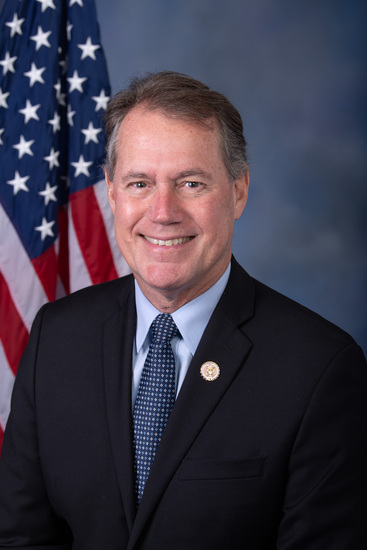
Rep. Ed Case
Sponsored bills
Maddy summaryThe Safe Schools Improvement Act (HR 6031) requires public elementary and secondary schools to implement comprehensive anti-bullying policies that specifically prohibit harassment based on protected characteristics like race, gender identity, disability, religion, and sexual orientation. It mandates schools to collect and publicly report annual data on bullying incidents while establishing clear grievance procedures for students and parents. The bill also requires states to submit biennial reports on school compliance and supports evidence-based interventions, such as restorative practices, to reduce exclusionary discipline. This legislation directly affects all public K-12 schools and students in the U.S., aiming to create safer learning environments through standardized policy requirements and data transparency.
Maddy summaryThe Reforming Disaster Recovery Act establishes a Long-Term Disaster Recovery Fund to improve federal assistance for communities recovering from major disasters, with a focus on helping low- and moderate-income households and distressed areas. It creates a new Community Development Block Grant Disaster Recovery Program that allocates funds based on unmet needs in the most impacted areas, requires at least 70% of funds to benefit low- and moderate-income persons, and allows preliminary funding of up to $5 million before full disaster assessment. The law mandates detailed grantee plans addressing housing, economic revitalization, infrastructure, and disaster mitigation, with requirements for public input, transparency, and coordination with FEMA and other agencies. It aims to strengthen long-term recovery by addressing pre-disaster challenges, reducing future risks through mitigation, and ensuring resources reach vulnerable communities most affected by disasters.
Maddy summaryHR 5907, the Stop Transnational Repression Act, creates a new federal crime for foreign governments or their agents to coerce, harass, threaten, or target U.S. persons (including activists, journalists, and dissidents) through physical or digital means, such as hacking, stalking, or intimidation, both within the U.S. and abroad. It establishes penalties of up to 10 years in prison for the offense, with enhanced penalties for violent acts or when committed under foreign government direction. The bill requires the Justice Department to centralize investigations and prosecutions of such cases and mandates annual reports to Congress detailing incidents, tactics used by foreign governments, and government efforts to disrupt transnational repression. This law directly affects U.S. citizens and residents targeted by foreign governments seeking to silence criticism or opposition.
Maddy summaryHR 5873 provides tax relief for individuals affected by federally declared disasters in 2023. It allows tax-free withdrawals from retirement plans (up to $100,000 per person) without early withdrawal penalties for those living in qualified disaster areas during the incident period, with the option to repay within 3 years to avoid income tax. The bill also increases retirement loan limits to $100,000 and delays loan repayments for 1 year for affected individuals. Additionally, it adjusts casualty loss deductions by raising the $500 threshold for personal casualty losses and increasing the standard deduction by the amount of qualifying disaster losses. These provisions apply to individuals sustaining economic losses in areas with major disaster declarations under the Stafford Act during 2023.
Maddy summaryHR 2577 establishes the DHS Suicide Prevention and Resiliency for Law Enforcement Act, requiring all Department of Homeland Security (DHS) law enforcement components - including U.S. Customs and Border Protection, Immigration and Customs Enforcement, the Secret Service, TSA, and others - to implement new mental health programs. The law creates a central "Law Enforcement Mental Health and Wellness Program" under the Chief Medical Officer to coordinate suicide prevention, reduce stigma, and provide confidential support, including peer-to-peer networks, annual training for officers, and resources for families. Key mechanisms include mandatory annual confidential surveys of personnel, data collection on suicides (while protecting privacy), and requiring DHS components to improve mental health programs by removing barriers to seeking help and ensuring no adverse actions for officers who access counseling. The bill mandates annual congressional briefings on implementation through 2027.
Maddy summaryThis resolution commemorates October 2023 as Filipino American History Month, honoring the contributions and cultural heritage of Filipino Americans to the United States. It directly recognizes the Filipino American community - now the third-largest Asian American and Pacific Islander group - with a population of approximately 4.5 million - and highlights their historical roles, including WWII service and community leadership. The resolution has no legal effect or funding provisions; it is purely ceremonial, urging the public to observe the month through educational programs and activities. It follows prior congressional recognitions of Filipino American History Month since 2009.
Maddy summaryHRES 752 is a symbolic resolution honoring those impacted by the August 2023 Maui wildfires, which caused 97 confirmed deaths, destroyed over 2,200 structures, and displaced thousands. It specifically recognizes first responders who risked their lives during the disaster and pays tribute to the 97 individuals who lost their lives. The resolution expresses support for Maui communities’ recovery efforts and urges broader wildfire prevention awareness, but it does not create new policies, allocate funding, or impose legal obligations. As a commemorative resolution, it serves only to acknowledge the tragedy and resilience without direct policy impact.
Maddy summaryHRES 736 is a House resolution designating September 25-October 1, 2023, as "Asian American and Native American Pacific Islander-Serving Institutions Week" to recognize institutions that serve high proportions of Asian American, Native Hawaiian, and Pacific Islander students. These institutions - enrolling over 46% of such students despite representing only 6.5% of U.S. colleges - provide critical support for low-income, first-generation students through culturally relevant programs. The resolution encourages eligible institutions to seek funding and urges the public to observe the week with activities celebrating their educational contributions. It has no legal effect but serves as a symbolic acknowledgment of their role in higher education.
Maddy summaryHRES 733 is a non-binding resolution expressing concern about the rising number of book bans in U.S. schools and libraries. It cites data showing nearly 3,400 book removals affecting 1,557 titles from July 2022-June 2023, with disproportionate targeting of books featuring LGBTQ+ themes (36%) and racial justice content (37%). The resolution urges school districts to follow established best practices for handling book challenges and reaffirms the importance of protecting students' access to diverse materials. It does not create new laws but calls for local governments to support free expression as protected by the First Amendment.